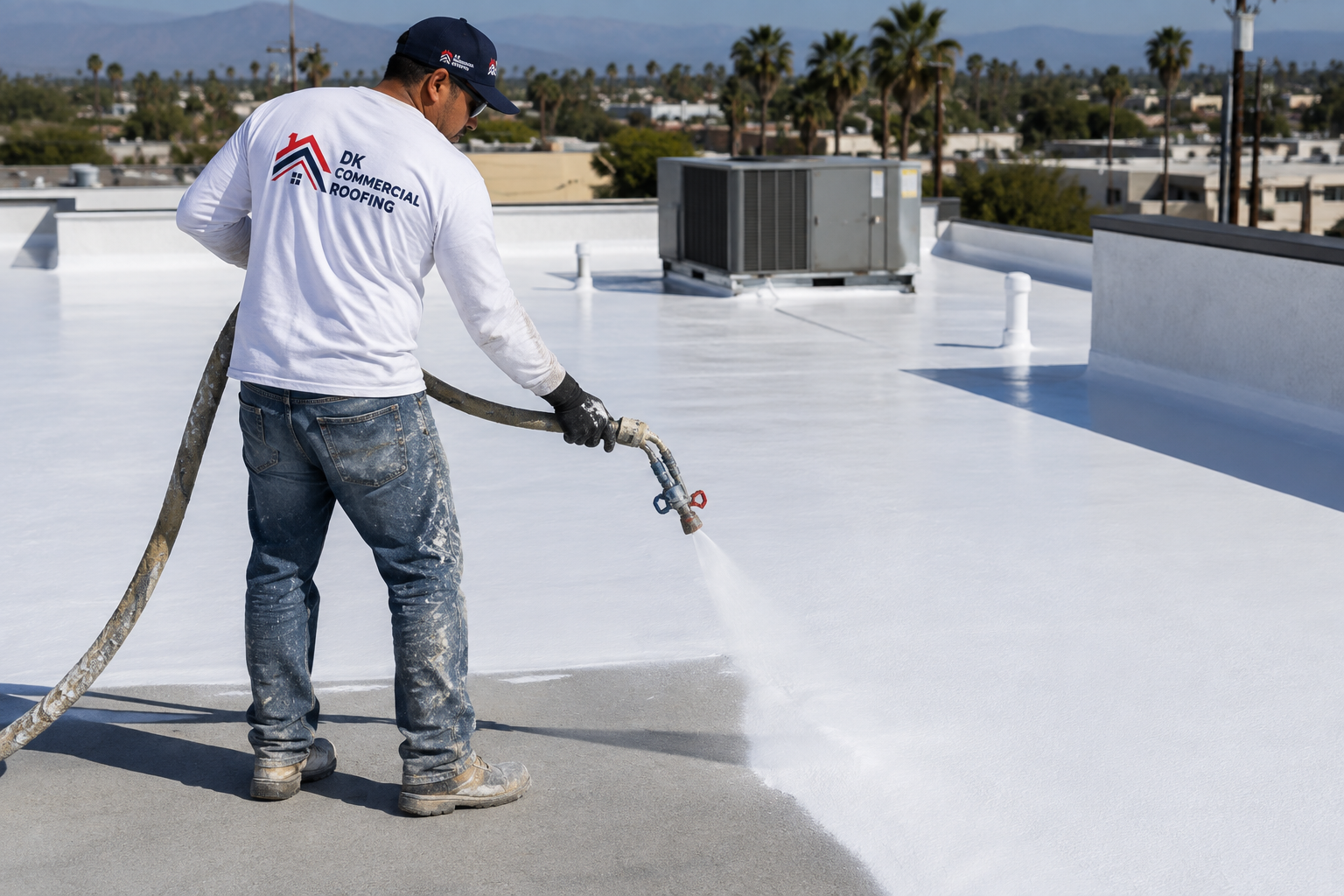
One reinforced thermoplastic membrane forms the exposed waterproofing surface.
Commercial Thermoplastic Roofing Systems
PVC Roofing Los Angeles
PVC roofing provides Los Angeles commercial property owners with a flexible, heat-welded single-ply membrane designed for flat and low-slope commercial roofs.
DK Commercial Roofing provides PVC roof installation, replacement, repair, inspection, and maintenance for restaurants, food-processing facilities, retail centers, offices, warehouses, industrial buildings, schools, multifamily properties, and commercial buildings throughout Los Angeles County.
01
PVC Commercial Roofing
A Clean, Heat-Welded Membrane for Demanding Commercial Roofs
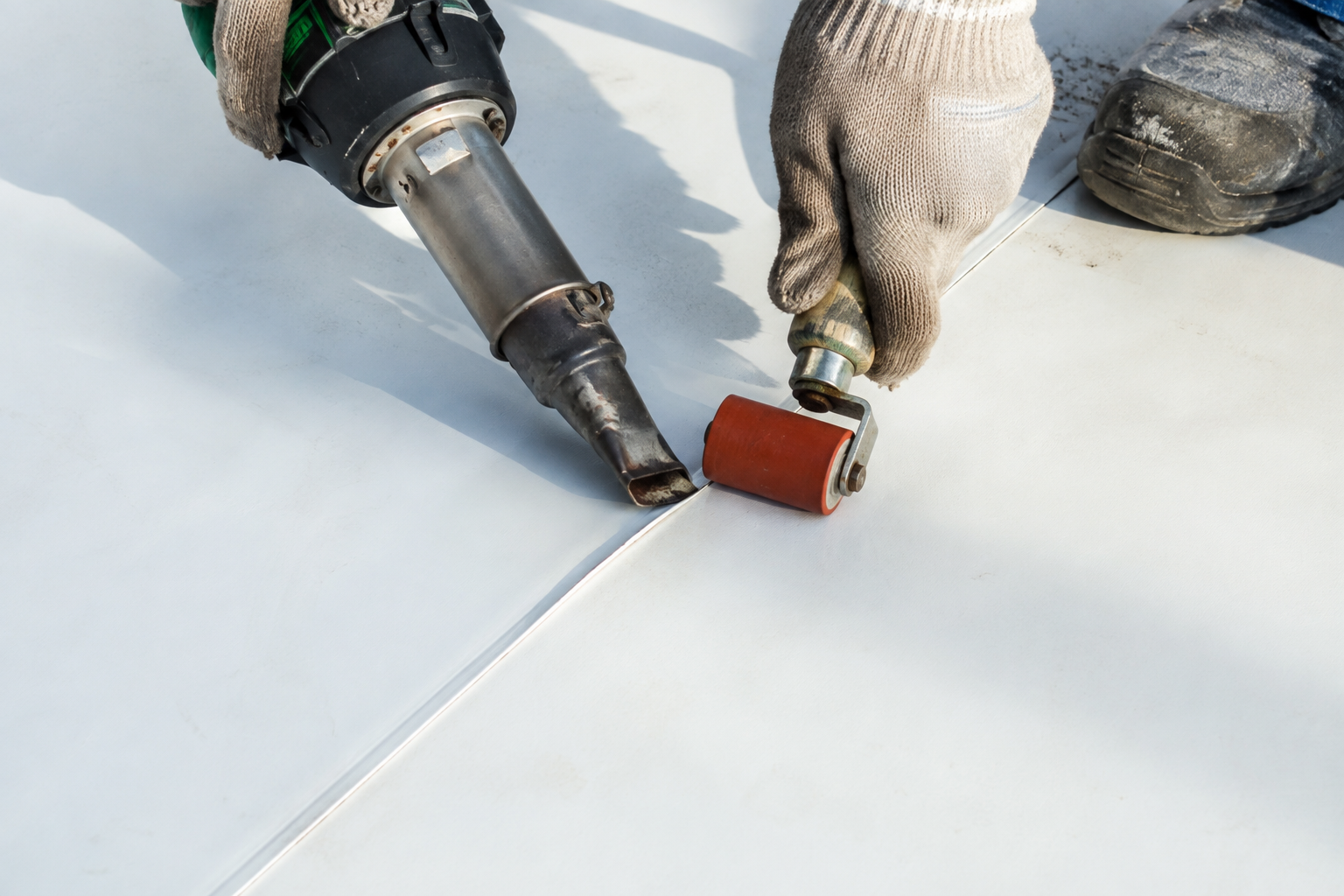
Hot-air welding joins compatible membrane sheets into a continuous roofing surface.
Commonly installed on commercial flat and low-slope roofing assemblies.
White and light-colored PVC membranes can reflect solar heat from the roof surface.
02
What Is PVC Roofing?
A Reinforced Thermoplastic Membrane With Hot-Air Welded Seams
PVC roofing is a flexible single-ply commercial roof membrane made primarily from polyvinyl chloride and reinforcing materials. The membrane is manufactured in rolls and installed over a prepared commercial roof assembly.
Adjacent sheets are joined using controlled hot air. The welding process softens compatible membrane surfaces so they can fuse together as the seam cools. Properly completed welds create a continuous waterproofing connection between membrane sheets.
PVC roofing is commonly considered for Los Angeles commercial buildings where chemical exposure, grease, oils, rooftop exhaust, light-colored surfacing, flexible membrane details, or heat-welded seams are important project considerations.
PVC is more than the exposed membrane.
The complete roof may also include insulation, tapered insulation, cover board, vapor-control materials, attachment components, adhesives, flashing, drains, scuppers, perimeter metal, walkways, and equipment supports.
03
PVC Membrane Seam Welding
Seam Performance Depends on Heat, Speed, Pressure, and Preparation
PVC sheets are joined with hot-air welding equipment. Membrane condition, welder settings, rooftop temperature, sheet preparation, installation speed, and pressure all affect the completed seam.
Surface Condition
Prepare the Membrane
Welding surfaces should be clean, dry, compatible, and free of contaminants that could interfere with the seam.
Equipment Settings
Control the Heat
Welding temperature should be adjusted for the membrane, equipment, weather, and current rooftop conditions.
Installation Movement
Maintain Consistent Speed
Consistent movement helps prevent incomplete welding, overheating, scorching, and uneven seam bonding.
Membrane Contact
Apply Proper Pressure
Appropriate rolling pressure brings the heated membrane surfaces together during the welding process.
Quality Review
Probe and Inspect
Completed seams should be checked for voids, incomplete welds, contamination, and irregular bonding.
04
Commercial PVC Roof Assembly
Each Component Supports the Complete Roofing System
The PVC membrane is the exposed waterproofing layer, but the performance of the commercial roof depends on every component beneath and around it.
01
Exposed Waterproofing
PVC Roof Membrane
Reinforced thermoplastic sheets form the primary exposed waterproofing surface.
02
Protective Substrate
Cover Board
A compatible cover board can improve substrate stability and resistance to impact or rooftop activity.
03
Thermal Performance
Roof Insulation
Rigid or tapered insulation supports energy performance and commercial roof drainage.
04
Project-Specific Component
Vapor-Control Layer
Some buildings require a vapor-control strategy based on interior use, climate, deck type, and assembly design.
05
Structural Foundation
Commercial Roof Deck
Steel, concrete, wood, gypsum, and other approved decks support the complete commercial roofing assembly.
05
Commercial Roof Exposure
PVC Is Often Considered Where Grease and Chemical Exposure Matter
Commercial kitchens, restaurants, food-processing facilities, manufacturing properties, laboratories, and industrial buildings may release grease, oils, chemicals, or exhaust onto the roof.
PVC roofing is often evaluated for these properties because the membrane may offer resistance to certain chemicals, oils, and grease. The specific product and exposure conditions should be reviewed before selecting a commercial roofing system.
Restaurants
Rooftop kitchen exhaust and grease exposure may affect areas around fans, ducts, and equipment curbs.
Food Processing
Facilities may need roofing materials suited to specialized production and exhaust conditions.
Manufacturing
Industrial exhaust, chemicals, oils, and operational conditions can influence material selection.
Commercial Kitchens
Kitchen equipment, ducts, curbs, and service areas require coordinated membrane flashing.
06
PVC Roof Installation Methods
Attachment Should Match The Building and Roof Assembly
PVC systems are commonly mechanically attached or fully adhered. The selected method should account for the roof deck, insulation, wind requirements, building operations, access, equipment, and project specifications.
01
Fastened System
Mechanically Attached
Fasteners and plates secure the membrane or roofing assembly to the approved structural roof deck.
- Common commercial installation method
- Fastener pattern follows the roof design
- Perimeters may require enhanced attachment
- Membrane sheets are heat welded
02
Adhered System
Fully Adhered
Compatible adhesive bonds the membrane to an approved insulation, cover board, or prepared substrate.
- Broad membrane contact with the substrate
- Requires suitable installation surfaces
- Adhesive coverage and curing matter
- Membrane seams remain heat welded
03
Existing Roof Strategy
Roof Recover
Some existing commercial roofs may support an approved PVC recover system without removing every roofing layer.
- Existing moisture must be evaluated
- Deck and insulation conditions matter
- Material compatibility must be confirmed
- System and local requirements apply
07
Commercial PVC Roof Applications
PVC Roofing for Los Angeles Commercial Buildings
PVC may be considered for a broad range of flat and low-slope properties, especially buildings with grease, exhaust, chemical exposure, reflective-roof goals, or complex rooftop equipment.
Restaurants
Commercial kitchen exhaust, grease, fans, ducts, equipment curbs, and service-access areas.
Food-Processing Facilities
Operational buildings with specialized exhaust and potential exposure from food-production processes.
Retail Centers
Shopping centers with HVAC equipment, penetrations, drains, and occupied tenant spaces below.
Industrial Buildings
Facilities with manufacturing equipment, exhaust, oils, chemicals, and recurring service activity.
Office Buildings
Professional properties requiring a maintainable, reflective commercial roofing system.
Warehouses
Large roof areas with drains, rooftop units, utility penetrations, and equipment-service paths.
Multifamily Properties
Apartment and HOA buildings with commercial flat-roof sections above occupied spaces.
Schools and Churches
Classroom, office, sanctuary, cafeteria, community, and activity buildings with low-slope roofs.
08
PVC and TPO Roofing Comparison
Similar-Looking Membranes With Different Material Characteristics
PVC and TPO are both thermoplastic single-ply systems with hot-air welded seams. They are not the same material, and the right choice depends on the building and roof conditions.
Polyvinyl Chloride
PVC
PVC Roofing
- Material
- Flexible polyvinyl chloride membrane
- Seams
- Hot-air welded
- Common Surface
- White or light-colored membrane
- Notable Consideration
- Often evaluated for grease and chemical exposure
- Typical Use
- Commercial and industrial applications
VS
The building, existing roof, drainage, deck, insulation, rooftop activity, exposure, energy goals, and system requirements should guide selection.
Thermoplastic Polyolefin
TPO
TPO Roofing
- Material
- Thermoplastic polyolefin membrane
- Seams
- Hot-air welded
- Common Surface
- White or light-colored membrane
- Notable Consideration
- Common reflective commercial roofing option
- Typical Use
- Commercial and industrial applications
09
PVC Roof Repair Los Angeles
Repair the Membrane Before Localized Damage Spreads
PVC roof damage may often be repaired using compatible membrane and hot-air welding when the surrounding roof remains suitable for corrective work.
Open or Irregular Seams
Contamination, installation issues, aging, or movement may affect welded membrane connections.
Punctures and Cuts
Tools, equipment service, debris, and uncontrolled traffic may damage the membrane.
Flashing Deterioration
Walls, curbs, pipes, drains, edges, and equipment details may require membrane reinforcement.
Contaminated Membrane
Grease, oils, chemicals, coatings, and rooftop residue may affect the roofing surface.
Drainage-Related Damage
Drains, scuppers, gutters, and low areas may deteriorate or retain water.
Failed Previous Repairs
Incompatible sealants, coatings, mastics, and temporary patches may require correction.
10
PVC Roof Maintenance
Protect Welded Seams, Flashing, Drainage, and Rooftop Details
Routine inspection and maintenance can identify developing seam issues, punctures, contaminated areas, blocked drainage, deteriorated flashing, and failed repairs.
Roof Condition Review
Inspect
Review membrane surfaces, seams, flashing, drains, penetrations, roof edges, equipment, and previous repairs.
Roof Housekeeping
Clean
Remove debris, contaminants, grease accumulation, loose materials, and drainage obstructions.
Water Management
Maintain Drainage
Keep drains, scuppers, gutters, strainers, and overflow outlets clear and accessible.
Localized Correction
Repair
Correct punctures, seams, flashing, edges, penetrations, drains, and failed previous work.
Long-Term Planning
Monitor
Track recurring conditions, exposure, roof traffic, repairs, moisture, and replacement needs.
11
Completed Commercial Roof
The Finished Roof Should Support Inspection and Long-Term Maintenance
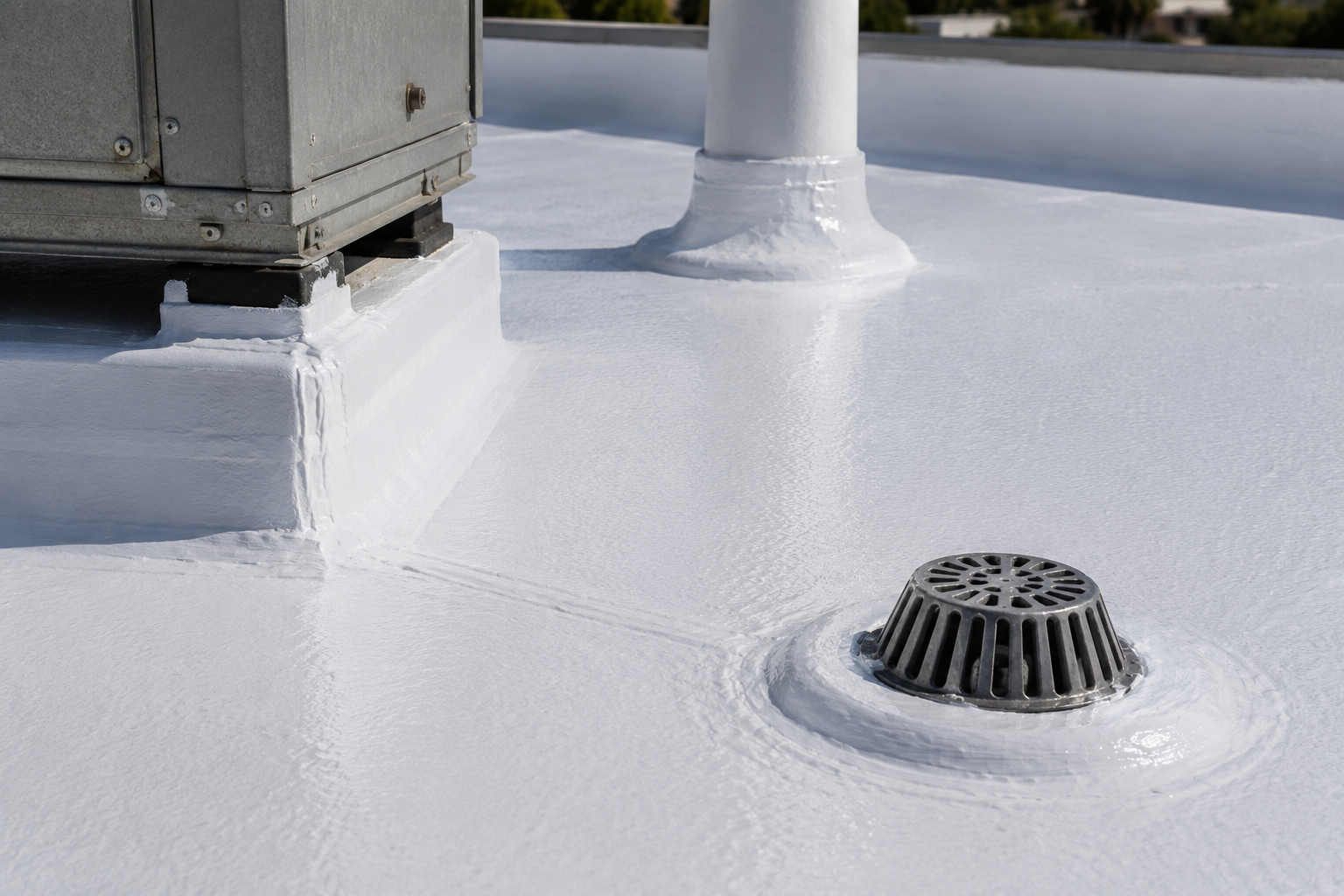
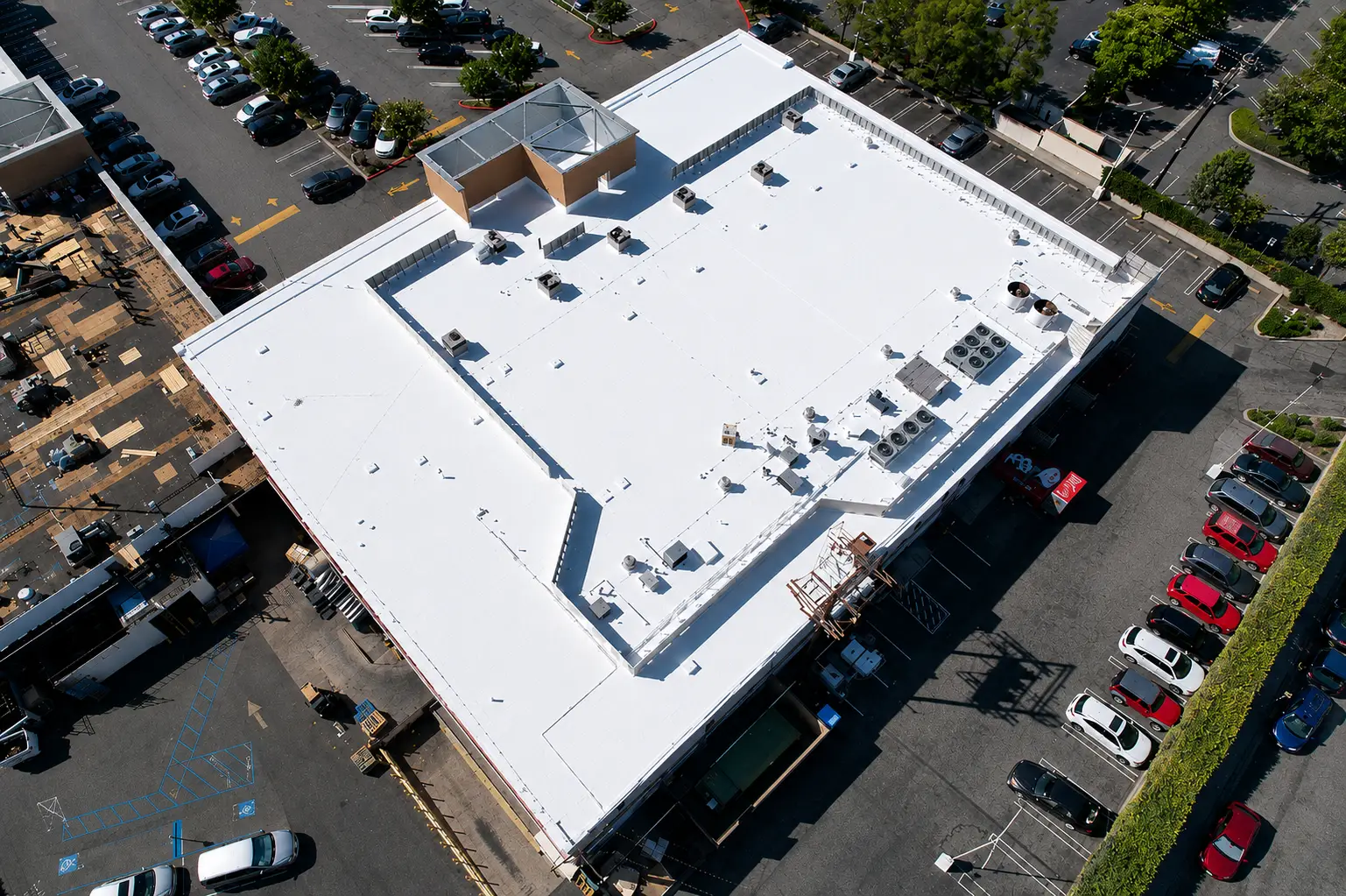
A completed PVC roof should provide continuous membrane coverage, secure welded seams, properly integrated flashing, clear drainage, dependable roof edges, protected penetrations, and planned service access.
Continuous PVC membrane
Secure hot-air welded seams
Reinforced flashing details
Clear drains and scuppers
Protected penetrations
Planned equipment walkways
12
Why DK Commercial Roofing
Commercial PVC Roofing Experience for Los Angeles Properties
Property owners comparing Los Angeles commercial roofing contractors should look for clear system guidance, compatible materials, careful planning, dependable seam welding, proper flashing, effective drainage, and attention to the complete roof assembly.
13
PVC Roofing FAQ
Common PVC Roofing Questions
Recommendations should be based on the property, existing roof, deck, insulation, drainage, rooftop exposure, equipment, building operations, access, and long-term ownership goals.
Ask About Your Commercial RoofWhat is PVC roofing? +
PVC roofing is a reinforced thermoplastic single-ply membrane commonly installed on flat and low-slope commercial roofs.
How are PVC roof seams joined? +
Compatible PVC membrane sheets are commonly joined using controlled hot-air welding equipment.
Is PVC roofing good for Los Angeles commercial buildings? +
PVC may suit many Los Angeles properties, including buildings with low-slope roofs, reflective-roof goals, commercial kitchens, grease exposure, or industrial operations.
What is the difference between PVC and TPO roofing? +
Both are thermoplastic single-ply membranes with hot-air welded seams. They use different material formulations and can have different performance characteristics.
Is PVC roofing resistant to grease and chemicals? +
PVC is often considered for properties with grease, oils, kitchen exhaust, or certain chemical exposures. The membrane and exposure conditions should be evaluated before installation.
Can PVC roofing be repaired? +
Punctures, seams, flashing, drains, penetrations, and localized damage may often be repaired with compatible PVC materials and hot-air welding.
Can PVC roofing be installed over an existing roof? +
A recover system may be possible when existing moisture, roof layers, deck condition, insulation, attachment, drainage, and compatibility permit it.
Is white PVC roofing energy efficient? +
White and light-colored PVC membranes can reflect solar heat. Overall performance also depends on insulation, air sealing, ventilation, climate, and building operations.
How long does a commercial PVC roof last? +
Performance depends on the membrane, reinforcement, installation, seam welding, flashing, drainage, exposure, traffic, inspection, repairs, and maintenance.
How much does PVC roofing cost in Los Angeles? +
Cost depends on roof size, tear-off, deck condition, insulation, membrane thickness, attachment, flashing, drainage, equipment, access, and project complexity.
PVC Roofing Los Angeles
Is PVC the Right Roofing System for Your Commercial Property?
Tell us about the property, current roof, roof size, deck, insulation, drainage, rooftop equipment, grease or chemical exposure, leaks, repair history, and replacement plans.