Roof Leaks
Water entry may result from failed seams, flashing, punctures, penetrations, drains, edge conditions, or previous repair areas.
DK Commercial Roofing provides professional commercial roof repair services for property owners, facility managers, and businesses throughout Los Angeles County. We inspect roof leaks, damaged membranes, flashing, drains, penetrations, seams, and other vulnerable areas before recommending a practical repair strategy.
Commercial roof repair focuses on correcting specific damaged or vulnerable areas while protecting the surrounding roofing system. Depending on the condition, repair work may involve seams, membrane punctures, flashing, penetrations, drains, curbs, transitions, perimeter details, or previously repaired sections.
A dependable commercial roofing contractor in Los Angeles should evaluate the existing roofing material before choosing a repair method. Products and techniques must be compatible with the roof system and appropriate for the visible condition.
DK Commercial Roofing helps businesses determine whether a focused repair is reasonable or whether broader restoration or commercial roof replacement should be evaluated.
DISCUSS YOUR COMMERCIAL ROOF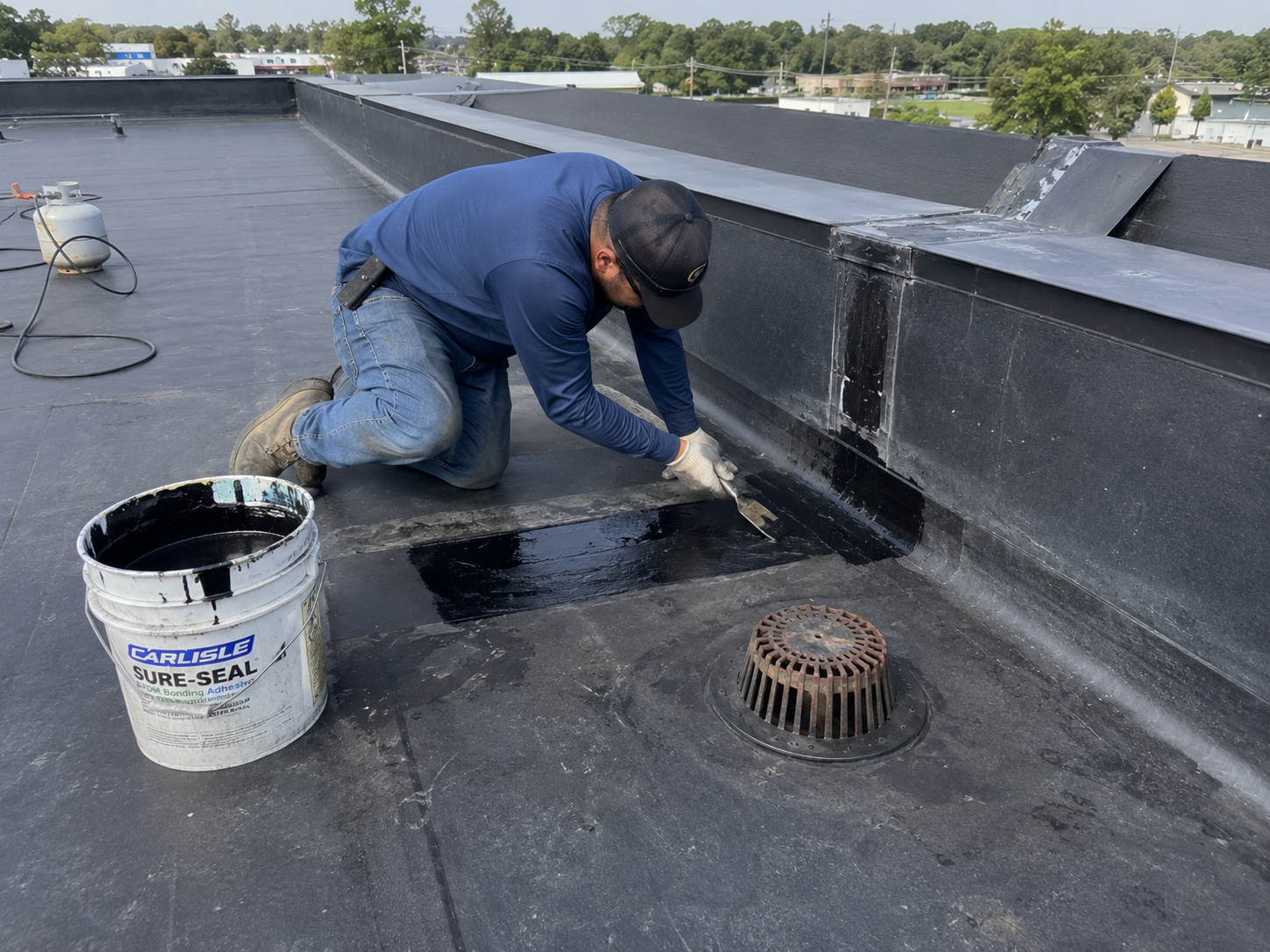
Commercial roofs experience constant exposure to heat, UV rays, wind, rain, equipment work, foot traffic, debris, and normal aging. Repair needs often begin at roof details rather than in the open field.
Water entry may result from failed seams, flashing, punctures, penetrations, drains, edge conditions, or previous repair areas.
Commercial membranes may develop punctures, splits, tears, shrinkage, open laps, surface deterioration, or traffic damage.
Deteriorated flashing around walls, curbs, penetrations, edges, and equipment can create vulnerable points for water entry.
Clogged drains, blocked scuppers, debris, poor slope, and standing water can place additional stress on a commercial roof.
HVAC, solar, electrical, plumbing, and construction work can disturb roofing details or create punctures and traffic damage.
Repeated leaks in the same location may indicate a larger condition that requires more than another temporary patch.
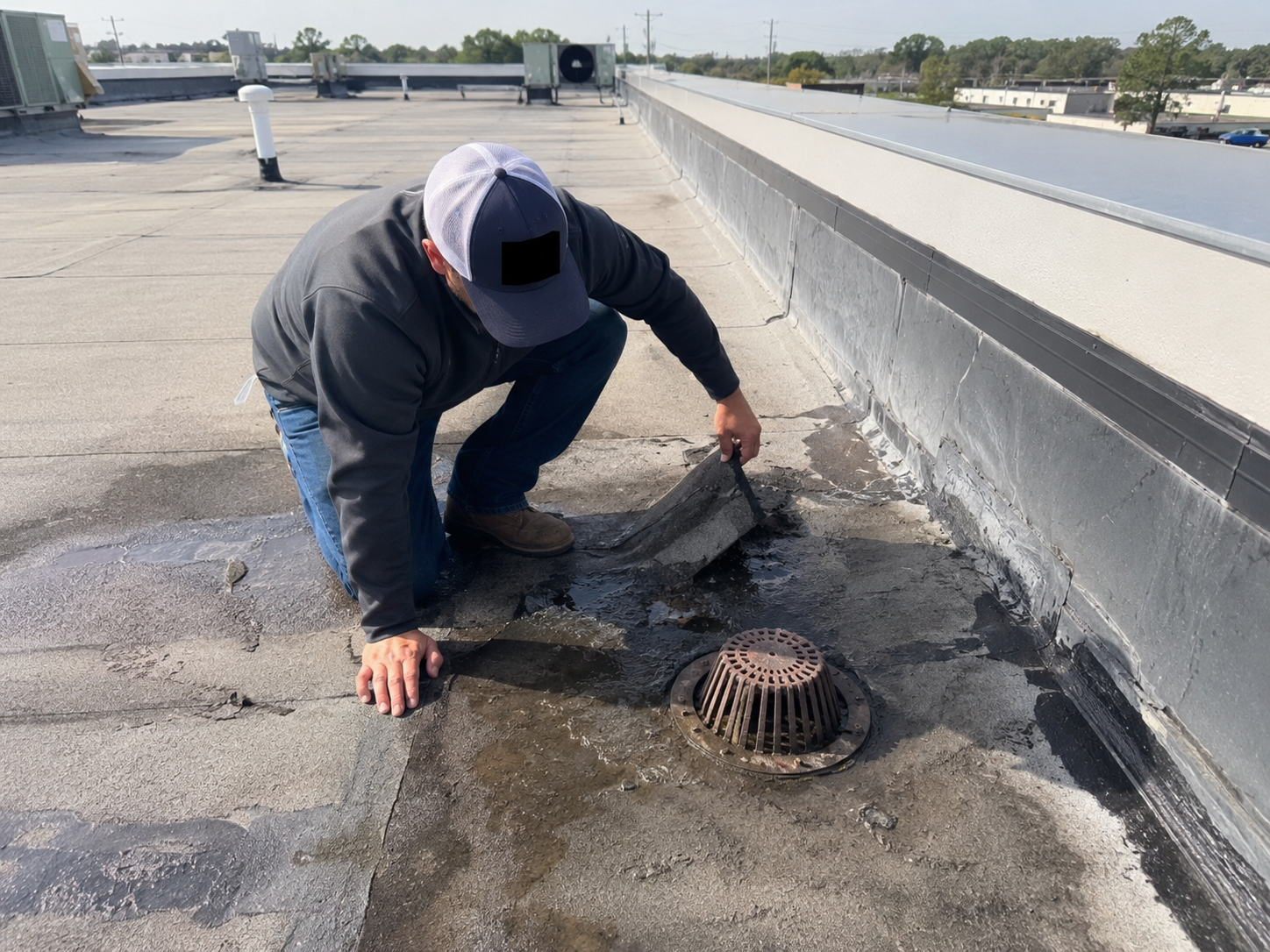
The location of an interior stain does not always identify the exact source of a commercial roof leak. Water may travel across insulation, decking, structural components, or concealed spaces before becoming visible inside the building.
A commercial roof inspection helps evaluate likely entry points and visible roof conditions before a repair strategy is recommended.
Repair recommendations depend on the roofing system, condition, moisture, age, accessibility, previous work, and extent of damage.
Investigation and repair of visible roof conditions associated with water entry into commercial buildings.
Repair of isolated punctures, cuts, tears, openings, and traffic damage in compatible commercial roof membranes.
Correction of open, loose, deteriorated, or damaged seams and laps according to the existing roofing material.
Repair or reinforcement around walls, equipment curbs, edges, penetrations, transitions, and other vulnerable details.
Maintenance or repair around drainage components where deterioration or improper detailing may contribute to water entry.
Urgent assessment and temporary or permanent repair recommendations when active leakage threatens building operations.
Review of wind, rain, debris, impact, displaced components, and other visible conditions following severe weather.
Evaluation of recurring or failed repair areas that may require improved preparation, detailing, or a broader solution.
A localized opening, split, failed seam, damaged flashing detail, or puncture may initially affect a small area. Continued exposure can allow moisture to reach insulation, decking, ceilings, equipment, inventory, and occupied areas.
Timely commercial roof repair can help isolate the problem, restore the affected detail, and reduce the likelihood of continued water entry.
The affected area should be cleaned, evaluated, prepared, and repaired using materials compatible with the existing roof system.

Each roofing system requires compatible materials and repair methods. The same patching approach should not be used indiscriminately across every commercial roof.
TPO repair may address punctures, open seams, failed flashing, membrane damage, penetrations, drains, and rooftop traffic areas.
PVC roof repair may involve compatible membrane patches, heat-welded details, flashing, seams, penetrations, and damaged areas.
EPDM repair may address punctures, patches, seams, shrinkage, flashing, penetrations, edge conditions, and drainage concerns.
Repair may involve laps, flashing, cracks, blisters, punctures, granulated surfaces, penetrations, and damaged asphalt areas.
Built-up roofing repairs may address cracks, blisters, flashing, surfacing, gravel displacement, exposed materials, and leak areas.
Coated roofing systems may require cleaning, preparation, reinforcement, patching, recoating, and correction around details.
Not every commercial roofing problem requires full replacement. However, repeated temporary repairs may not be appropriate when the system has widespread deterioration, trapped moisture, failing insulation, structural concerns, or extensive membrane failure.
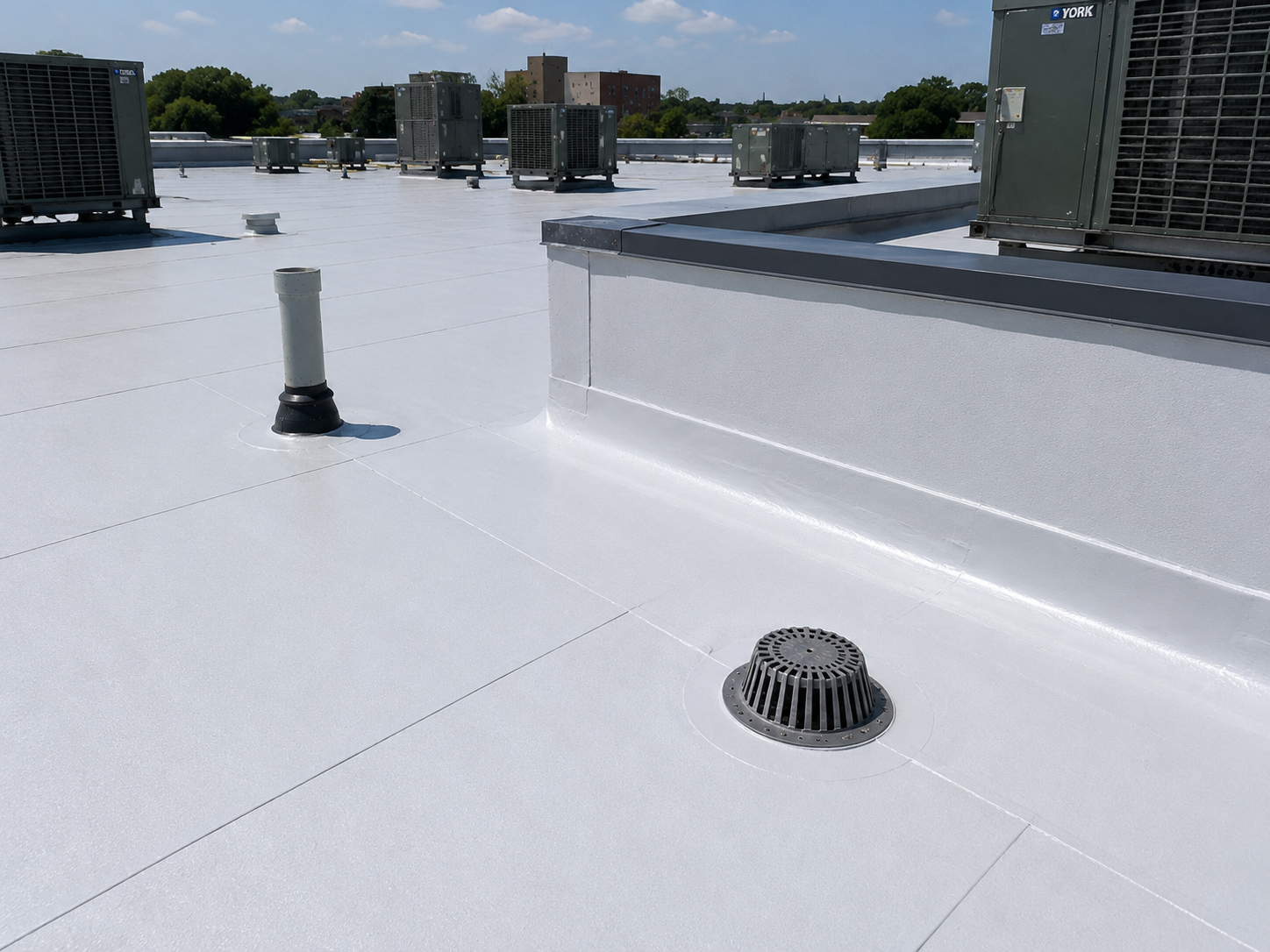
Effective repair work should do more than cover the visible opening. The damaged area, surrounding material, adhesion, moisture exposure, detailing, movement, and potential source of failure should be considered.
Our goal is to provide commercial property owners with clear information about the visible roof condition and a practical recommendation based on the building’s needs.
We begin with the property, roofing system, leak location, repair history, timing, and known building concerns.
The visible roof surface, seams, flashing, drains, penetrations, equipment areas, and prior repairs are reviewed.
Repair priorities and limitations are considered according to the visible roof condition and existing materials.
The repair area is cleaned, prepared, and evaluated before compatible repair materials are installed.
Approved work is completed with attention to seams, edges, flashing, adhesion, reinforcement, and surrounding materials.
Remaining concerns, maintenance needs, and future repair or replacement considerations are communicated clearly.
The appropriate repair scope depends on the roofing system, damage, moisture, previous work, roof age, drainage, and long-term plans for the property.
Inspection of membranes, drains, seams, penetrations, flashing, rooftop equipment, and previous repairs to identify visible conditions associated with water entry.
Targeted repair work for punctures, splits, open seams, penetrations, curbs, edge details, and damaged flashing on compatible roofing systems.
Review of previous patches or recurring leak areas where a more complete repair approach may be needed to address the visible failure point.
A finished repair should integrate with the surrounding roof material, protect vulnerable details, and leave the roof area clean and properly documented.
Have an active roof leak, damaged membrane, failed seam, flashing concern, or recurring repair area?
DISCUSS YOUR ROOF REPAIR PROJECTDK Commercial Roofing supports flat and low-slope commercial roofs across a range of building types throughout Los Angeles County.
Property owners comparing commercial roofing companies in Los Angeles need clear communication, practical recommendations, and workmanship that respects building operations.
Every commercial roof is different. An inspection is necessary before a specific repair scope, timeline, or recommendation can be confirmed.
A commercial roofer reviews visible roof surfaces, seams, flashing, drains, penetrations, equipment areas, prior repairs, and interior leak information. The interior stain may not be directly beneath the exterior entry point because water can travel through the assembly.
Many localized conditions can be repaired, but extensive deterioration, wet insulation, structural damage, widespread membrane failure, or repeated repair problems may require a broader restoration or commercial roof replacement evaluation.
Timing depends on roof access, weather, roofing material, extent of damage, moisture, repair preparation, building operations, and the approved scope.
No. Temporary work may help reduce immediate water entry, but the affected area may still require additional preparation, compatible materials, reinforcement, or broader corrective work.
Yes. Rooftop equipment, solar, electrical, plumbing, and construction activity can create punctures, disturb flashing, block drainage, or damage traffic areas.
Replacement may be appropriate when the roof has widespread deterioration, extensive moisture, repeated leaks, failing insulation, structural concerns, or insufficient remaining service life for continued repairs to be practical.
Tell us about your commercial building, roof leak, roofing system, visible damage, previous repairs, and timing. We’ll help identify an appropriate next step.