Fewer Exposed Leak Points
A continuous fluid-applied surface reduces reliance on exposed seams and laps where commercial roof leaks frequently begin.
Seamless commercial roofing systems create a continuous protective surface across flat and low-slope roofs. Instead of relying on large numbers of exposed seams, laps, and mechanical fasteners, these systems are applied across the existing roof to reinforce vulnerable areas and improve overall waterproofing.
DK Commercial Roofing (Los Angeles) helps property owners evaluate whether a seamless commercial roofing system is appropriate for their existing commercial roof. The condition of the membrane, insulation, drainage, flashing, penetrations, rooftop equipment, and previous repairs should all be reviewed before restoration begins. When the roof condition is uncertain, start with a commercial roof inspection before deciding between restoration, repair, or replacement.
As a commercial roofing contractor in Los Angeles property owners can contact for roof evaluation and restoration guidance, we focus on practical recommendations based on the building, roofing system, and long-term property goals. If localized defects are driving the problem, commercial roof repair may be enough. If the existing system is broadly deteriorated, commercial roof replacement may be the better long-term option.
DISCUSS YOUR COMMERCIAL ROOF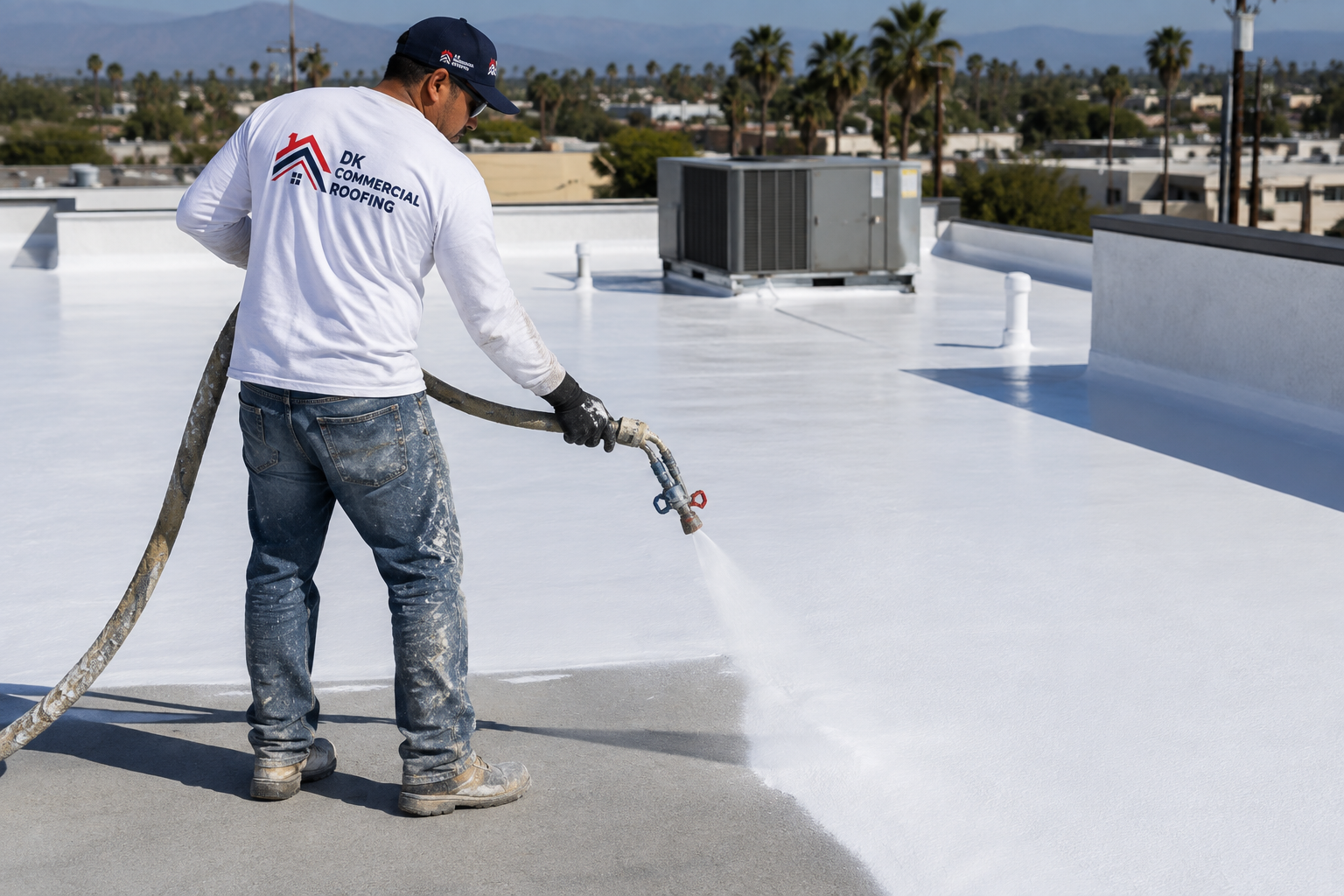
Seamless roof restoration can address vulnerable details while creating a clean, reflective, and continuous protective surface over an eligible commercial roofing system.
A continuous fluid-applied surface reduces reliance on exposed seams and laps where commercial roof leaks frequently begin.
White and reflective roof finishes can help reduce surface heat absorption on commercial buildings throughout Los Angeles.
Properly selected coating systems can accommodate normal thermal expansion and contraction across commercial roof assemblies.
Restoration may extend the useful service life of an eligible roof and delay the need for complete replacement.
Restoration may involve less tear-off, debris, noise, and disruption than some full commercial roof replacement projects.
Drains, penetrations, flashing, seams, curbs, and transitions can be reinforced before the final seamless membrane is installed.
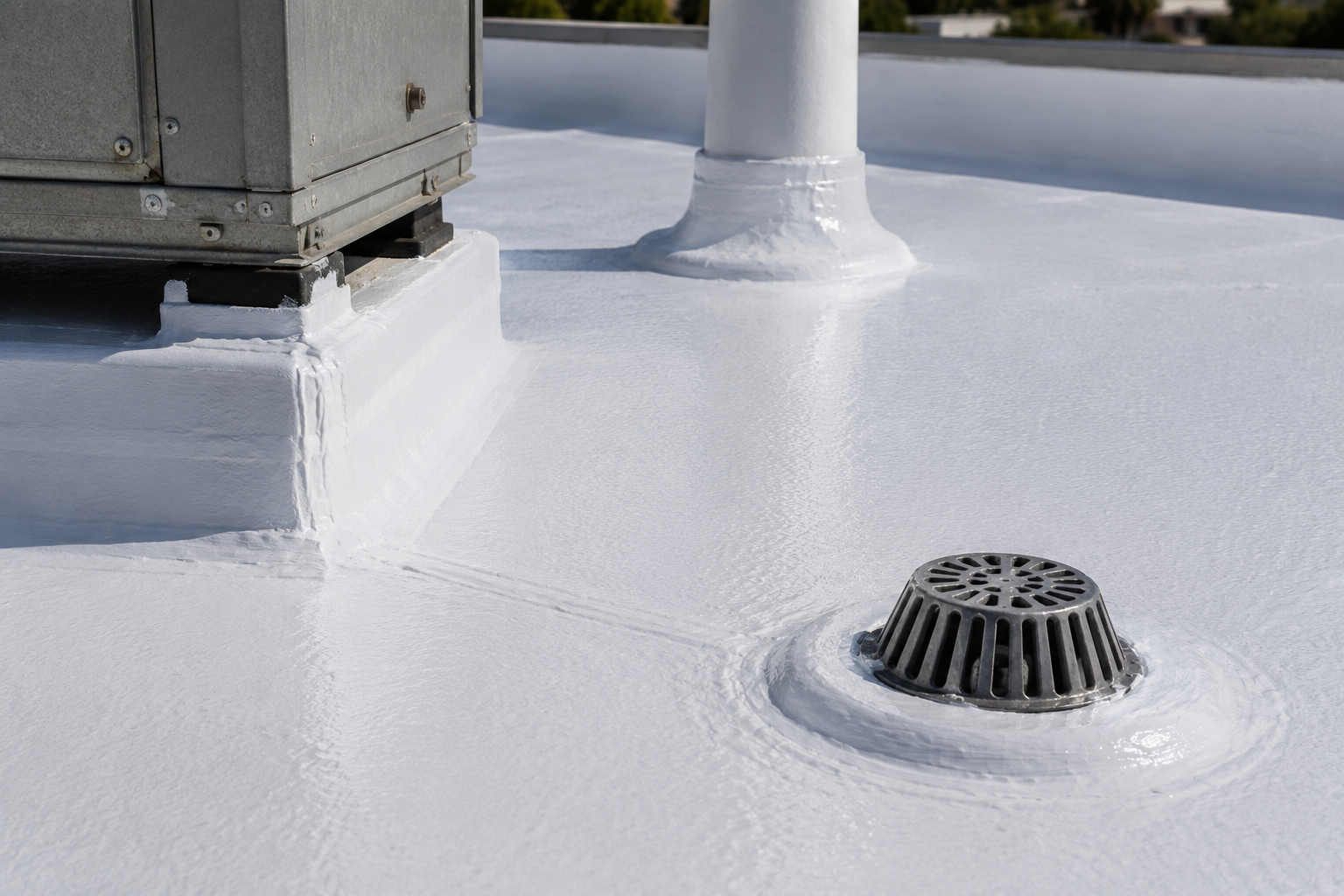
The finished roof is only as reliable as the preparation underneath it. Before applying a seamless system, the existing roof should be cleaned and evaluated for damage, trapped moisture, loose materials, adhesion concerns, drainage problems, failed flashing, and recurring leak areas.
Repairs and reinforcement are completed before the main roof coating or fluid-applied membrane is installed. Multiple layers may be used depending on the product, substrate, system requirements, and desired finished thickness.
Flat and low-slope roofs rarely fail in only one uniform way. Problems frequently develop around transitions, penetrations, equipment, drainage components, seams, laps, edges, and older repairs.
Aging membranes may develop separation or deterioration where individual roofing materials overlap or connect.
Walls, curbs, penetrations, edges, and equipment details can become vulnerable as flashing materials age or separate.
Drains, scuppers, gutters, low areas, and ponding-water locations require careful preparation and reinforcement.
UV exposure, weathering, foot traffic, debris, and heat can gradually weaken exposed commercial roof surfaces.
Old patches and incompatible materials may require removal, preparation, or correction before restoration.
HVAC units, solar equipment, pipes, electrical components, and maintenance traffic create complex roof conditions.
Tools, equipment, contractors, debris, and repeated foot traffic can damage commercial roofing membranes.
Roof edges and perimeter transitions experience wind exposure, movement, and weather-related stress.
Not every roof is suitable for restoration. A commercial roof inspection helps determine whether the existing system can reasonably remain in place or whether commercial roof replacement in Los Angeles is the better long-term option. For roofs that are still serviceable, preventative commercial roof maintenance can also help protect vulnerable areas and support longer-term performance.
| Evaluation Area | Seamless Roof Restoration | Commercial Roof Replacement |
|---|---|---|
| Existing Roof | Eligible roof remains largely in place | Existing roofing may be removed or covered |
| Project Disruption | Often less tear-off and debris | May involve more labor and building disruption |
| Moisture Condition | Best suited to roofs without widespread trapped moisture | May be necessary when insulation or decking is extensively damaged |
| Leak Areas | Repairs and reinforces localized vulnerable details | Addresses broader system failure or widespread deterioration |
| Finished Surface | Continuous reflective membrane or coating | Completely new commercial roofing system |
| Best Application | Structurally sound roofs that remain restorable | Roofs that have reached the end of practical service life |
The appropriate material depends on the existing roofing substrate, drainage, surface condition, building use, climate exposure, and manufacturer requirements.
Silicone coatings are often considered for commercial roofs exposed to UV rays, heat, rain, and areas where water may remain temporarily after storms.
Acrylic systems may provide a reflective and flexible restoration option for properly prepared commercial roofing surfaces.
Elastomeric roof coatings are designed to remain flexible as the roof experiences normal expansion, contraction, and temperature changes.
Spray foam roofing can create a seamless insulated surface while helping address irregular roof transitions and selected drainage conditions.
The roof surface, moisture concerns, flashing, penetrations, drainage, seams, repairs, and structural conditions are reviewed.
The existing substrate and proposed restoration products are evaluated for compatibility and adhesion requirements.
Dirt, debris, loose materials, oils, contamination, and unsuitable surface conditions are addressed before installation.
Punctures, damaged membrane areas, flashing, seams, drains, and penetrations are repaired and reinforced.
Primer, base coats, reinforcement, and finish coats are installed according to the approved system requirements.
The completed surface, roof details, drainage components, coverage, thickness, and finished appearance are reviewed.
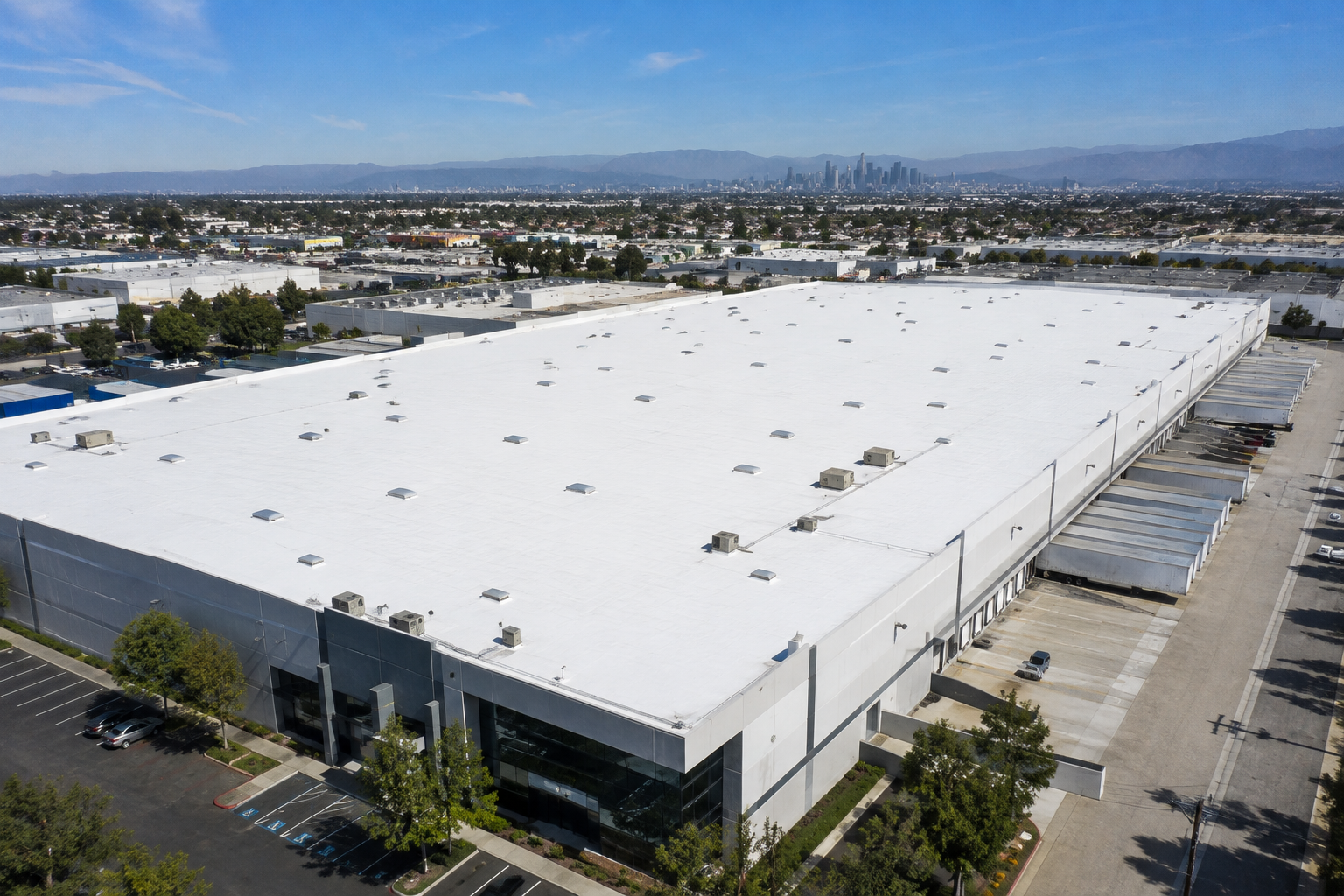
A properly completed seamless roof should create a consistent protective surface while integrating around drains, curbs, seams, flashing, penetrations, edges, and rooftop equipment.
The finished roof may improve reflectivity, reduce exposed leak points, and provide an additional layer of protection for the underlying commercial roofing system. Property owners interested in a reflective surface can also review our commercial cool roofing options, while roofs with recurring localized damage may first benefit from commercial roof repair.
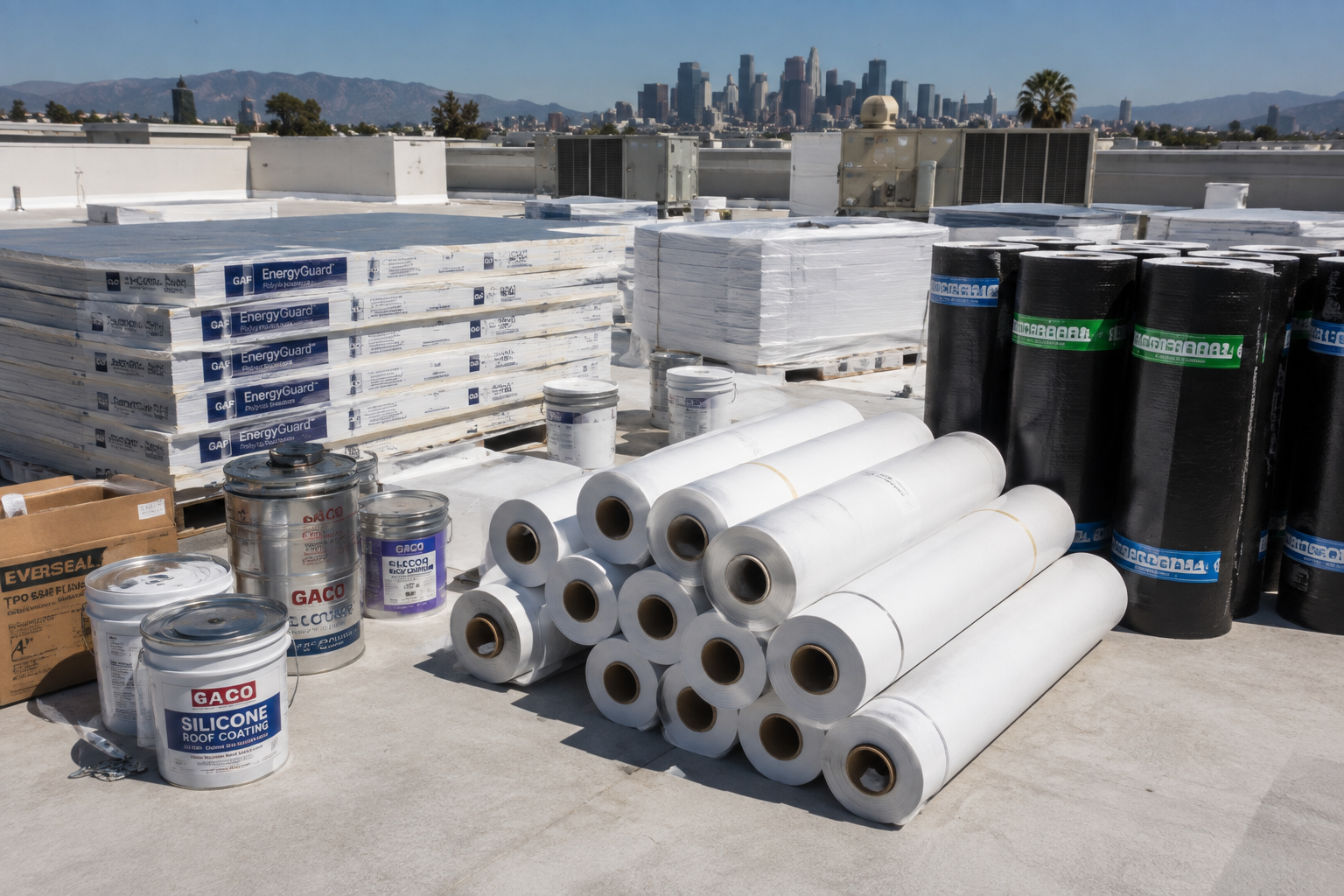
Seamless roofing products should not be applied indiscriminately. Primer selection, surface preparation, repair materials, reinforcing fabric, coating type, coverage rate, and finished thickness must work together as part of a complete system.
A Los Angeles commercial roofing contractor should also consider the existing membrane type, previous coatings, moisture condition, drainage, rooftop traffic, equipment, and manufacturer requirements before recommending restoration. Existing TPO, PVC, EPDM, and modified bitumen roofs may require different preparation and compatibility considerations.
DK Commercial Roofing (Los Angeles) supports a range of commercial, industrial, institutional, and multi-property roofing needs throughout Los Angeles County.
Property owners comparing commercial roofing companies in Los Angeles need clear communication, compatible roofing materials, practical recommendations, and a process that respects building operations. Explore our commercial roofing projects to see completed work, or review our company approach and experience before requesting an evaluation.
Seamless restoration is one option within a broader commercial roofing strategy. Depending on roof condition, a property may benefit from targeted repair, routine maintenance, reflective roofing, a coating system, or complete replacement.
A roof inspection is required before confirming whether a commercial roof is suitable for seamless restoration.
A seamless roofing system is a fluid-applied membrane or coating installed across an existing roof to create a continuous protective surface with fewer exposed seams and laps.
No. The existing roof must be inspected for compatibility, trapped moisture, adhesion, structural condition, damaged insulation, drainage, surface contamination, and widespread deterioration. A commercial roof inspection can help determine whether restoration is appropriate.
No. Seamless restoration generally works with an eligible existing roof, while commercial roof replacement involves installing a new roofing system and may require removal or covering of the old system.
Project timing depends on roof size, weather, access, surface condition, repairs, drying time, product requirements, and building operations.
Seamless roofing can reinforce vulnerable roof details and reduce exposed leak points, but active damage, wet insulation, failed flashing, and other underlying problems must be addressed first.
Replacement may be appropriate when the roof has widespread moisture, extensive deterioration, failing insulation, structural concerns, repeated leaks, or insufficient remaining service life. In those cases, review our commercial roof replacement services for the next step.