Recurring Roof Leaks
Moisture entering through multiple areas may indicate broader membrane, flashing, drainage, insulation, or deck problems.
Commercial roof replacement Los Angeles property owners can rely on begins with a careful evaluation of the existing roofing system, building operations, drainage, insulation, rooftop equipment, and long-term performance goals.
DK Commercial Roofing (Los Angeles) provides commercial roof replacement planning and installation support for warehouses, office buildings, retail centers, industrial facilities, apartment properties, schools, churches, and commercial buildings throughout Los Angeles County.
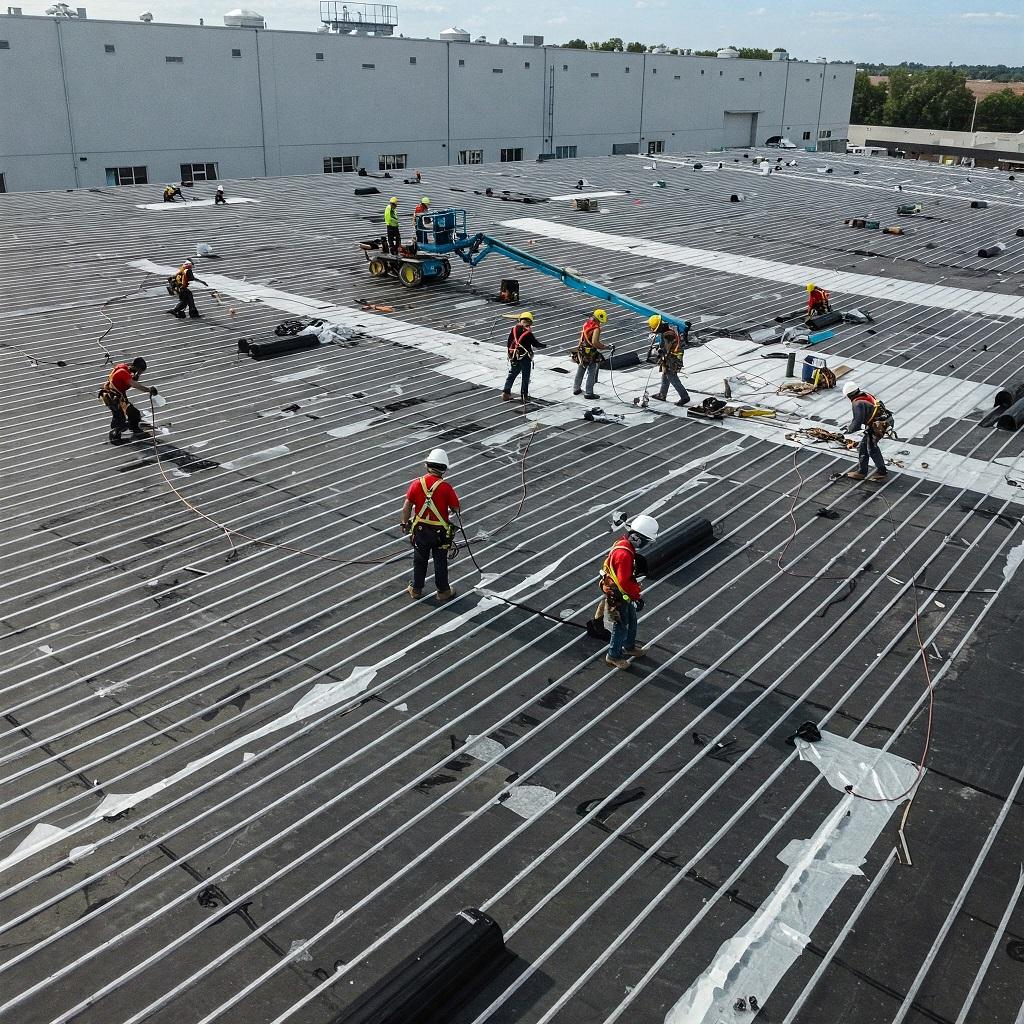
A commercial roof is not simply a visible membrane. It is a complete roofing assembly that may include the structural deck, vapor retarder, insulation, cover board, membrane, flashing, drainage components, penetrations, rooftop equipment, curbs, expansion joints, roof edges, and perimeter details.
Los Angeles commercial roof replacement projects should be planned around the existing building and the way the property is used. Access, tenant activity, loading areas, business hours, equipment locations, drainage, weather exposure, and future maintenance needs may all affect the installation plan.
The goal is not simply to cover an aging roof. The goal is to create a dependable commercial roofing system that protects the property, improves maintainability, and supports the long-term use of the building.
DISCUSS YOUR COMMERCIAL ROOFNot every roof leak requires replacement. A new roofing system is generally considered when deterioration is widespread, the roof has limited remaining service life, or recurring repairs are no longer delivering dependable results.
Moisture entering through multiple areas may indicate broader membrane, flashing, drainage, insulation, or deck problems.
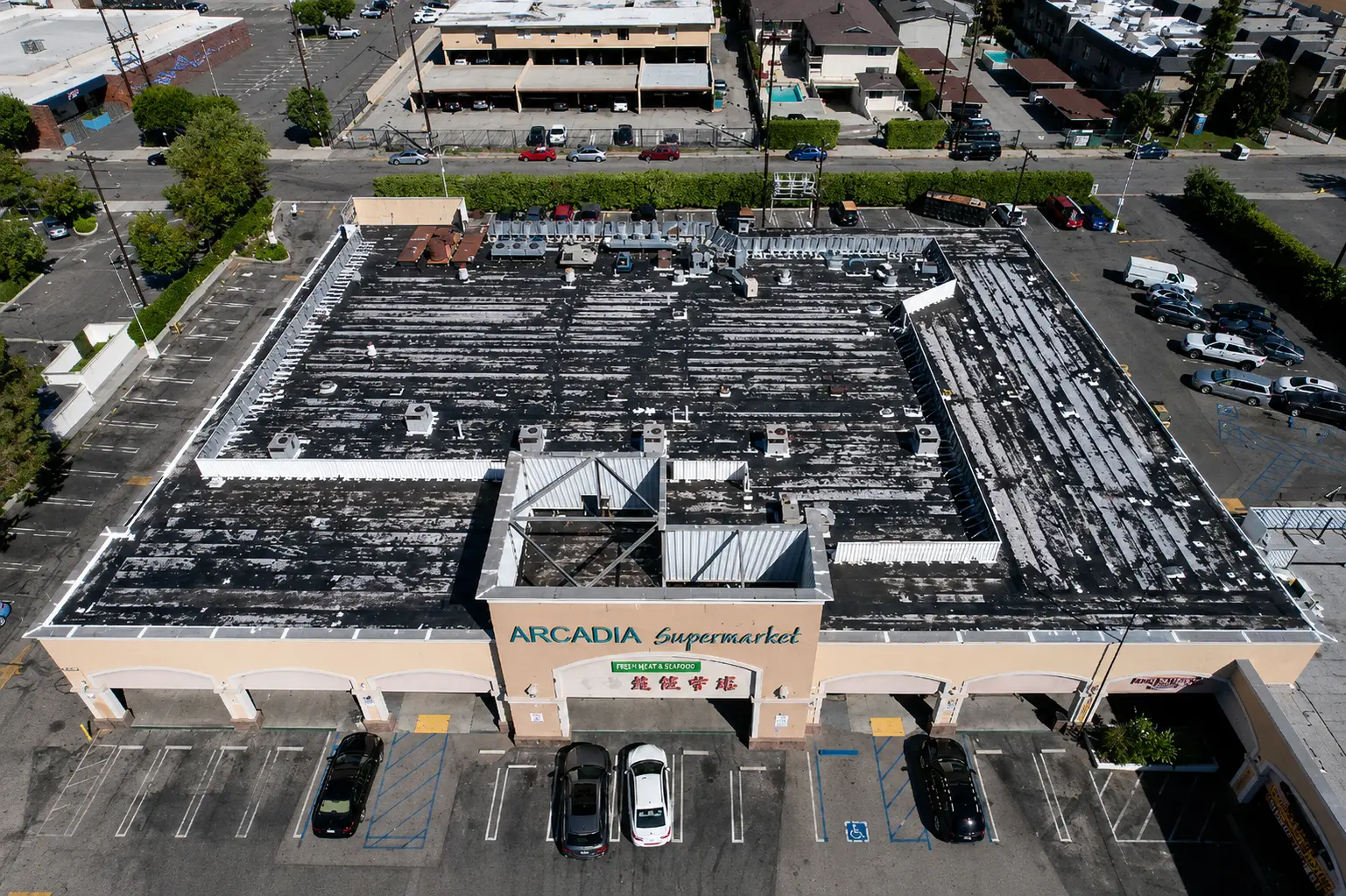
Cracks, splits, punctures, blisters, open seams, and failed repairs across large areas can signal overall system decline.
Saturated insulation can reduce thermal performance and contribute to membrane deterioration, deck damage, and interior moisture.
An aging roof approaching the end of its practical service life may no longer be a strong candidate for continued patching.
Persistent standing water may accelerate deterioration and can indicate drainage, slope, deck, or insulation concerns.
Deteriorated details around walls, penetrations, drains, curbs, and roof edges may create recurring leak pathways.
Frequent service calls and emergency repairs can eventually become less practical than a coordinated roof replacement.
Solar equipment, HVAC changes, remodeling, or major property improvements may make replacement more practical beforehand.
A commercial roof inspection helps determine whether the building needs targeted repair, restoration, a recover system, or complete replacement. The recommendation should be based on the actual roof condition rather than the presence of one isolated leak.
The evaluation should consider visible membrane deterioration, flashing, seams, curbs, drains, scuppers, penetrations, rooftop equipment, previous repairs, moisture patterns, insulation concerns, roof slope, and accessible deck conditions.
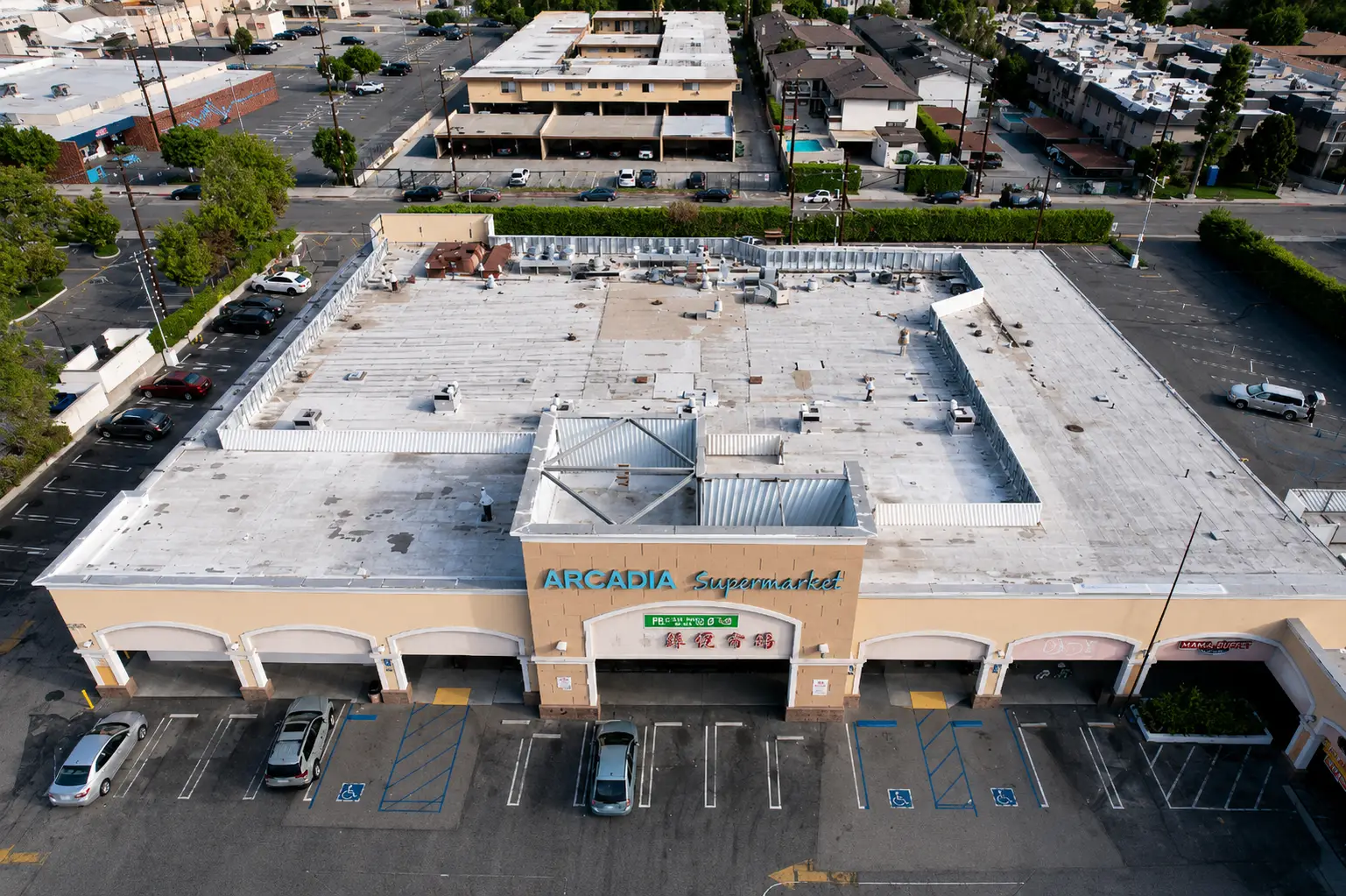
Commercial roof replacement should be recommended because of the building’s condition, repair history, and long-term needs—not simply because one leak has appeared.
Repair may be appropriate when the roof remains generally serviceable and deterioration is limited to specific locations.
Replacement may be the better direction when the roof has extensive deterioration or no longer provides dependable protection.
Schedule a roof inspection to document the visible conditions, review the repair history, and discuss practical options for the building.
A commercial replacement project creates an opportunity to remove failed materials, address damaged insulation or deck areas, improve drainage details, install a compatible roofing system, and rebuild vulnerable flashing around rooftop equipment and penetrations.
Each replacement stage should be coordinated carefully so damaged materials are addressed, the new system is installed correctly, and the completed roof is ready for long-term service.
Existing membrane deterioration, repairs, drainage concerns, flashing failures, and moisture conditions are documented before work begins.
Failed materials are removed or prepared while the new insulation, cover board, membrane, flashing, and roofing details are installed.
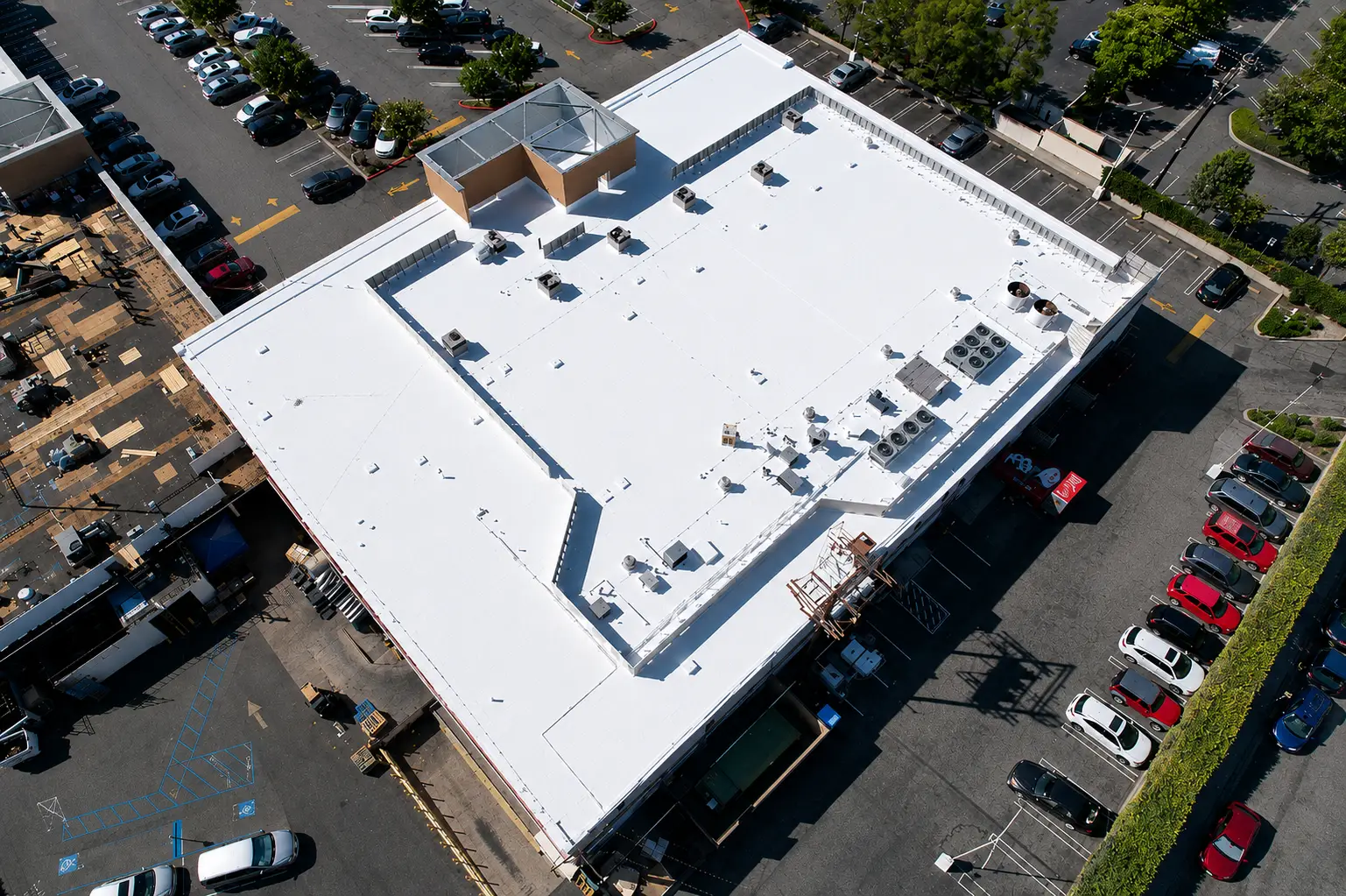
The finished roof should provide clean membrane transitions, dependable flashing, clear drainage, and access for future maintenance.
Roof slope, deck type, drainage, equipment, foot traffic, energy goals, budget, existing materials, and future property plans may all affect system selection.
A reflective single-ply membrane commonly used on flat and low-slope commercial buildings.
A durable single-ply system with heat-welded seams and strong resistance to certain chemicals and contaminants.
A flexible rubber membrane roofing system used on a variety of commercial and institutional properties.
A reinforced asphalt-based roofing system that can provide durable protection for commercial roofs.
A multi-layer commercial roofing assembly traditionally constructed with asphalt, reinforcement, and a protective surface.
Metal systems may provide long-term performance for appropriately designed commercial and industrial buildings.
Commercial roof replacement can address more than visible leaks. The project may improve waterproofing, insulation, drainage, maintenance access, appearance, and long-term planning for the property.
Replacement can eliminate multiple vulnerable areas within an aging or failing commercial roofing system.
New materials, flashing details, insulation, and drainage planning can improve the overall roofing assembly.
A replacement may be coordinated with solar panels, HVAC upgrades, renovations, or other building improvements.
A dependable new system may reduce the need for repeated emergency repairs and temporary patchwork.
Review membrane condition, flashing, drainage, equipment, repairs, moisture concerns, access, and visible deck conditions.
Determine removal requirements, insulation needs, system options, drainage details, access, and project sequencing.
Plan material delivery, access, staging, tenant communication, work zones, loading areas, and daily cleanup.
Existing materials are removed or prepared according to the selected replacement approach and documented conditions.
Insulation, cover board, membrane, flashing, drains, curbs, edges, and penetrations are installed as required.
Review completed seams, flashing, drainage, roof edges, equipment transitions, debris removal, and overall workmanship.
The completed commercial roof should provide secure seams, dependable flashing, controlled drainage, protected roof edges, and clean transitions around penetrations, curbs, rooftop equipment, and walls.
Future maintenance access should also be considered during the replacement process. Drains, HVAC equipment, electrical components, walkways, and commonly serviced roof areas should remain accessible.
DK Commercial Roofing (Los Angeles) supports roof replacement planning for commercial, industrial, institutional, multifamily, and multi-property buildings throughout Los Angeles County.
Property owners comparing commercial roofing contractors Los Angeles buildings may rely on should look for practical system guidance, clear communication, careful planning, and attention to the full roof assembly.
Every building and commercial roofing system should be evaluated before a replacement scope, material recommendation, or project schedule is finalized.
Replacement may be considered when the roof has widespread deterioration, recurring leaks, wet insulation, failed flashing, extensive repair history, or limited remaining service life. A roof inspection is needed to evaluate the actual condition.
Yes. Repair may be appropriate when damage is localized, the surrounding insulation remains dry, and the larger roofing system still has useful service life.
A recover system may be possible in some situations, depending on local requirements, the number of existing roof layers, deck condition, moisture, insulation, drainage, and the compatibility of the proposed system.
The appropriate system depends on roof slope, deck type, drainage, building use, rooftop equipment, exposure, foot traffic, energy goals, budget, and long-term maintenance expectations.
Project duration depends on roof size, access, weather, removal requirements, deck repairs, insulation, system type, rooftop equipment, tenant operations, and the overall project scope.
Many commercial buildings remain operational during roof work, but access, noise, odors, equipment shutdowns, interior protection, deliveries, tenant communication, and work-zone safety should be coordinated in advance.
An aging or failing roof should be evaluated before rooftop solar equipment is installed. Replacing the roof first may avoid the future cost and disruption of removing and reinstalling solar equipment.
Pricing depends on roof size, removal requirements, deck condition, insulation, roofing system, flashing, drainage, access, equipment, repairs, labor, and the complexity of the building.
Tell us about your commercial property, roofing system, roof age, recurring leaks, repair history, drainage concerns, rooftop equipment, and long-term plans for the building.