Water Leaks
Moisture around the curb, ceiling, framing, or interior wall can indicate failed flashing, open seams, or damaged glazing.
Commercial skylight removal, replacement, and installation for warehouses, office buildings, retail centers, schools, and industrial facilities throughout Los Angeles County.
DK Commercial Roofing (Los Angeles) helps property owners improve natural lighting while protecting the surrounding commercial roofing system from leaks, failed flashing, and premature deterioration.
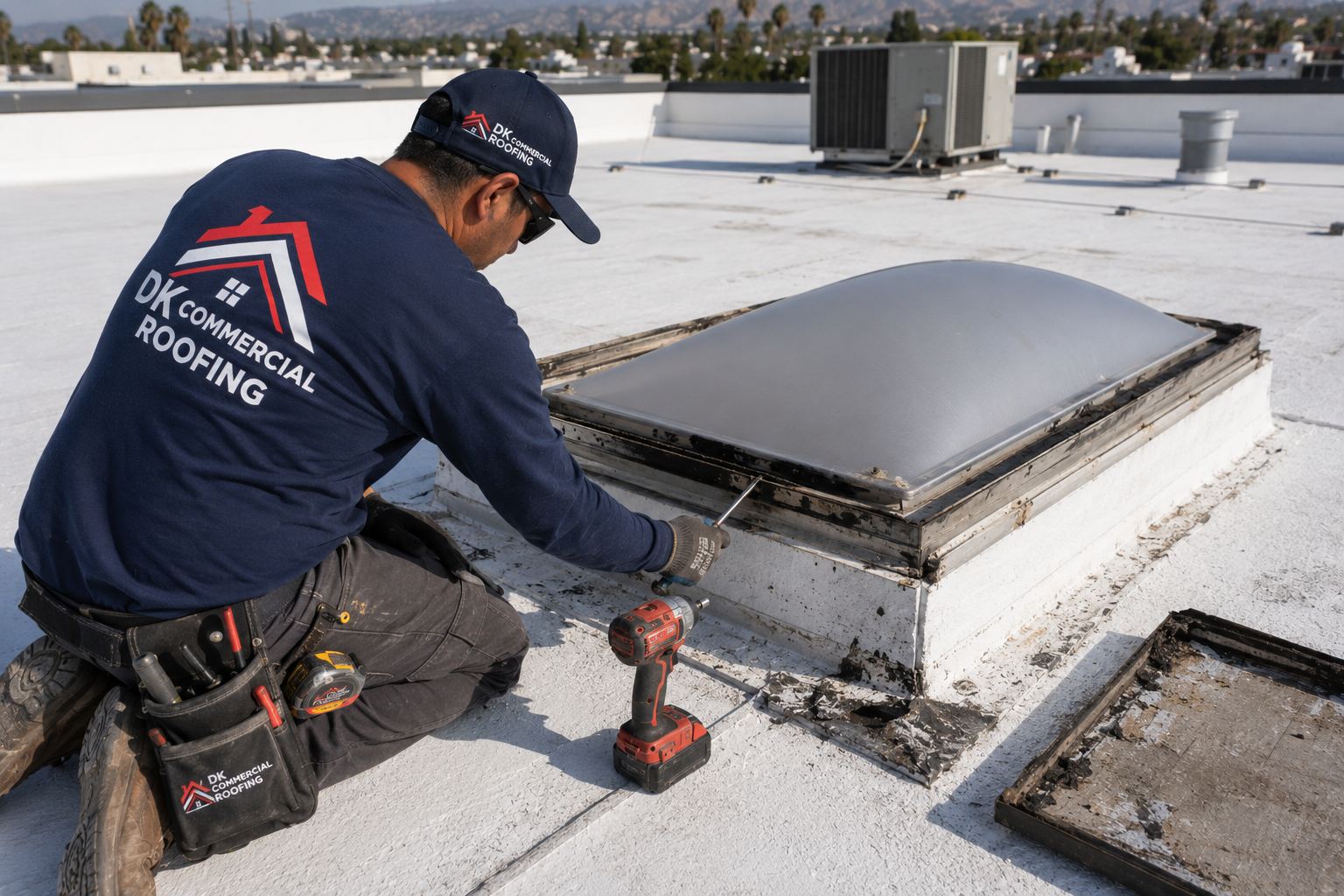
Commercial skylights can improve interior daylight, reduce reliance on artificial lighting, and make warehouses, offices, retail properties, and industrial buildings feel more open. However, aging skylights can also become a source of leaks, damaged insulation, heat gain, cracked glazing, failed seals, and deteriorated flashing.
DK Commercial Roofing (Los Angeles) evaluates the condition of the skylight and surrounding roof before recommending repair, replacement, or permanent removal. The existing roofing membrane, curb, deck, flashing, insulation, drainage, and previous repairs all affect the appropriate solution.
Property owners comparing commercial roofing contractors Los Angeles businesses may contact should choose a contractor that understands both the skylight assembly and the commercial roofing system around it.
DISCUSS YOUR SKYLIGHT PROJECTSkylight leaks are not always caused by the glazing itself. Water may enter through failed flashing, deteriorated sealants, damaged roofing membrane, open curb transitions, or drainage problems around the skylight.
Moisture around the curb, ceiling, framing, or interior wall can indicate failed flashing, open seams, or damaged glazing.
Aging acrylic, polycarbonate, or glass panels may crack, discolor, become brittle, or lose clarity over time.
Gaskets, sealants, joints, and glazing seals can deteriorate under repeated exposure to heat, UV radiation, and movement.
Rust, rot, impact damage, poor construction, or movement can weaken the curb supporting the skylight assembly.
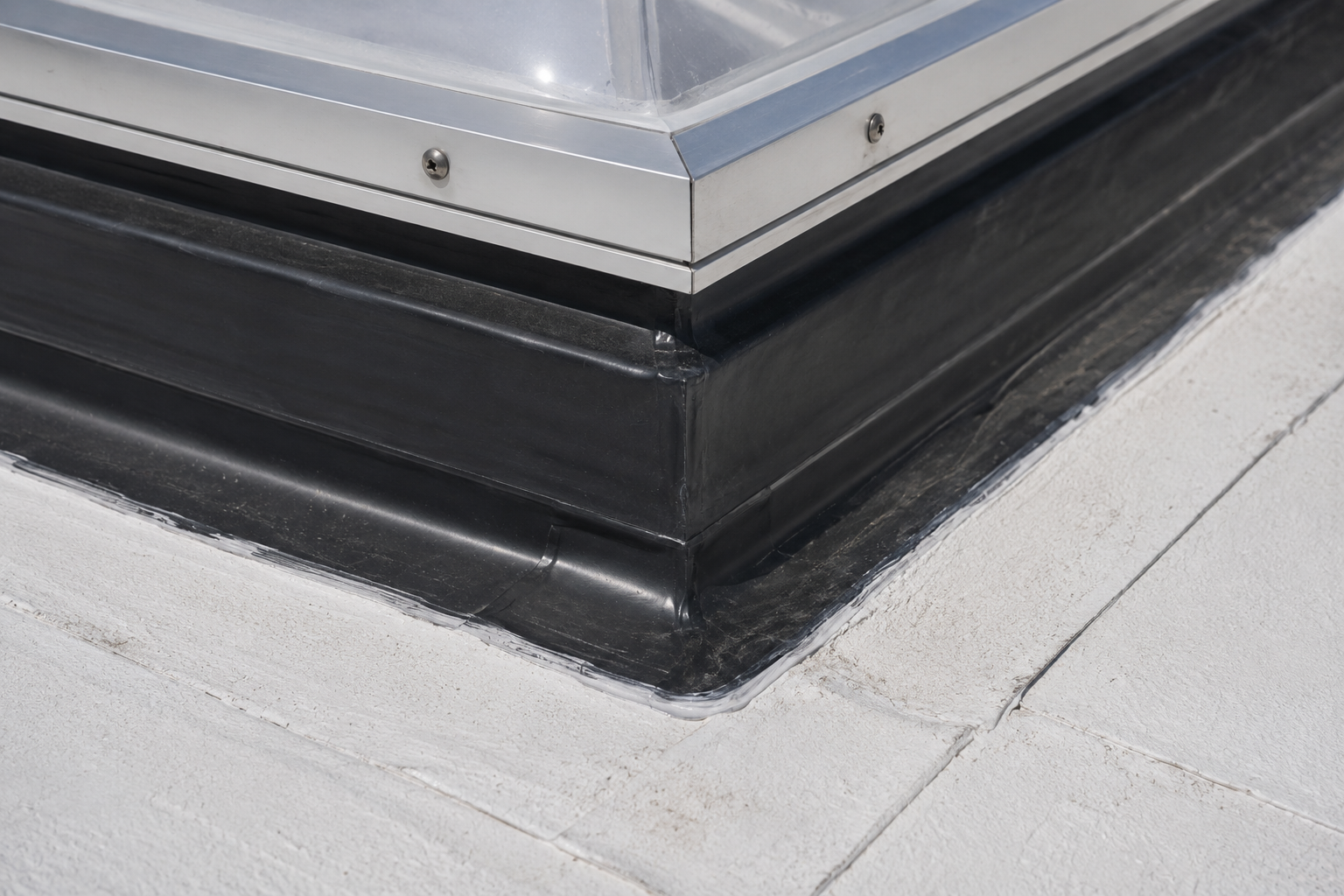
Membrane and flashing must transition securely from the roof surface to the vertical skylight curb.
Older skylights may allow unwanted heat into the building and increase cooling demands during warm Los Angeles weather.
Condensation may develop when warm interior air meets a cold skylight surface or when ventilation and insulation are inadequate.
A history of recurring patchwork may signal that replacement or permanent removal is more practical than another temporary repair.
The area where a skylight meets the roof is one of the most important waterproofing details on the building. The roofing membrane must transition vertically at the curb and remain sealed around corners, seams, fasteners, equipment, and nearby drainage paths.
The correct detail varies depending on whether the building has TPO, PVC, EPDM, modified bitumen, built-up roofing, metal roofing, spray foam, or a commercial roof coating system.
A commercial roof inspection helps determine whether the existing skylight can be repaired, should be replaced, or should be removed and the opening permanently closed.
Repair may be appropriate when the skylight remains serviceable and the problem is limited to flashing, sealant, minor damage, or a specific membrane transition.
Replacement may be recommended when the glazing is cracked, brittle, discolored, inefficient, leaking, or no longer compatible with the roofing project.
New installations may improve daylighting in warehouses, retail properties, schools, offices, and other large commercial interiors.
An unused skylight can be removed and the roof opening rebuilt, insulated, decked, and waterproofed as part of a roof repair or replacement project.
Skylight decisions are often made during reroofing, remodeling, leak repair, energy-efficiency improvements, or commercial roof replacement Los Angeles property owners are planning.
Replacement is generally the better direction when the building still benefits from natural light and the surrounding roof can support a new, properly flashed skylight assembly.
Preserves natural lighting Maintains or improves daylight inside the building.
Upgrades aging materials Replaces cracked glazing, failed seals, and inefficient panels.
Integrates with the roof New flashing can be coordinated with roof repair or replacement.
Supports continued building use Ideal for warehouses, offices, schools, and retail interiors.
Buildings that still benefit from commercial daylighting and need a more dependable modern skylight assembly.
Permanent removal may be the stronger long-term decision when a skylight is abandoned, repeatedly leaking, poorly positioned, or no longer useful to the interior of the building.
Eliminates the opening Removes an unwanted or unnecessary rooftop penetration.
Reduces future maintenance Removes the skylight assembly, curb, seals, and related details.
Rebuilds the roof area The opening is supported, insulated, decked, and waterproofed.
Works with roof replacement Closure can be coordinated with a larger commercial roofing project.
Unused, repeatedly leaking, damaged, abandoned, or unwanted commercial skylights.
A commercial roof and skylight inspection can identify the glazing, curb, flashing, deck, insulation, drainage, and roof conditions affecting the decision.

Modern commercial skylights are available in a range of shapes, sizes, glazing materials, curb configurations, and energy-conscious designs. The appropriate product depends on the building, roof, desired light level, interior conditions, and project goals.
Increase daylight across large interior commercial spaces.
Daylighting may reduce reliance on artificial lighting during daylight hours.
Modern glazing may provide improved clarity, durability, and thermal performance.
Natural light can create brighter, more comfortable commercial interiors.
Review glazing, flashing, curb condition, drainage, membrane, insulation, leaks, and previous repairs.
Determine whether the project requires repair, replacement, new installation, or permanent removal.
Match the skylight, curb, flashing, insulation, and waterproofing details to the existing roofing system.
Remove damaged materials and prepare the deck, curb, surrounding membrane, and structural opening.
Secure the skylight assembly and integrate the flashing into the surrounding commercial roofing system.
Inspect the glazing, fastening, curb, flashing, sealants, membrane tie-ins, and finished appearance.
Commercial skylight installation is not a one-size-fits-all project. The size and placement of the opening, roof structure, interior layout, desired daylight, glazing, curb height, and roofing system must all work together.
DK Commercial Roofing (Los Angeles) helps property owners evaluate practical skylight solutions as part of roof repair, roof restoration, new construction, or commercial roof installation Los Angeles County buildings may require.
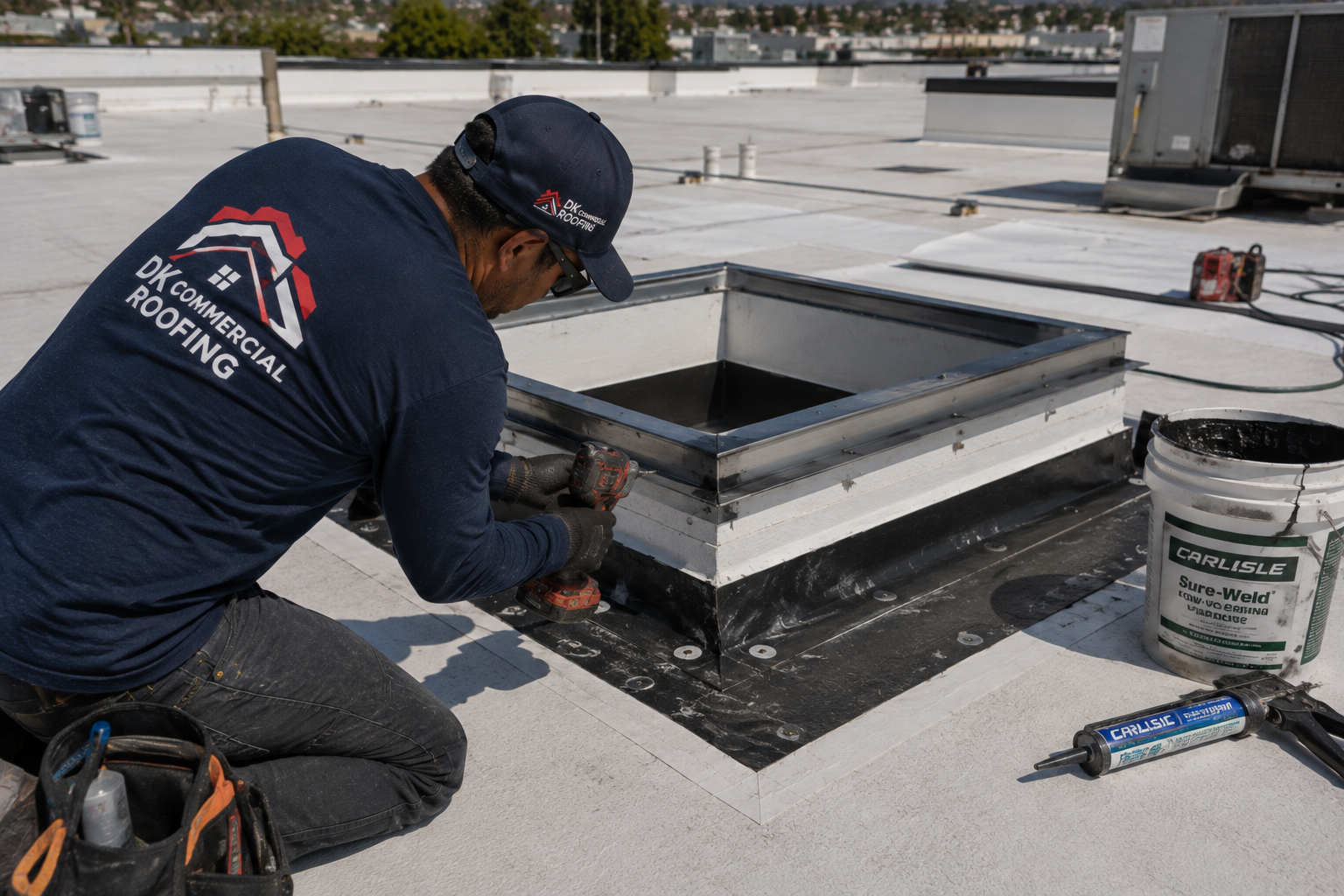
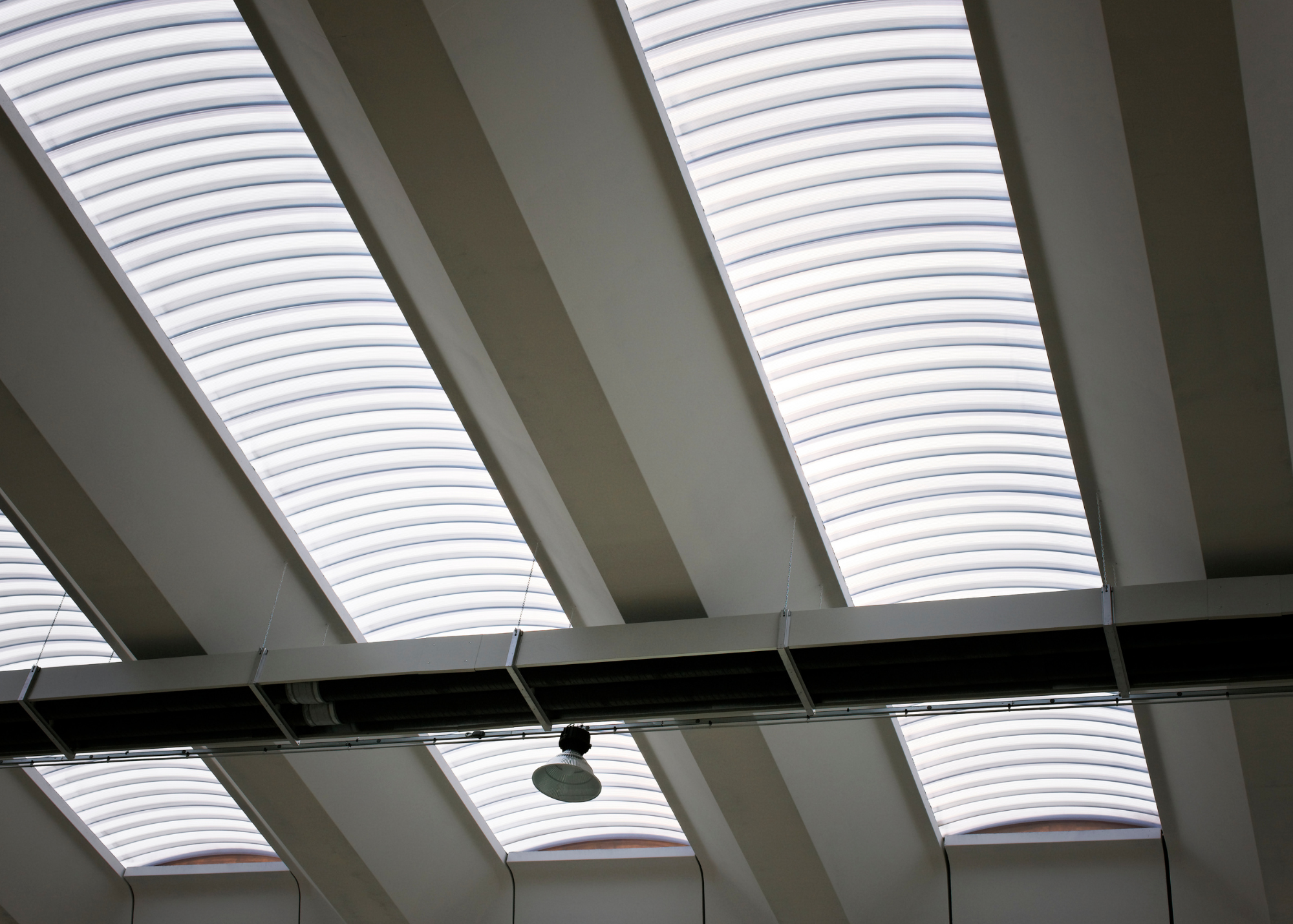
Some commercial buildings no longer need their existing skylights. The interior may have been remodeled, equipment may block the daylight, the openings may repeatedly leak, or the building owner may want to simplify future roof maintenance.
Permanent removal involves more than placing roofing material over the opening. The skylight and curb must be removed or modified, the opening properly supported, insulation restored, decking installed, and the new roof membrane securely tied into the surrounding system.
DK Commercial Roofing (Los Angeles) supports skylight and commercial roofing projects for a range of commercial, industrial, institutional, and multi-property buildings.
Skylight installation requires an understanding of roofing membranes, flashing, insulation, deck conditions, drainage, curbs, penetrations, and long-term roof performance.
Every skylight and roofing system should be evaluated before a repair, replacement, installation, or removal recommendation is made.
Service life depends on the glazing material, frame, curb, flashing, installation quality, UV exposure, maintenance, weather, and surrounding roofing system.
Some leaks can be repaired when the skylight remains serviceable and the problem is limited to flashing, membrane details, sealants, minor damage, or drainage around the curb.
Aging skylights are often evaluated during commercial roof replacement because the new roofing system must be properly integrated with each skylight curb and flashing detail.
Yes. The skylight opening can be properly framed or supported, insulated, decked, and waterproofed to become part of the surrounding commercial roof.
Yes, when the skylight curb and flashing are designed and installed using materials and details compatible with the specific membrane roofing system.
Skylights can be integrated into certain metal roofing systems, but the panel layout, curb, structural opening, flashing, slope, and drainage must be carefully evaluated.
Pricing depends on skylight size, glazing, quantity, roof access, curb condition, roofing material, structural repairs, flashing, interior work, and the overall project scope.
Tell us about your commercial property, skylight condition, active leaks, roofing system, repair history, and long-term plans for the building.