01
Evaluate
Inspect the Existing Roof
Review moisture, deck condition, attachment, drainage, flashing, penetrations, coatings, and previous repairs.
Restore, insulate, and protect flat and low-slope commercial roofs with a seamless spray polyurethane foam system shaped around the actual building.
DK Commercial Roofing provides commercial spray foam roof installation, restoration, repair, recoating, inspection, and maintenance for warehouses, industrial facilities, office buildings, retail centers, schools, churches, and multifamily properties throughout Los Angeles County.
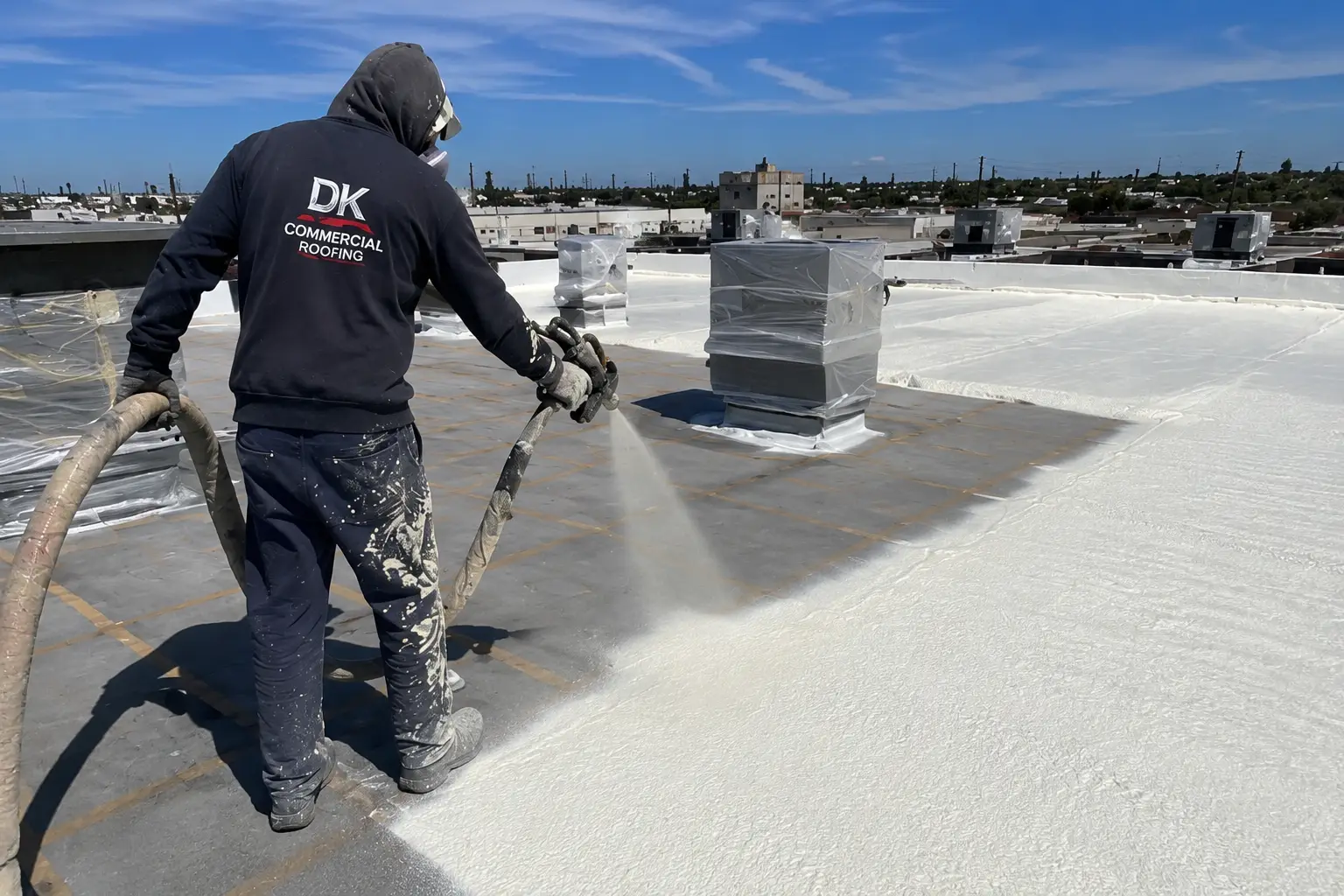
Spray polyurethane foam begins as two liquid components that are combined at the spray equipment and applied to a prepared commercial roof surface.
The material expands rapidly, bonds to the approved substrate, and forms a closed-cell foam layer. Because the system is created in place, it can follow irregular roof geometry and integrate around rooftop equipment, drains, walls, curbs, pipes, ducts, and transitions.
After the foam has cured and been shaped, it receives a compatible elastomeric coating. That coating becomes the exposed weathering surface and protects the foam from ultraviolet light, weather, normal rooftop traffic, and long-term surface wear.
The finished assembly can help reduce thermal bridging, add insulation, simplify complex detailing, and create a more continuous surface than many sheet-applied roofing systems. Performance still depends on dry conditions, proper preparation, correct foam density, even application, compatible materials, and complete coating coverage.
Spray foam roofing is often most valuable on commercial buildings where the roof is crowded with equipment or contains multiple elevations, transitions, drains, and penetrations. Because the material is formed on the roof, the installer can build the system around those conditions rather than cutting and joining large membrane sheets around every detail.
The existing roof still controls the project. Moisture, poor attachment, unstable materials, damaged decking, incompatible coatings, or extensive deterioration can change the recommended scope. A commercial roof inspection should determine whether the building is a good candidate for localized repair, recoating, spray foam restoration, or full replacement.
A dependable spray foam roof begins before the first pass of foam is applied. Existing conditions, moisture, weather, preparation, application thickness, detailing, coating coverage, and final inspection all matter.
Review moisture, deck condition, attachment, drainage, flashing, penetrations, coatings, and previous repairs.
Remove contaminants and failed materials, correct unsuitable areas, dry the roof, and prepare the surface for adhesion.
Install controlled passes so the foam expands, bonds, and reaches the intended thickness across the roof.
Coordinate drains, low areas, equipment curbs, walls, roof edges, penetrations, and transitions.
Install compatible protective coating and complete a final review of coverage, drainage, flashing, and finished conditions.
Each layer supports the next: the roof deck provides structure, the existing roof creates the foundation, the foam adds continuity and insulation, and the protective coating shields the completed system from exposure.
Shields the foam from ultraviolet light, weather, normal foot traffic, and surface wear. Coating thickness, coverage, detailing, and future recoating are essential to long-term performance.
Forms a continuous layer that can add insulation, bridge compatible roof areas, and be shaped around drains, curbs, penetrations, walls, and irregular transitions.
Must be evaluated for moisture, attachment, stability, cleanliness, compatibility, deck condition, drainage, and necessary repairs before SPF application.
Steel deck, concrete, wood, gypsum, or another approved structural substrate supports the completed roof assembly and must remain suitable for the proposed scope.
A commercial spray foam recover system may reduce demolition and disposal when the existing roof is structurally suitable, reasonably dry, properly attached, and compatible with the new assembly.
Good candidates are generally dry, stable commercial roofs with sound attachment, manageable localized defects, and surfaces that can be properly cleaned and prepared. Buildings with numerous curbs, pipes, drains, rooftop equipment, irregular transitions, limited insulation, or localized drainage concerns may benefit from the adaptable nature of spray-applied foam.
Roofs with widespread trapped moisture, damaged decking, unstable materials, poor attachment, or incompatible surfaces may require tear-off or corrective work before a dependable SPF system can be installed. That decision should be made from actual roof conditions—not from appearance alone.
During restoration, localized defects can be corrected before foam is applied. The new SPF layer can then bridge approved roof areas, add insulation, reinforce drainage, and create a new continuous surface beneath the protective coating.
For occupied commercial properties, restoration may also reduce the disruption associated with full tear-off. Staging, access, odor, overspray control, equipment protection, tenant operations, and daily weather conditions still require careful planning.
Wet insulation, structural damage, unstable materials, trapped moisture, poor attachment, and incompatible surfaces may require removal or corrective work.
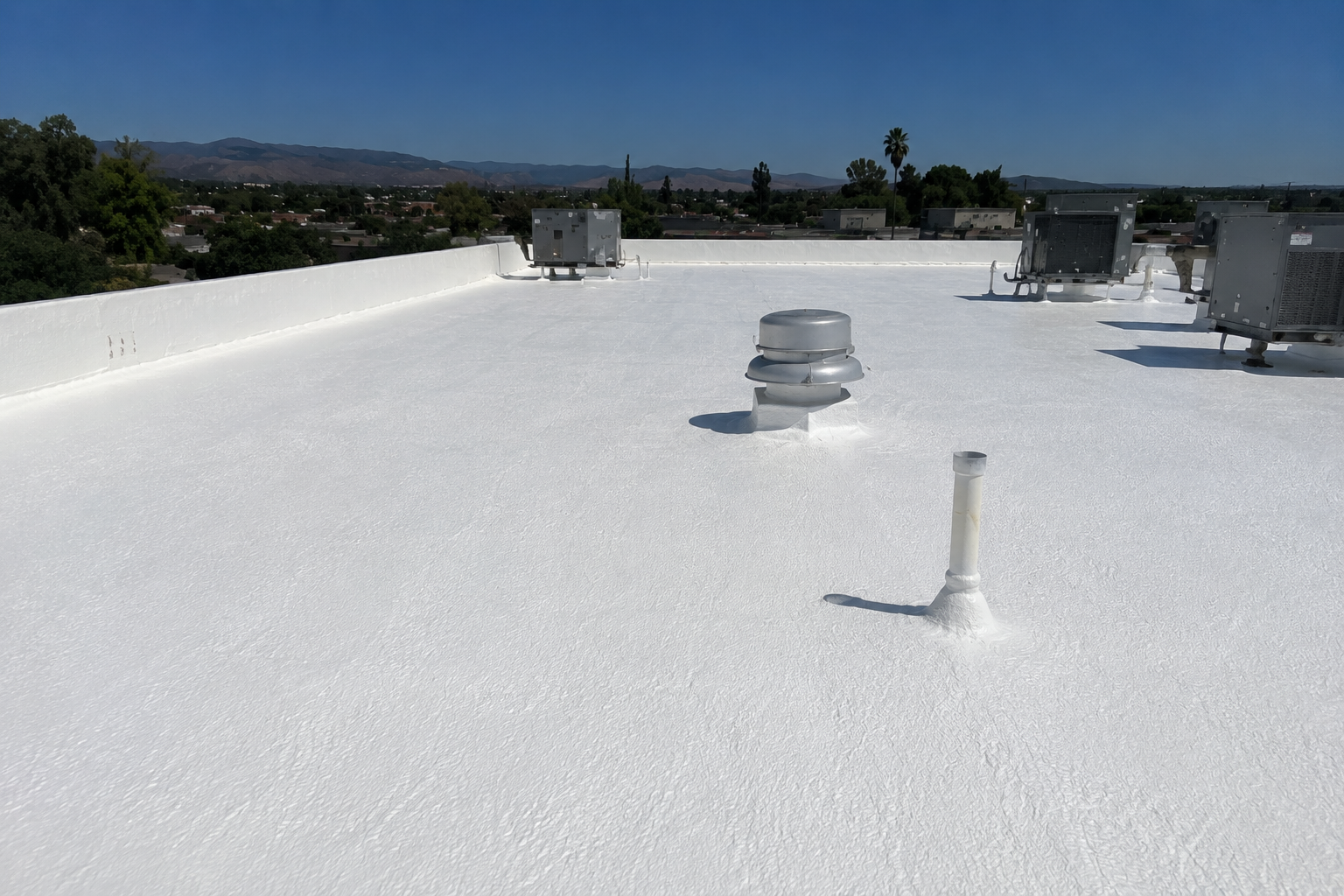
Spray foam may be useful where the roof has complex geometry, many penetrations, insulation needs, drainage concerns, or a suitable existing roof that may support restoration.
Large roof surfaces, skylights, drains, penetrations, and insulation needs.
Equipment-heavy roofs with curbs, ducts, vents, and complex transitions.
Occupied properties where insulation, controlled staging, and reduced tear-off may be valuable.
Buildings with occupied spaces below the roof and varied operating schedules.
Warehouses, offices, schools, retail centers, industrial facilities, churches, and multifamily properties have different interior conditions, rooftop traffic, equipment, operating schedules, and insulation priorities. The commercial spray foam roofing scope should reflect how the property is actually used.
Not every spray foam roofing problem requires the same scope of work. The right response depends on coating condition, foam damage, moisture, drainage, flashing, and the overall performance of the existing roof.
Localized punctures may only need compatible repair materials. A sound foam layer with worn coating may be a recoating candidate. A broader restoration can address insulation, continuity, and drainage, while widespread moisture or structural damage may point toward replacement.
Appropriate for isolated punctures, exposed foam, damaged flashing, small coating failures, or limited previous repairs.
Appropriate when the foam remains sound but the protective coating has worn, thinned, or reached the end of its service interval.
Appropriate when the existing commercial roof is suitable for a broader SPF installation that adds continuity, insulation, and a new protective surface.
May be necessary when the roof contains widespread moisture, structural damage, unstable materials, poor attachment, or conditions unsuitable for restoration.
Routine inspections can identify coating wear, punctures, exposed foam, flashing damage, blocked drainage, and roof traffic before localized problems spread.
Review coating condition, drainage, flashing, penetrations, equipment areas, and roof traffic paths.
Correct punctures, exposed foam, localized damage, failed sealants, and unsuitable previous repairs.
Keep drains, scuppers, gutters, overflow outlets, and drainage paths clear and functional.
Renew protective coverage before widespread wear exposes the foam to ultraviolet light and weather.
Property owners should look for careful roof evaluation, moisture awareness, proper preparation, controlled foam application, complete coating coverage, clear drainage, compatible detailing, and a realistic long-term maintenance plan.
Recommendations should be based on the existing roof, substrate, moisture, drainage, insulation needs, rooftop equipment, access, building operations, and long-term ownership goals.
Spray polyurethane foam roofing is a field-applied system that expands into a closed-cell foam layer and receives a protective elastomeric coating.
The field-applied foam forms a continuous roofing layer without conventional membrane sheet seams across the main roof surface.
Closed-cell spray foam adds insulation directly to the roof assembly. Overall performance depends on thickness, continuity, existing insulation, and building conditions.
Foam thickness can be adjusted to build up localized areas and help direct water toward drains, scuppers, and other outlets.
A recover system may be possible when the existing roof is suitable, reasonably dry, properly attached, compatible, and prepared for the new system.
Yes. The foam should remain protected by a compatible elastomeric coating system that is inspected and renewed as needed.
Punctures, coating wear, exposed foam, flashing issues, and localized damage may often be repaired using compatible SPF and coating materials.
Routine inspections are useful after severe weather, after rooftop work, and as part of an ongoing commercial roof maintenance program.
Service life depends on substrate conditions, foam quality, coating thickness, drainage, roof traffic, weather exposure, repairs, inspections, and timely recoating.
Cost depends on roof size, preparation, tear-off, moisture, substrate repairs, foam thickness, drainage work, coating type, flashing, equipment, access, and project complexity.