Asphalt and reinforcing layers
Multi-Ply Commercial Roofing Systems
Built-Up Roofing Los Angeles
Built-up roofing gives Los Angeles commercial property owners a durable multi-ply asphalt roofing system designed for flat and low-slope buildings.
DK Commercial Roofing (Los Angeles) provides built-up roof installation, replacement, inspection, maintenance, and repair for warehouses, retail centers, offices, multifamily properties, industrial facilities, schools, churches, and commercial buildings throughout Los Angeles County.
01Multi-Ply Protection
02Asphalt + Reinforcement
03Low-Slope Roofing
Commercial flat-roof applications
Cap sheet or reflective coating
Multiple waterproofing layers
Commercial properties countywide
01
Built-Up Roofing Explained
A Commercial Roof Built One Layer at a Time
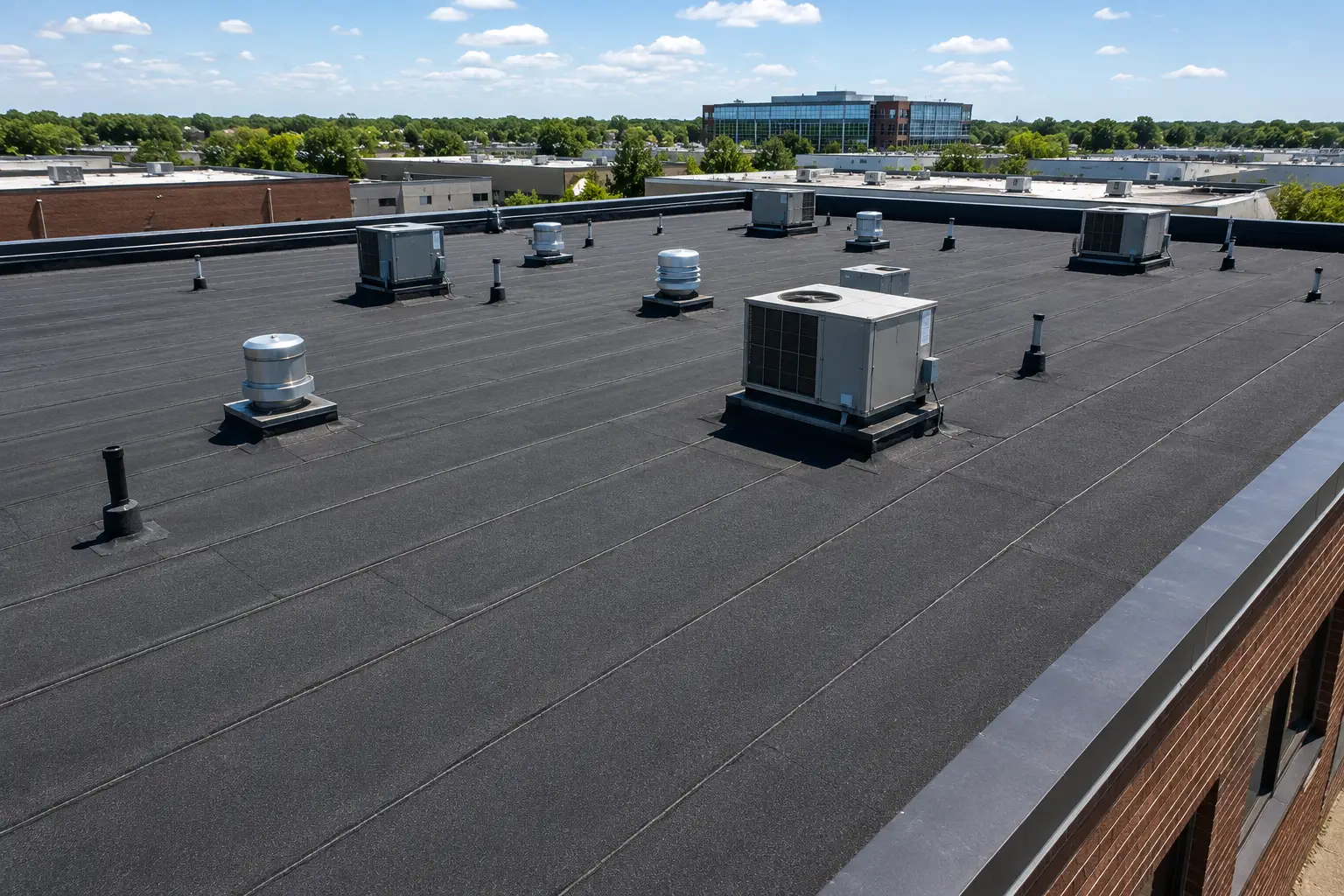
Built-up roofing, commonly called BUR, is created by combining multiple layers of asphalt with reinforcing felts or fabrics. Together, those materials form a thick, continuous waterproofing system.
Unlike a single-ply roof that relies primarily on one exposed membrane, built-up roofing develops protection through several coordinated layers. Each reinforcing ply becomes part of the waterproofing body of the completed roof.
A finished BUR system may use gravel, aggregate, a mineral-surfaced cap sheet, or a compatible reflective coating to protect the asphalt from sunlight, heat, weather, physical damage, and regular rooftop activity.
“The strength of built-up roofing is not one individual layer. It is the combined protection created by the entire commercial roofing assembly.”
02
How a Built-Up Roof Is Created
From the Structural Deck to the Finished Weathering Surface
Every layer has a specific role. The exact assembly depends on the roof deck, drainage, insulation requirements, existing conditions, rooftop traffic, building operations, and selected specification.
01
Structural Foundation
Commercial Roof Deck
Steel, concrete, wood, gypsum, and other approved roof decks support the completed commercial roofing assembly.
02
Thermal and Drainage Design
Insulation and Slope
Rigid and tapered insulation can improve thermal performance while directing water toward drains, scuppers, gutters, and outlets.
03
Assembly Foundation
Base Sheet or Cover Board
Compatible base materials create a stable substrate for the asphalt and reinforcing plies installed above.
04
Primary Waterproofing Body
Asphalt and Reinforcing Plies
Alternating layers of asphalt and reinforcement create the multi-layer waterproofing portion of the built-up roof.
05
Exposed Protective Finish
Gravel, Cap Sheet, or Coating
The final surface protects the asphalt from ultraviolet light, weather, heat, impact, and normal rooftop conditions.
03
Commercial BUR Installation
The Roofing Process Requires Consistency Across Every Layer
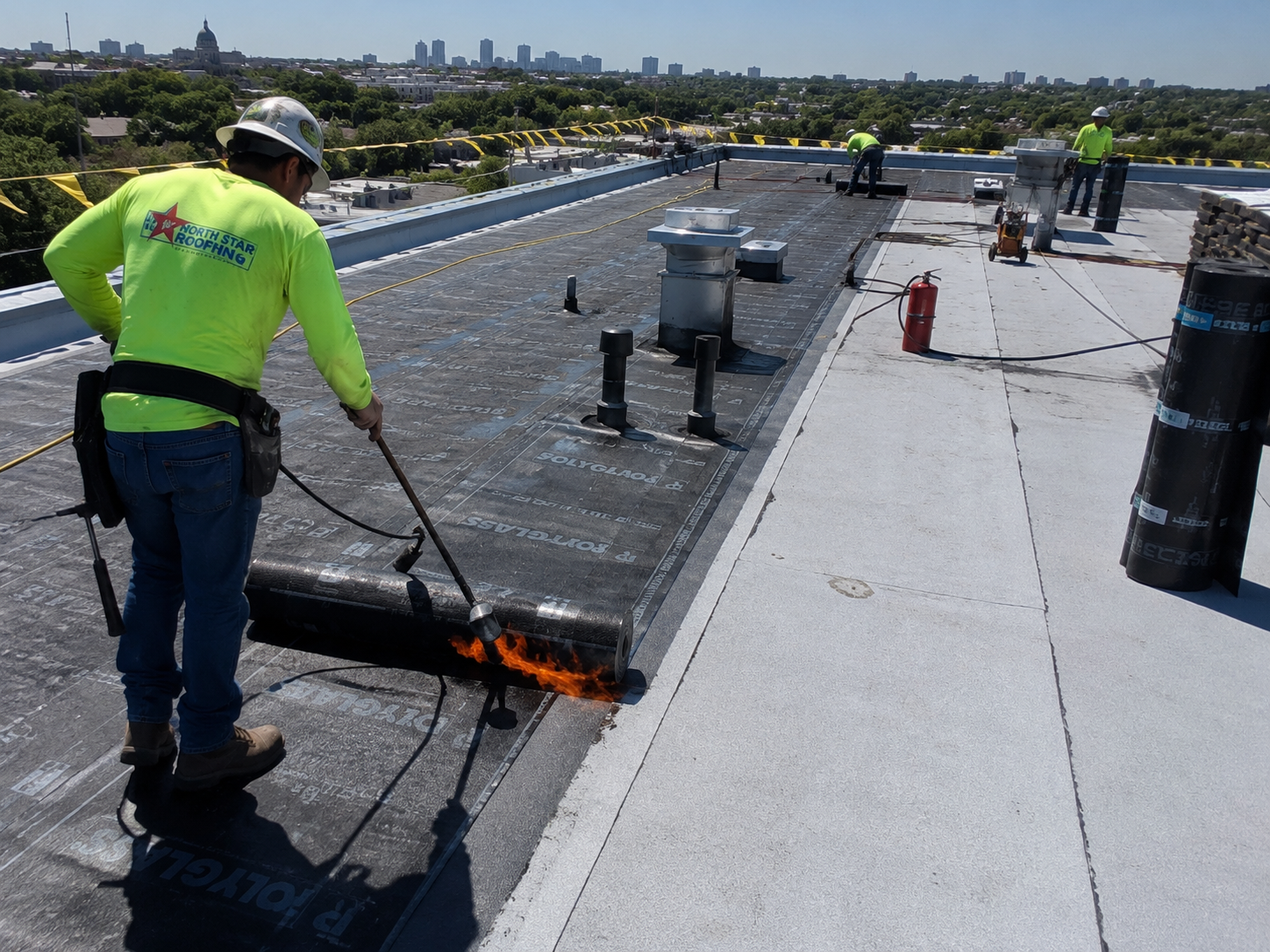
Built-up roof installation requires careful control of substrate preparation, insulation, asphalt or adhesive coverage, reinforcing materials, flashing, drainage, transitions, roof edges, and the finished protective surface.
Prepare the Roof
Review the deck, remove unsuitable materials, address moisture, and create a stable installation surface.
Install Insulation and Base Materials
Coordinate insulation thickness, tapered drainage, cover boards, base sheets, and attachment.
Build the Waterproofing Plies
Install asphalt and reinforcement with proper coverage, alignment, overlap, bonding, and sequencing.
Complete Flashing and Details
Integrate walls, drains, curbs, skylights, penetrations, equipment, roof edges, and drainage components.
Apply the Protective Surface
Finish the roof with aggregate, a cap sheet, or an approved coating selected for the roofing assembly.
04
Understanding Roofing Plies
The Number of Layers Helps Define The Roofing Assembly
A ply is a reinforcing layer within the built-up roofing system. More plies generally create a thicker assembly, but the correct design depends on the property and project requirements.
2
Two-Ply Assembly
Light Multi-Layer Protection
Two reinforcing plies provide multiple waterproofing layers in a comparatively lighter commercial roofing assembly.
- Multiple reinforcing layers
- Project-specific surface protection
- Compatible flashing required
Common Commercial Option
3
Three-Ply Assembly
Added Roofing Redundancy
Three reinforcing plies create additional system thickness and layered protection throughout the commercial roof.
- Additional waterproofing ply
- Durable asphalt construction
- Broad commercial application
4+
Heavier Multi-Ply Assembly
Greater System Thickness
Four-ply and heavier specifications may be selected when greater roof-system thickness and redundancy are appropriate.
- Additional reinforcing materials
- Higher material and labor needs
- Roof weight must be evaluated
Ply count should be selected according to roof design, deck conditions, existing materials, building use, drainage, system weight, warranty requirements, and long-term plans.
05
Why Multiple Layers Matter
Redundancy Is the Defining Feature of Built-Up Roofing
The layered construction of BUR creates a different waterproofing approach than a single exposed membrane. If the upper surface receives localized wear, additional roofing materials may remain beneath it.
Layered Waterproofing
Multiple asphalt and reinforcing layers contribute to the roof’s waterproofing protection.
Durable Surface
Gravel, cap sheets, or coatings can shield the asphalt and underlying materials.
Impact Resistance
A properly surfaced multi-ply assembly can withstand ordinary commercial rooftop conditions.
Repairability
Compatible asphalt and reinforcement can often be integrated into localized roof repairs.
06
Protective Roof Surfacing
The Finished Surface Protects The Asphalt Below
The correct surface depends on roof weight, drainage, building use, reflectivity goals, maintenance access, surrounding conditions, and the selected roofing specification.
Traditional Surfacing
Aggregate or Gravel
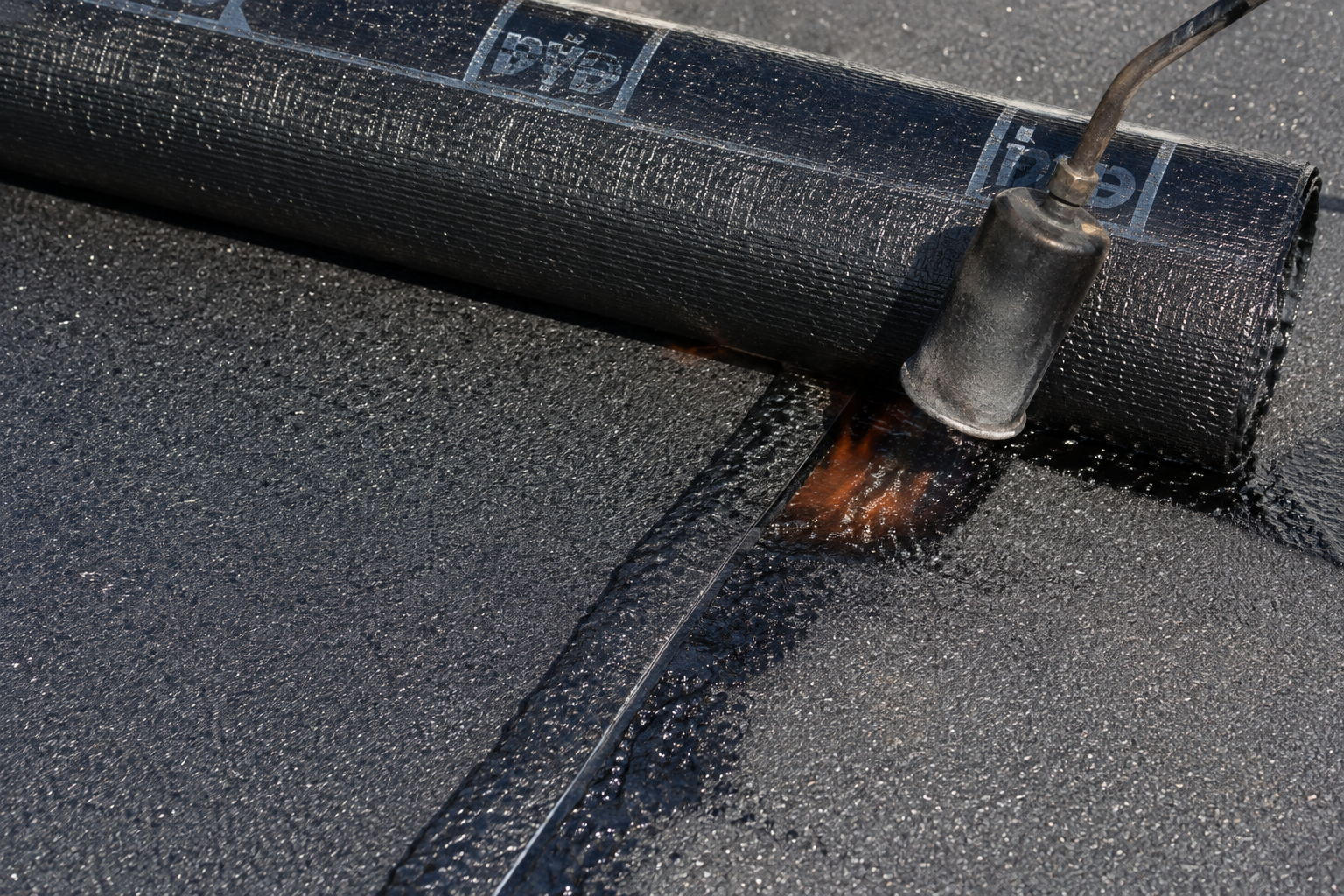
Embedded aggregate helps protect asphalt from sunlight, weathering, and physical exposure.
Factory-Finished Surface
Mineral-Surfaced Cap Sheet
A cap sheet can provide a consistent finished membrane surface over the underlying BUR assembly.
Reflective Finish
Compatible Roof Coating
A compatible coating may improve reflectivity and protect suitable asphalt roofing materials.
Maintenance Access
Protected Walkways
Walkway materials can help protect service paths near HVAC units, drains, equipment, and recurring access areas.
07
Commercial Building Applications
Built-Up Roofing for Large Low-Slope Properties
Built-up roofing is commonly considered for warehouses, industrial facilities, retail centers, offices, apartment buildings, schools, churches, and other commercial properties.
The Property Supports a Multi-Ply Asphalt Assembly
- The roof is flat or low slope.
- Layered waterproofing is preferred.
- The deck can support the proposed system.
- Durable surface protection is appropriate.
- Existing asphalt materials are compatible.
- Drainage and roof access can be planned properly.
Existing Conditions Affect the Proposed Roof
- Widespread trapped moisture is present.
- The roof deck is damaged or unsuitable.
- Added roof weight creates structural concerns.
- Severe drainage problems remain unresolved.
- Hot-asphalt application is restricted.
- Existing materials are incompatible.
08
Built-Up Roof Repair Los Angeles
Inspect Developing Problems Before They Spread
Aging built-up roofs can develop surface cracking, splits, blisters, deteriorated flashing, displaced gravel, drainage problems, punctures, and failed previous repairs.

09
Commercial Roofing System Comparison
BUR, Modified Bitumen, and TPO Take Different Approaches
Multi-Ply Asphalt
BUR
Built-Up Roofing
- Construction
- Field-built asphalt and reinforcing plies
- Waterproofing
- Multiple asphalt-based layers
- Surface
- Gravel, cap sheet, or coating
- Installation
- Hot asphalt or cold-process application
Reinforced Asphalt Sheet
MB
Modified Bitumen
- Construction
- Factory-manufactured reinforced membranes
- Waterproofing
- One or more modified-asphalt sheets
- Surface
- Granulated, smooth, or coated membrane
- Installation
- Torch, adhesive, asphalt, or self-adhered
Thermoplastic Single-Ply
TPO
TPO Roofing
- Construction
- Single thermoplastic membrane
- Waterproofing
- Heat-welded field membrane
- Surface
- Commonly white and reflective
- Installation
- Attached, adhered, or induction welded
This comparison is general. Roof deck, weight, existing materials, insulation, drainage, building use, traffic, installation restrictions, energy goals, and long-term maintenance should be evaluated before selecting a commercial roofing system.
10
Completed Commercial Roof
The Final Roof Should Be Designed for Inspection and Long-Term Maintenance
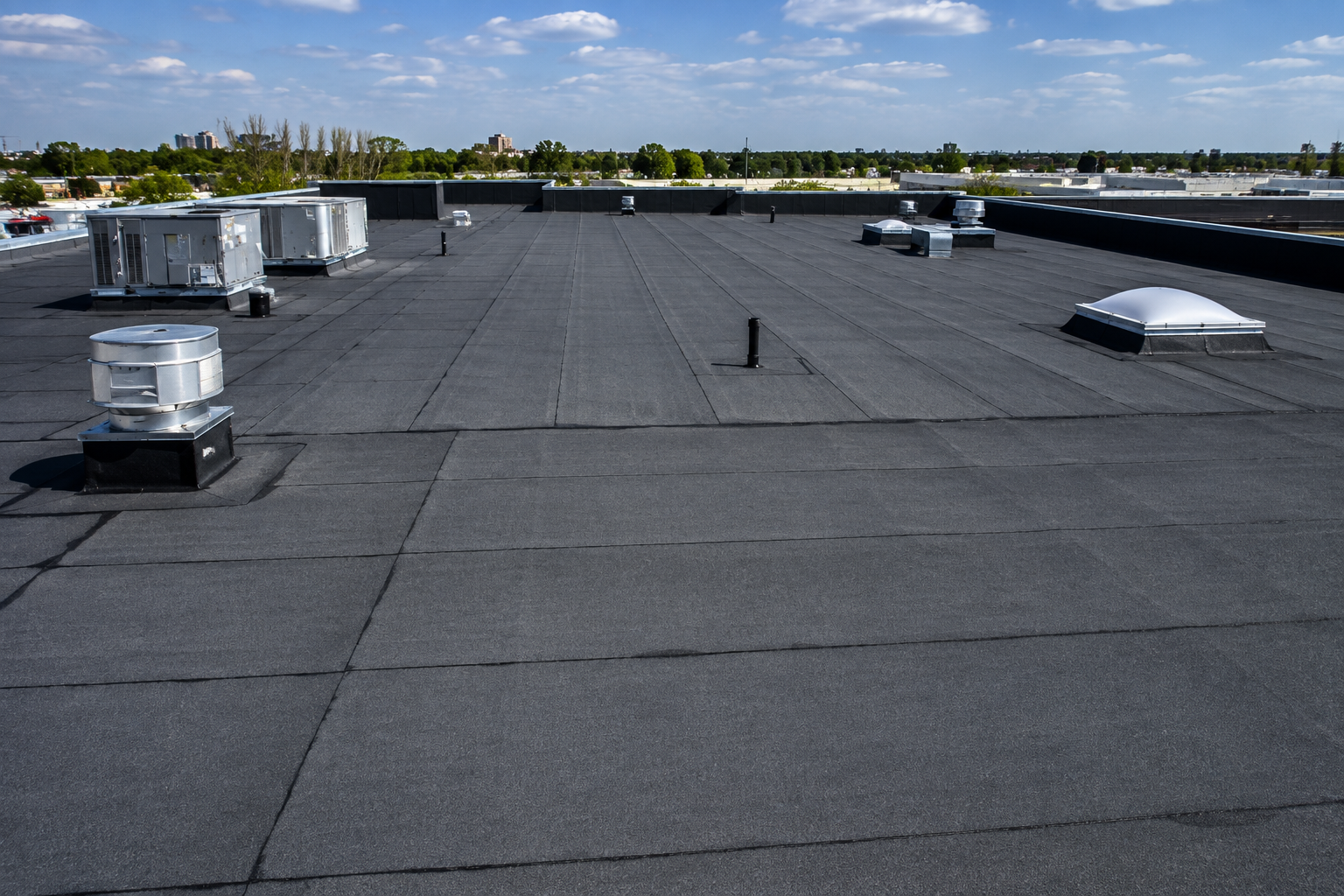
A completed BUR system should provide continuous reinforcing plies, consistent asphalt bonding, secure flashing, clear drainage, dependable roof edges, protected penetrations, and maintainable equipment-service areas.
Continuous reinforcing plies
Consistent asphalt bonding
Protected roof surfacing
Reinforced flashing details
Clear drains and scuppers
Planned service walkways
11
Why DK Commercial Roofing
Built-Up Roofing Experience for Los Angeles Commercial Properties
Property owners comparing Los Angeles commercial roofing contractors should look for building-specific guidance, compatible materials, careful planning, clear communication, dependable flashing, proper drainage, and attention to the complete roof assembly.
12
Built-Up Roofing FAQ
Common Built-Up Roofing Questions
Every recommendation should be based on the building, roof deck, existing roof, moisture, drainage, insulation, weight, surfacing, rooftop equipment, access, and long-term property goals.
Ask About Your Commercial RoofWhat is built-up roofing? +
Built-up roofing is a multi-ply asphalt system created by alternating layers of asphalt and reinforcing felts or fabrics.
What does BUR stand for? +
BUR stands for built-up roofing. The name refers to the roof being built through multiple waterproofing and reinforcing layers.
How many layers are used in a built-up roof? +
The number varies. Two-ply, three-ply, four-ply, and heavier assemblies may be used depending on the selected roof specification.
Why is gravel used on built-up roofing? +
Aggregate can protect asphalt from sunlight, heat, weathering, and normal physical exposure.
Can BUR be installed without hot asphalt? +
Some approved systems may use cold-process adhesives, compatible base sheets, cap sheets, or hybrid installation methods.
Can a built-up roof be repaired? +
Localized cracks, blisters, flashing, drainage areas, punctures, and surfacing damage may often be repaired when surrounding materials remain suitable.
What is the difference between BUR and modified bitumen? +
BUR generally uses field-installed asphalt and reinforcing plies. Modified bitumen uses factory-manufactured sheets containing polymer-modified asphalt.
How much does built-up roofing cost in Los Angeles? +
Pricing depends on roof size, removal, deck condition, insulation, number of plies, surfacing, application method, flashing, drainage, equipment, access, and project complexity.
Built-Up Roofing Los Angeles
Is BUR the Right Roofing System for Your Commercial Property?
Tell us about the building, current roofing system, roof size, deck, drainage, insulation, rooftop equipment, leaks, surface condition, repair history, and replacement plans.