01
TOP WATERPROOFING LAYER
TPO Membrane
The reflective thermoplastic surface provides the primary weather barrier and is joined using heat-welded seams.
TPO roofing Los Angeles commercial property owners can use provides a reflective, heat-welded single-ply membrane system designed for flat and low-slope commercial buildings.
DK Commercial Roofing (Los Angeles) provides TPO roof installation, replacement, repair, inspection, and maintenance solutions for warehouses, retail centers, offices, industrial facilities, multifamily properties, schools, churches, and commercial buildings throughout Los Angeles County.
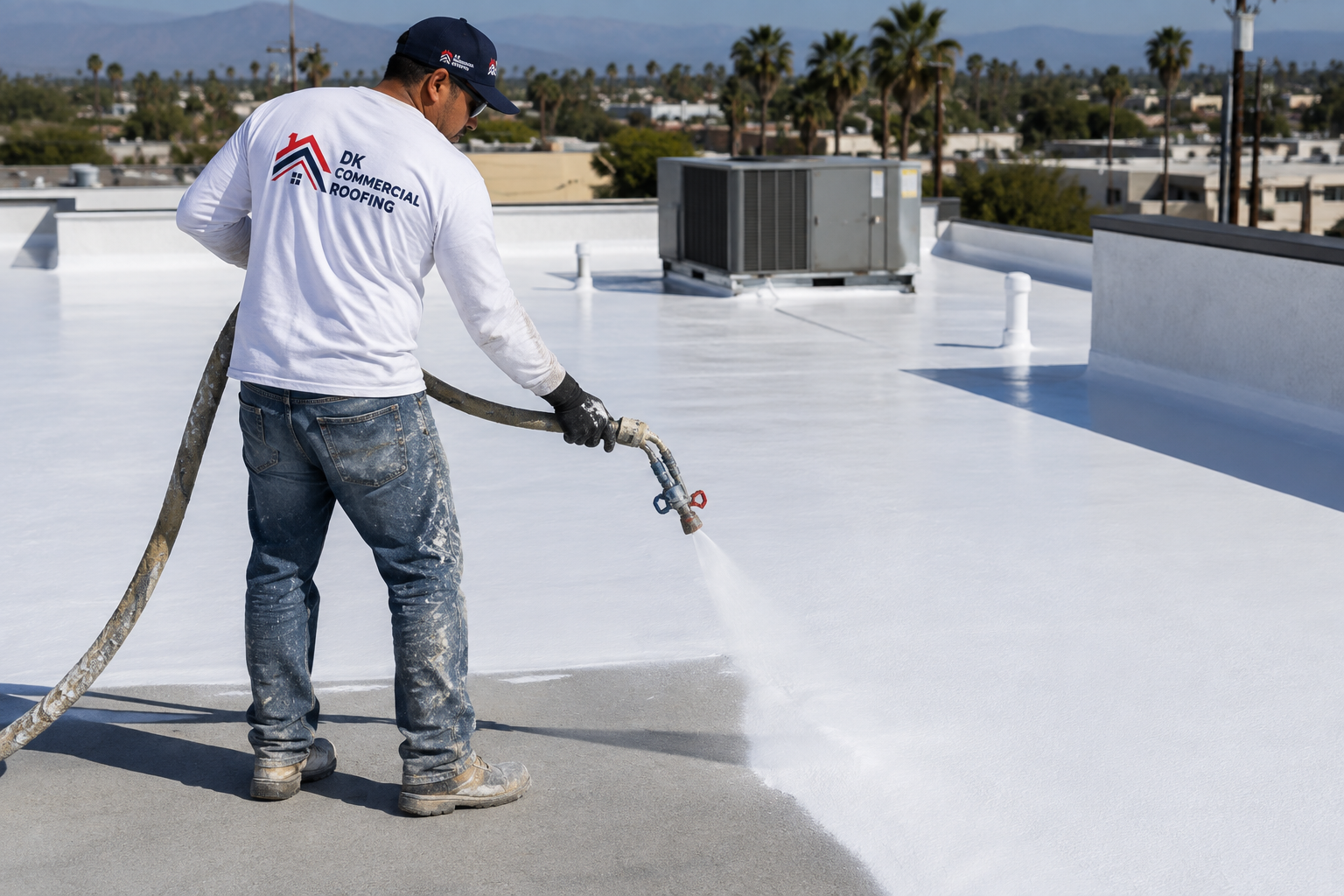
TPO stands for thermoplastic polyolefin. It is a flexible single-ply roofing membrane commonly used on flat and low-slope commercial buildings. The membrane is supplied in large rolls and installed across the roof using an attachment method selected for the building, roof deck, wind conditions, insulation assembly, and project requirements.
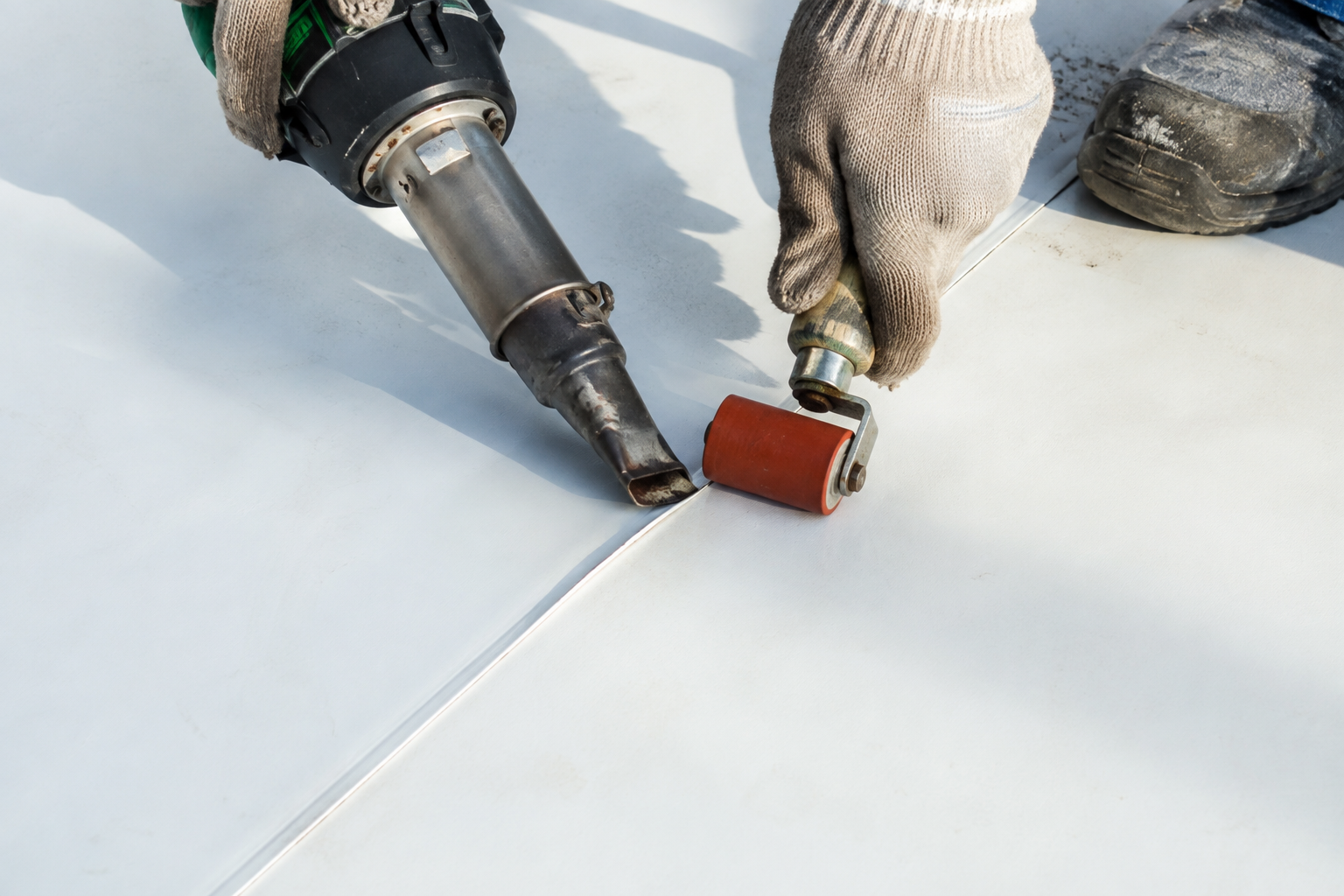
Adjacent membrane sheets are joined using hot-air welding. The heat softens the thermoplastic surfaces so they can be fused together, creating continuous seams across the roofing system.
The visible white membrane is only one component of a TPO roof. Beneath it may be a cover board, rigid insulation, tapered insulation, a vapor-control layer, and the structural roof deck. Flashing, drains, scuppers, curbs, penetrations, roof edges, and equipment transitions complete the waterproofing assembly.
A dependable TPO roof is not created by membrane alone. Every layer and every rooftop transition must work as one system.
The exact assembly varies by project, but a commercial TPO system may contain several coordinated layers above the building structure.
The reflective thermoplastic surface provides the primary weather barrier and is joined using heat-welded seams.
A cover board may provide a stable membrane substrate and additional resistance to impact and rooftop traffic.
Rigid or tapered insulation supports thermal performance and may help establish positive drainage toward roof drains.
Some buildings may require a vapor retarder or air-control layer based on the interior environment and roof design.
Steel, concrete, wood, gypsum, or another approved deck supports the complete TPO roofing assembly.
TPO membrane sheets are overlapped and welded with controlled hot air. The heated membrane surfaces are pressed together to create a continuous thermoplastic seam.
Proper welding depends on surface preparation, machine settings, membrane condition, weather, speed, temperature, pressure, and workmanship. Seams should be inspected as work progresses and again during final project review.
TPO is often considered for commercial roofing projects because it combines a reflective surface, flexible membrane, heat-welded seams, and several installation options.
White TPO membrane reflects a portion of the sunlight that would otherwise be absorbed by a darker roofing surface.
Membrane sheets are joined with hot-air welding rather than relying only on adhesives or taped field seams.
TPO is commonly installed on warehouses, retail buildings, offices, apartments, schools, churches, and industrial properties.
Flexible membrane can accommodate properly designed transitions, curbs, penetrations, flashing details, and normal roof movement.
The system may be mechanically attached, fully adhered, or induction welded depending on the building and approved assembly.
Compatible TPO membrane and flashing materials may be used to repair punctures, damaged seams, flashing, and localized deterioration.
TPO is commonly evaluated for buildings with broad flat or low-slope roof areas, compatible decks, commercial drainage systems, and rooftop mechanical equipment.
Large uninterrupted roof areas, mechanical equipment, drains, and loading operations.
Multi-tenant buildings with rooftop HVAC units, drains, curbs, and occupied spaces below.
Professional and mixed-use properties requiring maintainable low-slope roofing assemblies.
Operational properties with rooftop equipment, exhaust systems, utility penetrations, and service traffic.
Multifamily and HOA properties with flat roofs, equipment curbs, drainage, and occupied units below.
Educational, administrative, sanctuary, and community buildings with low-slope commercial roof areas.
Occupied professional facilities requiring planned access, equipment coordination, and dependable drainage.
Large commercial footprints with roof drains, vents, skylights, penetrations, and ongoing building operations.
The appropriate attachment method depends on the roof deck, insulation assembly, wind requirements, building conditions, approved system design, and project specifications.
The membrane is secured to the roof deck with approved fasteners and plates. Adjacent sheets overlap the fastening rows, and the field seams are heat welded.
The membrane is bonded to a compatible insulation surface or cover board using an approved adhesive system. Field seams remain heat-welded.
The membrane is secured to specially designed coated fastening plates using an induction-welding tool without penetrating the membrane at each plate.
Each membrane has different strengths. System selection should be based on the building rather than choosing a material from one feature alone.
| System Feature | TPO | PVC | EPDM |
|---|---|---|---|
| Common Membrane Color | White | White or light colors | Black or white-faced options |
| Field Seam Method | Heat welded | Heat welded | Adhesive or seam tape |
| Roof Reflectivity | High with white membrane | High with white membrane | Varies by membrane surface |
| Chemical and Grease Exposure | Project-dependent | Often considered for demanding exposure | Project-dependent |
| Material Character | Thermoplastic | Thermoplastic | Synthetic rubber |
| Common Commercial Use | Broad commercial application | Commercial and specialty applications | Commercial low-slope roofs |
This comparison is general. Roof design, manufacturer requirements, chemical exposure, drainage, deck type, wind conditions, insulation, building use, and maintenance expectations should be evaluated before selecting a roofing system.
TPO roofing can be repaired when damage is identified and the surrounding membrane remains suitable for compatible corrective work.
Seams may require cleaning, preparation, welding, or compatible membrane reinforcement.
Tools, debris, service traffic, and equipment work may create localized punctures or tears.
Walls, curbs, drains, roof edges, penetrations, and equipment transitions may require corrective flashing work.
Drainage components and surrounding membrane may deteriorate, separate, or become damaged.
Attachment concerns may require evaluation of fasteners, plates, insulation, wind zones, and surrounding materials.
Temporary patches, sealants, coatings, or incompatible materials may need removal and replacement.
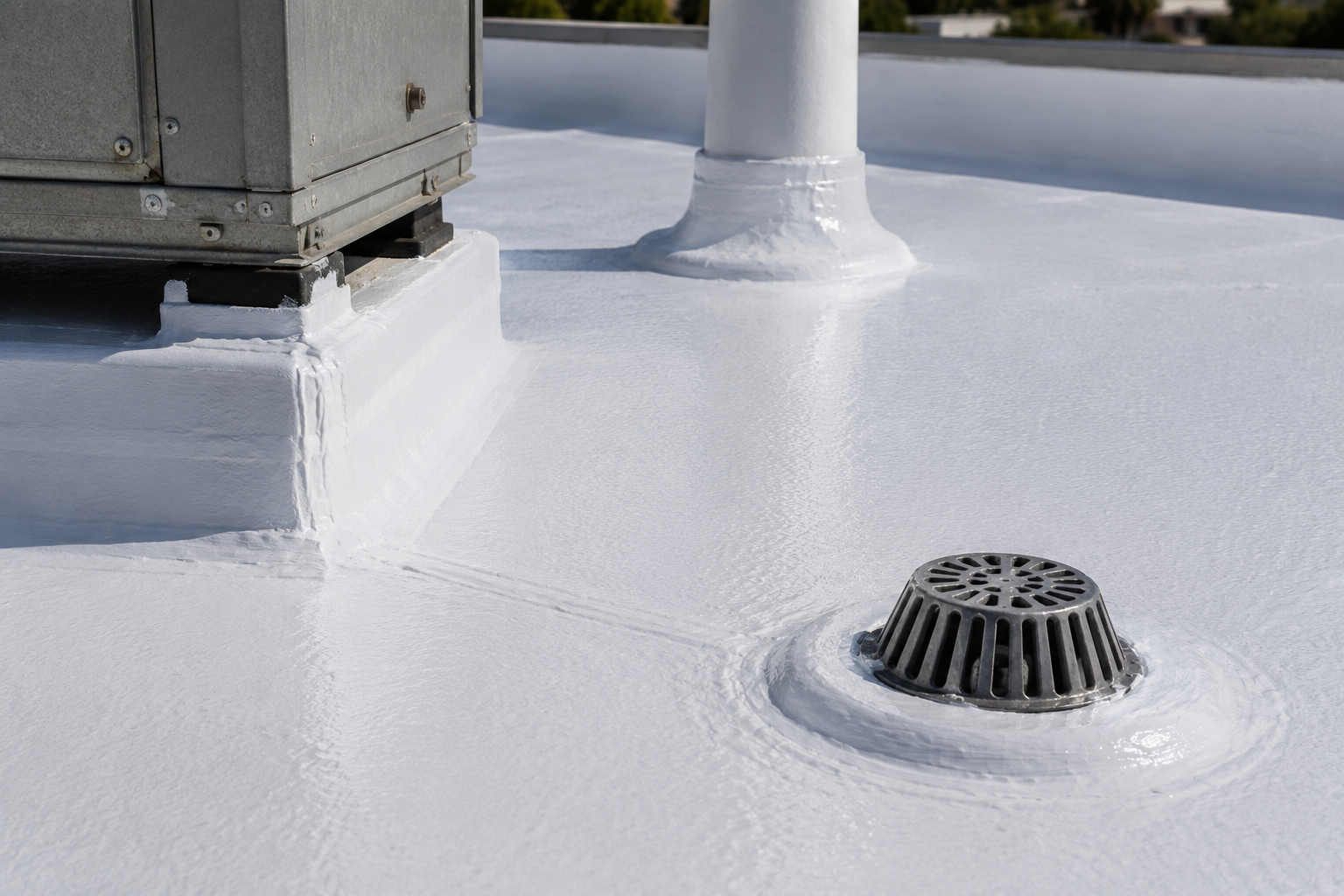
A commercial TPO roof should be incorporated into a long-term inspection, maintenance, repair, and replacement plan.
Install the complete membrane, insulation, attachment, flashing, drainage, edges, penetrations, and rooftop details.
Review seams, membrane surfaces, drains, flashing, equipment, roof edges, penetrations, and previous work.
Remove debris, clear drainage, maintain rooftop access, and address developing sealant, flashing, or membrane concerns.
Complete compatible repairs to damaged membrane, seams, flashing, drains, penetrations, and roof-edge details.
Evaluate replacement when deterioration is widespread, insulation is wet, repairs are recurring, or service life is limited.
A completed TPO roof should provide consistent membrane installation, secure welded seams, dependable flashing, clear drainage, protected roof edges, and accessible rooftop equipment.
Property owners comparing Los Angeles commercial roofing contractors should look for clear system guidance, careful project planning, compatible materials, proper seam welding, detailed flashing, and attention to the complete commercial roof assembly.
TPO roofing recommendations should be based on the building, roof deck, insulation, drainage, equipment, exposure, system design, and long-term maintenance needs.
TPO stands for thermoplastic polyolefin. It is a flexible thermoplastic single-ply membrane commonly installed on flat and low-slope commercial roofing systems.
TPO may be a strong option for many Los Angeles commercial properties, particularly buildings that need a reflective low-slope membrane system. The roof deck, drainage, equipment, exposure, attachment, and building use should be evaluated first.
Adjacent TPO membrane sheets are overlapped and joined using controlled hot-air welding. The welded seams should be inspected and tested during installation.
A recover system may be possible in some cases. Existing roof layers, trapped moisture, deck condition, attachment, insulation, drainage, local requirements, and system compatibility must be evaluated.
Localized punctures and tears may often be repaired using compatible TPO membrane materials when the surrounding roof remains suitable for repair.
White TPO membrane reflects more sunlight than many dark roofing surfaces. Actual building energy performance also depends on insulation, air leakage, HVAC efficiency, building use, roof condition, and local climate.
Performance depends on membrane, assembly design, installation, seam welding, flashing, drainage, exposure, foot traffic, repairs, inspection, and ongoing maintenance.
Pricing depends on roof size, removal requirements, deck condition, insulation, cover board, membrane thickness, attachment method, flashing, drainage, equipment, access, and overall project complexity.
Both are thermoplastic single-ply membranes with heat-welded seams, but their material formulations and performance characteristics differ. Building use, chemical exposure, grease, budget, drainage, and project requirements should guide the selection.
Inspection frequency depends on roof age, condition, weather, warranty requirements, building use, equipment service, foot traffic, previous repairs, and property-management practices.
Tell us about the building, current roof, roof size, deck type, drainage, rooftop equipment, leaks, replacement needs, construction plans, and long-term performance goals.