Recurring Roof Leaks
An inspection can help locate possible sources of moisture and determine whether the problem is isolated or more widespread.
Commercial roof inspections Los Angeles property owners, facility managers, and businesses can rely on help identify leaks, membrane deterioration, drainage problems, damaged flashing, open seams, moisture concerns, and developing roof issues before they cause larger disruptions.
DK Commercial Roofing (Los Angeles) provides commercial roof condition assessments for warehouses, office buildings, retail properties, industrial facilities, apartment buildings, schools, churches, HOAs, and other commercial properties throughout Los Angeles County.
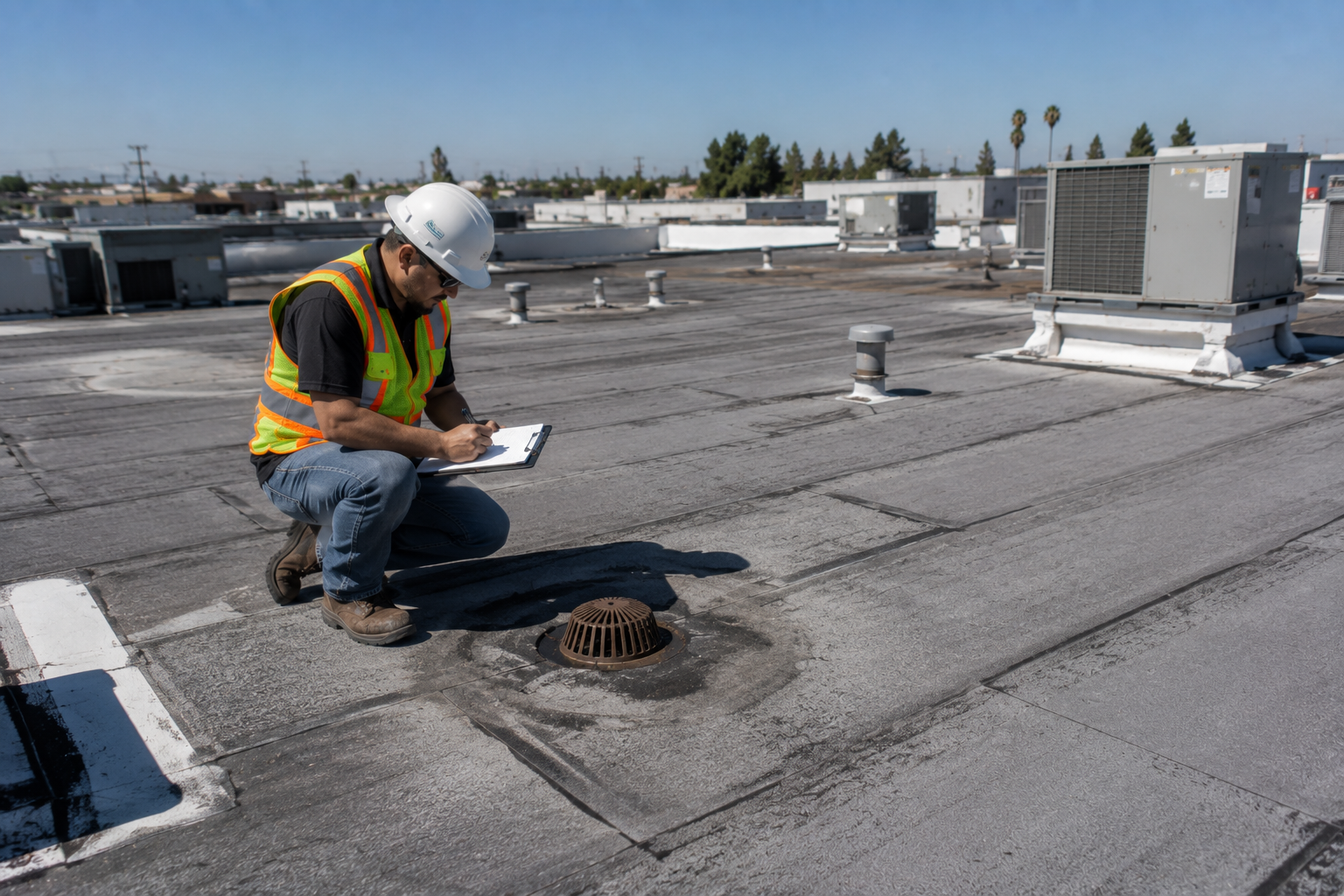
A commercial roof is exposed to sunlight, heat, wind, rain, debris, foot traffic, rooftop equipment, maintenance activity, and normal material aging. Even when a roof appears intact from the ground, developing problems may be present around seams, flashing, drains, penetrations, curbs, roof edges, and previous repair areas.
A commercial roof inspection provides an opportunity to document visible conditions before a leak becomes a larger building problem. Inspection findings can also help property owners plan routine maintenance, prioritize repairs, evaluate the remaining service life of the roof, and budget for future roofing work.
As a commercial roofing contractor Los Angeles property owners can contact for roof evaluations, DK Commercial Roofing focuses on clear, practical recommendations based on the condition of the entire roofing system.
SCHEDULE A COMMERCIAL ROOF INSPECTIONRoof inspections are useful before and after major weather events, when leaks appear, during property transactions, as part of preventative maintenance, and when planning repair or replacement.
An inspection can help locate possible sources of moisture and determine whether the problem is isolated or more widespread.
Routine evaluations can identify small issues before they become larger repairs, interior damage, or emergency roofing problems.
Wind, rain, debris, heat, and rooftop movement can damage membrane, flashing, roof edges, penetrations, and drainage components.
A condition assessment helps determine whether repair, restoration, recover, or complete replacement is the best option.
Buyers and investors may want a clearer understanding of roof age, visible damage, repair history, and future roofing needs.
The roof should be evaluated before mounting equipment limits access to membrane, drains, flashing, and future repair areas.
Documentation can help property teams track roof conditions, schedule maintenance, and respond to developing issues.
A regular inspection schedule can help establish a history of roof condition, repairs, drainage, and maintenance needs.
Roof leaks are not always caused by the membrane field. Moisture can enter through failed flashing, open seams, damaged penetrations, deteriorated sealants, loose roof edges, clogged drains, punctures, rooftop equipment curbs, or previous repair areas.
A thorough inspection should look at the overall roof condition and the transitions where different materials and building components meet.
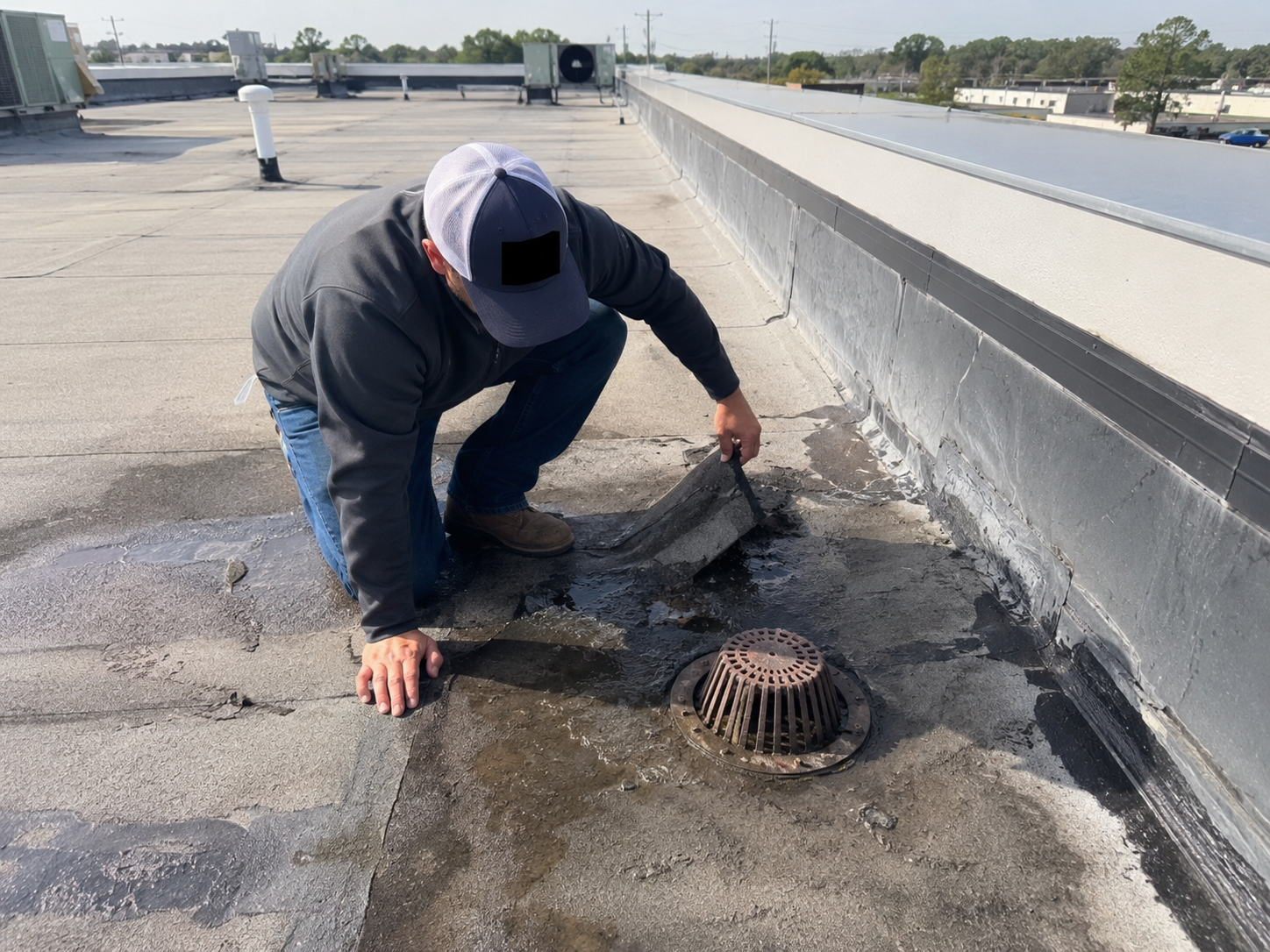
The inspection should consider the location, age, severity, surrounding materials, repair history, moisture patterns, and overall condition of the roof.
Separated, poorly welded, deteriorated, or stressed seams can create pathways for water intrusion.
Tools, debris, foot traffic, equipment service, and sharp materials can damage the roof membrane.
Deteriorated flashing around walls, curbs, drains, pipes, vents, edges, and equipment can allow moisture into the roof assembly.
Persistent standing water may point to blocked drainage, insufficient slope, compressed insulation, or deck movement.
Raised membrane areas may be associated with trapped moisture, adhesion problems, heat, or movement within the roof assembly.
Cracked, separated, missing, or poorly applied sealants may leave penetrations and transitions vulnerable.
Loose metal, open joints, wind damage, corrosion, and failed edge details can affect perimeter waterproofing.
Leaves, dirt, roofing debris, vegetation, and loose materials can restrict drains, scuppers, gutters, and drainage paths.
Incompatible materials, temporary patches, loose coatings, and deteriorated repair areas may require corrective work.
A roof inspection can help separate isolated repair needs from widespread deterioration. The findings may support routine maintenance, targeted repair, roof restoration, drainage correction, or commercial roof replacement planning.
The scope of an inspection may vary depending on whether the property owner is responding to a leak, developing a maintenance plan, evaluating a purchase, or preparing for a larger roofing project.
A general review of visible roof conditions, drainage, flashing, penetrations, seams, repairs, equipment, and maintenance needs.
Focused evaluation of suspected moisture-entry points, roof damage, drainage conditions, transitions, and interior leak patterns.
Inspection intended to identify minor repairs, cleaning, maintenance, and sealant work before larger problems develop.
Review of membrane damage, loose materials, roof edges, debris, drainage, flashing, punctures, and weather-related vulnerabilities.
Assessment that may help buyers understand visible roof conditions, repair needs, aging materials, and possible future roofing costs.
Evaluation used to help determine whether repair, restoration, recover, partial replacement, or full roof replacement is practical.
Review of roof condition, service life, drainage, membrane, flashing, penetrations, access, and possible repairs before solar.
Recurring inspection used to track roof performance, completed repairs, drainage concerns, and developing maintenance needs.
Commercial roof inspections can help property teams prioritize work, reduce surprises, document current conditions, and plan roofing expenses more strategically.
Identifying developing damage early may reduce the risk of larger leaks, wet insulation, and interior disruption.
Inspection findings can help separate urgent repairs from routine maintenance and longer-term roofing projects.
Proactive roof planning may help reduce unexpected leaks, emergency work, damaged inventory, and tenant disruption.
Property owners can use roof-condition information to plan future maintenance, restoration, or replacement expenses.
Review the roof age, roofing system, leak history, recent weather, previous repairs, building use, and current concerns.
Evaluate visible membrane conditions, seams, punctures, wear, coating deterioration, debris, traffic areas, and repairs.
Check flashing, walls, curbs, penetrations, equipment, drains, scuppers, gutters, roof edges, and transitions.
Separate active concerns, preventative maintenance items, damaged areas, and conditions requiring additional evaluation.
Provide practical guidance for maintenance, repair, restoration, drainage correction, monitoring, or replacement planning.
Prioritize immediate work, near-term repairs, routine maintenance, and long-term commercial roofing needs.
An inspection is most valuable when the findings are used to guide maintenance and repair. Small punctures, damaged flashing, aging sealants, loose materials, clogged drains, open seams, and debris should be addressed before they contribute to larger roofing issues.
A clear maintenance plan can also help protect future access to drains, rooftop equipment, penetrations, roof edges, walls, and frequently serviced areas.

Inspection methods and common problem areas vary depending on the roofing system, attachment, age, exposure, flashing, drainage, equipment, repair history, and building use.
Commercial roof evaluations may be scheduled for individual buildings, occupied properties, investment properties, managed portfolios, and multi-building commercial facilities.
Roof reviews for professional, corporate, and mixed-use offices.
Inspections for large flat roofs, drains, seams, and rooftop equipment.
Assessments for equipment-heavy and operational commercial roofs.
Roof-condition reviews for occupied shopping and retail properties.
Roof inspections for multifamily buildings and managed communities.
Evaluations for sanctuary, classroom, office, and community-building roofs.
Roof reviews for educational, administrative, and activity buildings.
Inspections planned around occupied healthcare and office operations.
Property owners comparing commercial roofing contractors Los Angeles buildings may rely on should look for practical roof-condition guidance, clear communication, and recommendations matched to the building’s actual needs.
Every roof inspection should be based on the roofing system, building use, age, repair history, drainage, equipment, visible conditions, and the property owner’s current concerns.
Inspection frequency depends on roof age, condition, system type, building use, weather exposure, repair history, warranty requirements, rooftop activity, and property-management practices.
Yes. Developing problems such as open seams, damaged flashing, clogged drains, punctures, loose materials, aging sealants, and membrane wear may be present before an interior leak appears.
Inspection areas may include the membrane, seams, flashing, walls, penetrations, curbs, drains, scuppers, gutters, roof edges, equipment, traffic areas, previous repairs, and drainage paths.
An inspection can help identify visible roof defects and possible moisture-entry points. Leak investigations may also consider interior staining, drainage, weather patterns, equipment, walls, penetrations, and previous repair areas.
A post-weather inspection may be helpful when the building has experienced leaks, wind damage, debris impact, loose roof-edge materials, blocked drainage, punctures, or other visible changes.
No inspection can guarantee that a future leak will not occur. However, routine evaluations and timely repairs can help identify and address visible vulnerabilities before they become more severe.
A roof evaluation may help buyers better understand visible roof conditions, estimated age, repair areas, drainage concerns, maintenance needs, and possible future roofing expenses.
Pricing depends on roof size, access, building height, roof type, equipment, inspection scope, leak investigation needs, safety requirements, documentation, and project complexity.
Tell us about the commercial property, roofing system, roof age, visible damage, interior leaks, recent weather, drainage concerns, previous repairs, and the reason for the inspection.