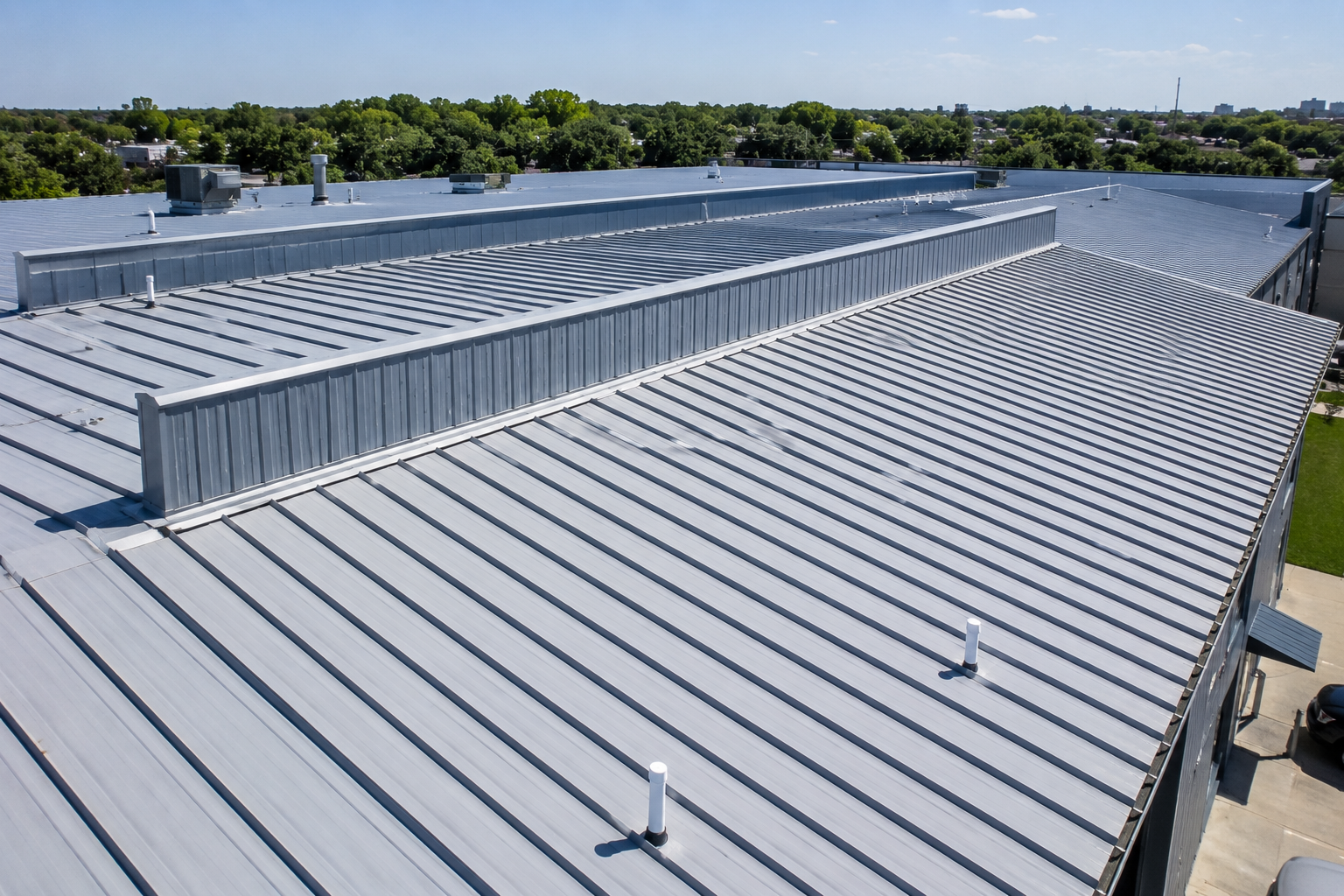
Clean panel lines and a professional building appearance.
Commercial Metal Roofing Systems
Metal Roofing Los Angeles
Commercial metal roofing gives Los Angeles property owners a durable, architectural roofing option designed for long-term performance, weather protection, and professional curb appeal.
DK Commercial Roofing provides commercial metal roof installation, replacement, repair, inspection, and maintenance for warehouses, industrial facilities, retail centers, office buildings, schools, churches, multifamily properties, and commercial buildings throughout Los Angeles County.
Standing seams and coordinated metal flashing details.
Accessible panels, fasteners, seams, coatings, and trim.
Commercial, industrial, retail, office, and institutional use.
Installation, replacement, repairs, and retrofit applications.
01
Commercial Metal Roofing Explained
A Durable Roofing System With Distinct Architectural Character
Commercial metal roofing uses formed metal panels and coordinated flashing components to create a weather-resistant roof assembly. Depending on the property, panels may use concealed clips, concealed fasteners, or exposed-fastener attachment.
Metal roofing is used on commercial properties where durability, appearance, structural compatibility, drainage, wind performance, serviceability, and long-term ownership are important considerations.
The complete roofing system can include metal panels, clips, fasteners, underlayment, insulation, vapor-control materials, sealants, closures, flashing, coping, gutters, downspouts, roof transitions, penetrations, and perimeter details.
“
A metal roof performs as a coordinated assembly. The panels, seams, clips, fasteners, flashing, coatings, and drainage details all have to work together.
02
Commercial Metal Roofing Profiles
Panel Profile Changes the Appearance and Performance
Different panel systems use different seams, ribs, clips, fasteners, widths, gauges, coatings, and installation methods. The correct profile depends on the building and roofing design.
01
Concealed-Fastener System
Standing Seam Metal Roofing
Vertical metal panels connect through raised seams positioned above the primary drainage surface.
- Concealed clips or fastening components
- Raised interlocking panel seams
- Clean architectural appearance
- Designed to accommodate panel movement
- Coordinated flashing and perimeter trim
02
Through-Fastened System
Exposed-Fastener Metal Panels
Fasteners pass through the metal panel and into the supporting roof structure or framing.
- Visible fasteners and sealing washers
- Common industrial and utility application
- Regular fastener inspection is important
- Panel laps and trim require careful sealing
- Movement can affect attachment points
03
Retrofit Roof Strategy
Metal Roof Retrofit Systems
Some commercial buildings can receive a new metal roof assembly over an approved existing roof or structural system.
- Existing roof conditions must be reviewed
- Structural capacity must be considered
- Moisture conditions require evaluation
- Insulation and ventilation can be upgraded
- Attachment must match the retrofit design
03
Metal Roofing System Comparison
Standing Seam and Exposed-Fastener Panels Use Different Attachment Strategies
Both systems can be appropriate for commercial buildings, but their seams, fasteners, maintenance needs, movement characteristics, and appearance are different.
Concealed Attachment
SS
Standing Seam
- Fasteners
- Typically concealed beneath or within the panel system
- Panel Movement
- Clip systems may allow controlled expansion and contraction
- Appearance
- Clean vertical seams and an architectural finish
- Maintenance
- Focus on seams, clips, flashing, coatings, and sealants
- Common Use
- Commercial, retail, institutional, and architectural buildings
VS
Roof slope, structure, budget, desired appearance, panel length, wind requirements, building use, and maintenance plans should guide the final selection.
Through-Fastened Attachment
EF
Exposed Fastener
- Fasteners
- Visible fasteners penetrate the metal panel surface
- Panel Movement
- Movement can place stress around fasteners and panel laps
- Appearance
- Ribbed industrial and utility-style panel finish
- Maintenance
- Fasteners, washers, laps, sealants, and penetrations require review
- Common Use
- Warehouses, industrial buildings, canopies, and utility structures

Commercial Metal Roof Assembly
Panel alignment, attachment, flashing, and drainage details should be
coordinated throughout the entire installation.
04
Commercial Metal Roof Assembly
Every Layer Supports the Finished Metal Panel System
Structural Foundation
Roof Deck or Framing
Steel framing, metal deck, wood, concrete, and other approved substrates can support the selected roof assembly.
Thermal and Moisture Design
Insulation and Vapor Control
Insulation and vapor-control components should match the building use, climate, deck, and roofing design.
Secondary Water Protection
Underlayment
Approved underlayment can provide temporary and secondary protection beneath the metal panels.
Panel Attachment
Clips and Fasteners
Clips, fasteners, spacing, and attachment patterns should follow the roof design and supporting structure.
Exposed Weathering Surface
Metal Panels and Seams
Formed panels direct water while coordinated seams and ribs connect the finished roofing surface.
Roof Transitions
Flashing, Trim, and Drainage
Ridges, valleys, walls, edges, gutters, penetrations, and transitions require compatible metal details.
05
Metal Panel Movement
Metal Expands and Contracts as Roof Temperatures Change
Commercial metal panels heat up and cool down throughout the day. Panel length, material, color, roof exposure, clips, fasteners, seams, penetrations, and flashing should be designed with movement in mind.
Panel Length
Longer metal panels may experience more total movement than shorter panel sections.
Clip Design
Sliding or compatible clip systems can help accommodate controlled panel movement.
Fastener Placement
Incorrect attachment can restrict movement or concentrate stress at seams and penetrations.
Flashing Details
Walls, curbs, edges, ridges, valleys, and transitions must remain weather resistant as panels move.
06
Commercial Metal Roofing Materials
Material and Finish Affect Appearance and Long-Term Care
Metal roof selection can involve panel material, gauge, coating, color, profile, seam design, fastening system, surrounding conditions, corrosion exposure, and architectural requirements.
01
Common Commercial Material
Coated Steel
Steel panels are commonly used for commercial and industrial metal roofing systems and can receive protective factory finishes.
Standing Seam
Industrial
Architectural
02
Lightweight Metal Option
Aluminum
Aluminum may be considered where lightweight materials or resistance to particular environmental conditions are important.
Lightweight
Formable
Specialty Use
03
Architectural Finish
Factory-Applied Coatings
Factory finishes can provide color, surface protection, visual consistency, and resistance to normal weather exposure.
Color Options
Surface Protection
Reflectivity
07
Commercial Metal Roofing Applications
Metal Roofing for Los Angeles Commercial Properties
Metal roofing can be used on low-slope and steep-slope commercial buildings, depending on the panel system, roof design, drainage, structure, and manufacturer requirements.
Warehouses
Large roof surfaces, metal framing, equipment, drainage, and industrial building operations.
Industrial Facilities
Manufacturing buildings, production facilities, utility structures, and service areas.
Retail Centers
Architectural roof sections, entrances, canopies, storefronts, and tenant buildings.
Office Buildings
Professional properties requiring durable materials and a clean architectural appearance.
Schools
Classroom buildings, gyms, cafeterias, walkways, offices, and institutional facilities.
Churches
Sanctuaries, fellowship halls, offices, educational buildings, and community facilities.
Multifamily Properties
Apartment buildings, clubhouses, common areas, canopies, and architectural roof sections.
Commercial Canopies
Entry structures, covered walkways, loading areas, parking structures, and service canopies.
08
Commercial Metal Roof Repair
Common Metal Roof Problems Should Be Addressed Before Damage Spreads
Metal roofs can develop leaks and deterioration around fasteners, seams, panel laps, flashing, penetrations, coatings, sealants, gutters, transitions, and previous repairs.
01
Attachment
Loose or Backed-Out Fasteners
Exposed fasteners and washers can loosen, deteriorate, or lose sealing contact over time.
Inspect washers, threads, placement, and substrate contact.
02
Panel Connections
Open Panel Seams
Movement, installation issues, impact, or aging can affect panel connections, joints, and laps.
Review seam engagement, movement, closures, and sealant.
03
Transitions
Failed Flashing
Walls, curbs, roof edges, ridges, valleys, pipes, and equipment require properly integrated flashing.
Check transitions for gaps, separation, movement, and damage.
04
Surface Protection
Corrosion or Coating Wear
Scratches, standing water, incompatible materials, and exposure can affect protective finishes.
Identify exposed metal, coating failure, and corrosion sources.
05
Weather Sealing
Sealant Deterioration
Sealants at transitions, closures, penetrations, laps, and trim can crack, separate, or lose adhesion.
Remove failed material and install compatible corrective sealing.
06
Previous Work
Improper Previous Repairs
Incompatible coatings, mastics, patches, and excessive sealant can conceal or worsen developing roof conditions.
Evaluate compatibility before removing or correcting prior work.
Metal Roof Inspection Priority
Identify the source—not just the visible interior leak location.
Request a Metal Roof Inspection
→
09
Commercial Metal Roof Installation
A Coordinated Process From Inspection Through Final Review
Commercial metal roof installation should account for the existing roof, structure, panel design, attachment, insulation, drainage, penetrations, building operations, access, staging, and final quality review.
Existing Conditions
Inspect
Review the roof, structure, deck, framing, drainage, penetrations, moisture, equipment, and access.
Roof System Planning
Design
Coordinate panels, clips, fasteners, underlayment, insulation, flashing, trim, and drainage.
Material Preparation
Fabricate
Order or form panels, trim, flashing, closures, and accessories according to project measurements.
Roof Installation
Install
Place underlayment, insulation, clips, fasteners, panels, flashing, edges, and drainage components.
Project Completion
Review
Inspect panel alignment, attachment, seams, flashing, sealants, trim, drainage, and completed roof conditions.
10
Finished Metal Roofing System
The Completed Roof Should Be Weather Resistant and Maintainable
A completed commercial metal roof should provide aligned panels, secure attachment, coordinated seams, compatible flashing, dependable perimeter details, clear drainage, protected penetrations, and accessible maintenance areas.
Aligned metal panels
Secure clips and fasteners
Coordinated panel seams
Compatible flashing details
Clear gutters and drainage
Protected roof penetrations
Final Quality Review
10
Commercial Metal Roof Checklist
Panel Alignment
Seam and Lap Review
Flashing Integration
Attachment Review
- 01 Verify panel runs, spacing, ribs, and seam alignment
- 02 Review clips, fasteners, washers, and attachment patterns
- 03 Check edges, walls, ridges, valleys, curbs, and penetrations
- 04 Confirm gutters, downspouts, drainage paths, and discharge points
- 05 Remove debris and document the completed roofing system
11
Why DK Commercial Roofing
Commercial Metal Roofing Experience for Los Angeles Properties
Property owners comparing Los Angeles commercial roofing contractors should look for building-specific guidance, careful measurements, compatible materials, proper attachment, coordinated flashing, effective drainage, clear communication, and attention to the complete metal roof assembly.
12
Metal Roofing FAQ
Common Commercial Metal Roofing Questions
Metal roofing recommendations should be based on the building, structure, existing roof, slope, drainage, panel design, insulation, exposure, equipment, access, appearance, and long-term ownership plans.
Ask About Your Commercial Roof →What is commercial metal roofing? +
Commercial metal roofing uses formed panels, attachment components, flashing, trim, and coordinated drainage details to create a weather-resistant roof assembly.
What is standing seam metal roofing? +
Standing seam roofing uses metal panels connected by raised seams. Fasteners and clips are commonly concealed beneath or within the panel system.
What is the difference between standing seam and exposed-fastener roofing? +
Standing seam systems generally conceal attachment components, while exposed-fastener panels use fasteners that penetrate the visible metal surface.
Can metal roofing be installed on low-slope commercial roofs? +
Some metal panel systems are designed for low-slope applications. The required slope depends on the panel profile, seam design, drainage, manufacturer requirements, and project conditions.
Can a commercial metal roof be repaired? +
Fasteners, panel seams, laps, flashing, penetrations, coatings, sealants, gutters, and localized panel damage may often be repaired when the surrounding system remains suitable.
Why do metal roof fasteners become loose? +
Thermal movement, installation conditions, vibration, aging washers, substrate conditions, and repeated weather exposure can affect exposed fasteners.
Can a new metal roof be installed over an existing roof? +
A retrofit or recover system may be possible when the structure, existing materials, moisture conditions, attachment, drainage, and applicable project requirements support it.
Does metal roofing expand and contract? +
Yes. Metal panels move as temperatures change. Panel design, clips, fasteners, seams, flashing, and penetrations should account for that movement.
Is commercial metal roofing available in different colors? +
Metal roofing panels may be available with different factory finishes and colors depending on the material, profile, coating system, and manufacturer.
How much does commercial metal roofing cost in Los Angeles? +
Cost depends on roof size, panel material, profile, gauge, coating, tear-off, structure, insulation, underlayment, attachment, flashing, trim, drainage, equipment, access, and project complexity.
Metal Roofing Los Angeles
Is Metal Roofing Right for Your Commercial Property?
Tell us about the building, current roof, slope, roof size, structure, deck, insulation, drainage, panel style, leaks, fasteners, flashing, repair history, and replacement plans.