Earlier Problem Detection
Inspections can identify open seams, damaged flashing, clogged drains, punctures, deterioration, and other concerns before they lead to more serious damage.
Proactive commercial roof maintenance can help identify developing problems before they become disruptive leaks, interior damage, or expensive emergency repairs. DK Commercial Roofing helps Los Angeles property owners, facility managers, and businesses protect flat and low-slope roofing systems through inspections, preventative maintenance, repairs, and long-term roof planning.
Commercial roof maintenance is the ongoing process of inspecting, cleaning, repairing, documenting, and monitoring a commercial roofing system. The goal is to help preserve the roof, reduce avoidable damage, and support better long-term decisions for the property.
A roof may appear functional from ground level while still developing problems around seams, drains, flashing, penetrations, rooftop equipment, edges, or previously repaired areas. Preventative commercial roof maintenance helps bring those areas into focus.
Maintenance recommendations should always be based on the existing roof system, its age, current condition, repair history, drainage, building use, and the owner’s long-term plans.
DISCUSS A ROOF MAINTENANCE PLAN
A consistent commercial roofing maintenance program can help reduce uncertainty, document roof conditions, and give property owners more time to plan repairs, restoration, or replacement.
Inspections can identify open seams, damaged flashing, clogged drains, punctures, deterioration, and other concerns before they lead to more serious damage.
Addressing minor maintenance needs at the appropriate time may help preserve roofing components and support the roof’s useful service life.
Proactive maintenance may reduce the likelihood that small, manageable issues turn into urgent leaks or unexpected disruptions.
Maintenance records and condition reviews can help owners plan for future repairs, restoration, recover systems, or full replacement.
Routine inspections create a clearer history of roof conditions, maintenance work, recurring concerns, and completed repairs.
Planned maintenance is generally easier to coordinate around employees, tenants, customers, equipment, and normal business operations.
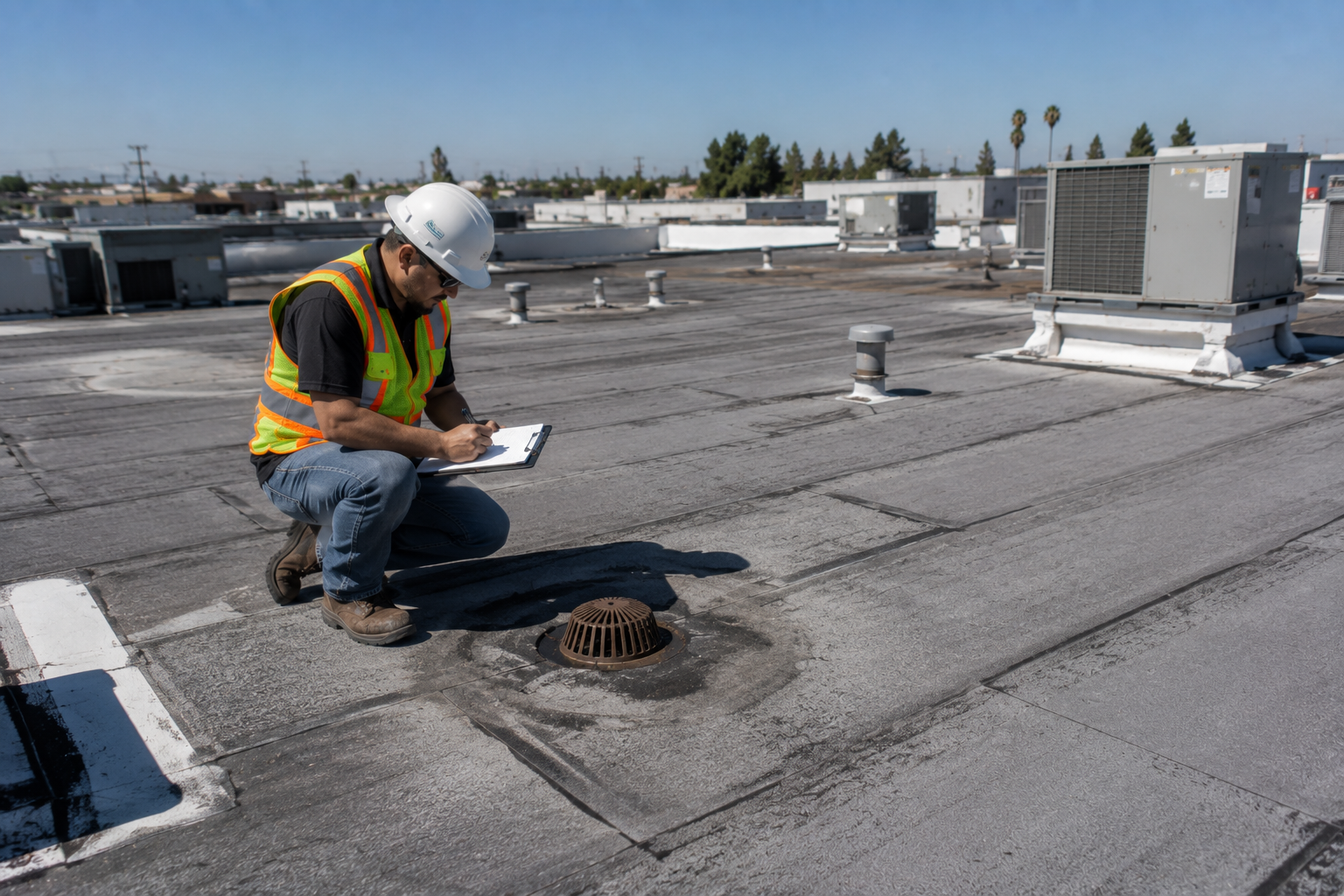
A commercial roof inspection provides an opportunity to evaluate the visible condition of the roof and identify areas that may need maintenance, repair, monitoring, or further investigation.
The inspection should go beyond the open roof field. Many commercial roof problems begin around drains, penetrations, curbs, flashing, seams, equipment supports, transitions, and perimeter details.
Preventative commercial roof maintenance focuses on correcting manageable issues before they contribute to wider roof damage. Maintenance needs vary depending on the roofing system, building, rooftop activity, weather exposure, and existing condition.
Work may include cleaning drains, removing debris, resealing selected details, reinforcing vulnerable areas, addressing minor punctures, correcting isolated membrane concerns, and documenting items that require future monitoring.

A commercial roof maintenance program should reflect the actual building, roofing system, roof age, exposure, access, drainage, repair history, and operational needs of the property.
Roof reviews may be scheduled annually, semiannually, seasonally, or after significant storms and rooftop activity.
Identified concerns are organized according to urgency, condition, potential impact, and recommended timing.
Appropriate maintenance and small repairs may be completed before problems expand into larger commercial roof repairs.
Inspection findings, photographs, repairs, and maintenance history help create a clearer picture of the roof over time.
Property owners receive practical guidance regarding monitoring, repairs, restoration, recover options, or replacement planning.
Additional inspections may be useful after heavy rain, wind events, construction work, equipment installation, or unusual rooftop use.
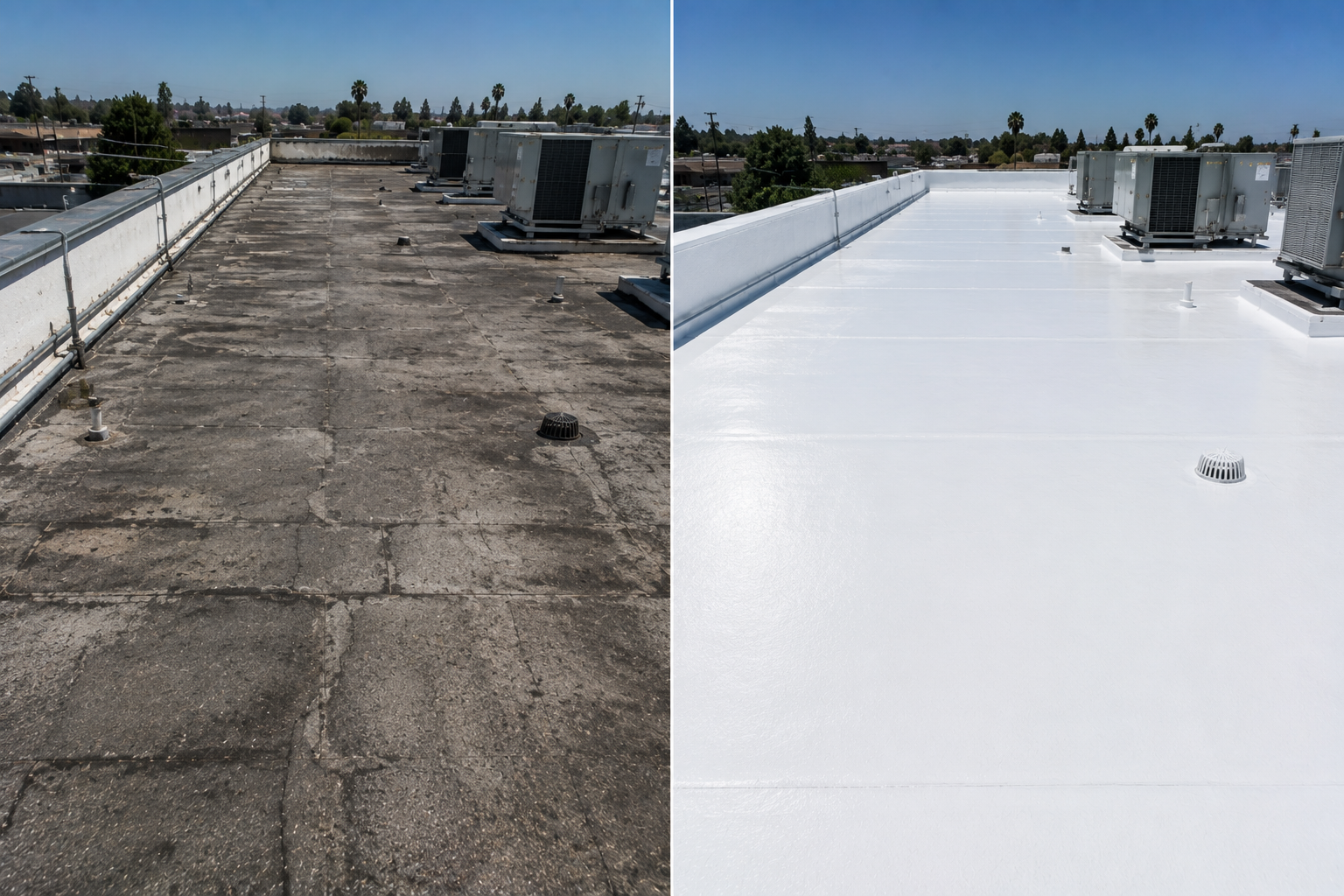
Commercial roofing maintenance often focuses on areas that do not yet require full replacement but still need attention. Timely corrections around seams, flashing, drains, penetrations, or damaged surfaces may help prevent continued deterioration.
The before-and-after difference may appear localized, but the value comes from addressing a vulnerable point before water reaches insulation, decking, ceilings, equipment, inventory, or occupied spaces.
Severely deteriorated, saturated, structurally damaged, or extensively failed roofing systems may require restoration, recover, or full commercial roof replacement instead.
Visible water entry is only one sign of a roofing problem. Commercial property owners and facility managers should also pay attention to exterior roof conditions, drainage, interior staining, and changes following storms or rooftop work.
Maintenance methods vary by roofing material. Repairs and maintenance products should be compatible with the existing commercial roof system and installed according to appropriate requirements.
Inspection and maintenance may focus on welded seams, punctures, flashing, membrane movement, penetrations, drainage, and rooftop traffic areas.
PVC roof maintenance may include reviewing seams, flashing, surface condition, penetrations, rooftop equipment, and areas exposed to grease or chemicals.
EPDM maintenance may address seams, patches, flashing, membrane shrinkage, punctures, edge conditions, and drainage concerns.
Maintenance may include reviewing laps, flashing, granulated surfaces, penetrations, cracks, blisters, drainage, and previous repairs.
Built-up roof maintenance may focus on surfacing, blisters, cracks, flashing, drainage, penetrations, gravel displacement, and exposed materials.
Coated roofs may require periodic cleaning, inspection, reinforcement, recoating, and attention to drains, seams, penetrations, and high-wear areas.
We begin with the building location, roofing system, known concerns, leak history, rooftop activity, and maintenance objectives.
The visible roof surface, drainage, flashing, seams, penetrations, equipment areas, perimeter, and prior repairs are reviewed.
Maintenance items are organized according to urgency, condition, potential impact, and recommended timing.
Approved maintenance and minor repairs are completed with attention to compatibility and existing roof conditions.
Findings, completed work, photographs, and remaining concerns help establish a clearer roof history.
Future inspection timing and long-term recommendations are based on the roof’s age, condition, and ongoing property needs.
Preventative commercial roof maintenance can support many types of flat and low-slope roofing systems throughout Los Angeles County.
The best inspection schedule depends on the roof, property, exposure, rooftop activity, warranty requirements, and previous problems. However, several events commonly justify a professional roof review.
A routine annual review can help document general roof condition and identify developing maintenance needs.
Older roofs, high-use properties, or buildings with known concerns may benefit from spring and fall inspections.
Heavy rain, high winds, flying debris, and unusual weather can damage commercial roofing components.
HVAC, solar, electrical, plumbing, and construction work can create punctures or disturb flashing and roofing details.
Roof information can support planning before significant property, tenant, financing, or ownership decisions.
Water entry should be investigated even when the visible interior symptoms temporarily stop.
Every commercial roof is different. These answers provide a starting point, but the roof should be inspected before specific maintenance or repair recommendations are made.
Many commercial roofs benefit from at least one inspection per year. Older roofs, roofs with known concerns, and high-use properties may require more frequent reviews. Inspections may also be appropriate after storms, rooftop construction, equipment work, or reported leaks.
Maintenance may include inspections, drain clearing, debris removal, minor repairs, seam or flashing work, sealant replacement, documentation, and monitoring of developing roof concerns.
Maintenance can address many minor conditions, but it cannot correct every roofing problem. Extensive deterioration, wet insulation, structural concerns, widespread membrane failure, or severely aged roofing may require restoration, recover, or replacement.
Planned maintenance is often easier to budget and coordinate than emergency work. However, actual cost depends on the roofing system, condition, access, size, damage, and necessary scope.
Timely maintenance may help preserve compatible roofing components and reduce avoidable deterioration. The amount of additional service life depends on the roof’s age, materials, installation, condition, moisture, and previous damage.
Yes. New roofs still require inspections, drain clearing, protection from rooftop traffic, documentation, and attention after equipment, solar, or construction work.
Tell us about your commercial building, roofing system, leak history, maintenance concerns, and long-term plans. We’ll help identify an appropriate next step.