Reduced Heat Absorption
Reflective surfaces are designed to absorb less solar heat than many dark-colored roofing materials, helping reduce extreme roof surface temperatures.
Reflective commercial roofing systems can help reduce rooftop heat absorption, support indoor comfort, and protect commercial properties from Southern California’s demanding sun exposure. DK Commercial Roofing helps property owners and managers explore practical commercial cool roofing solutions throughout Los Angeles County.
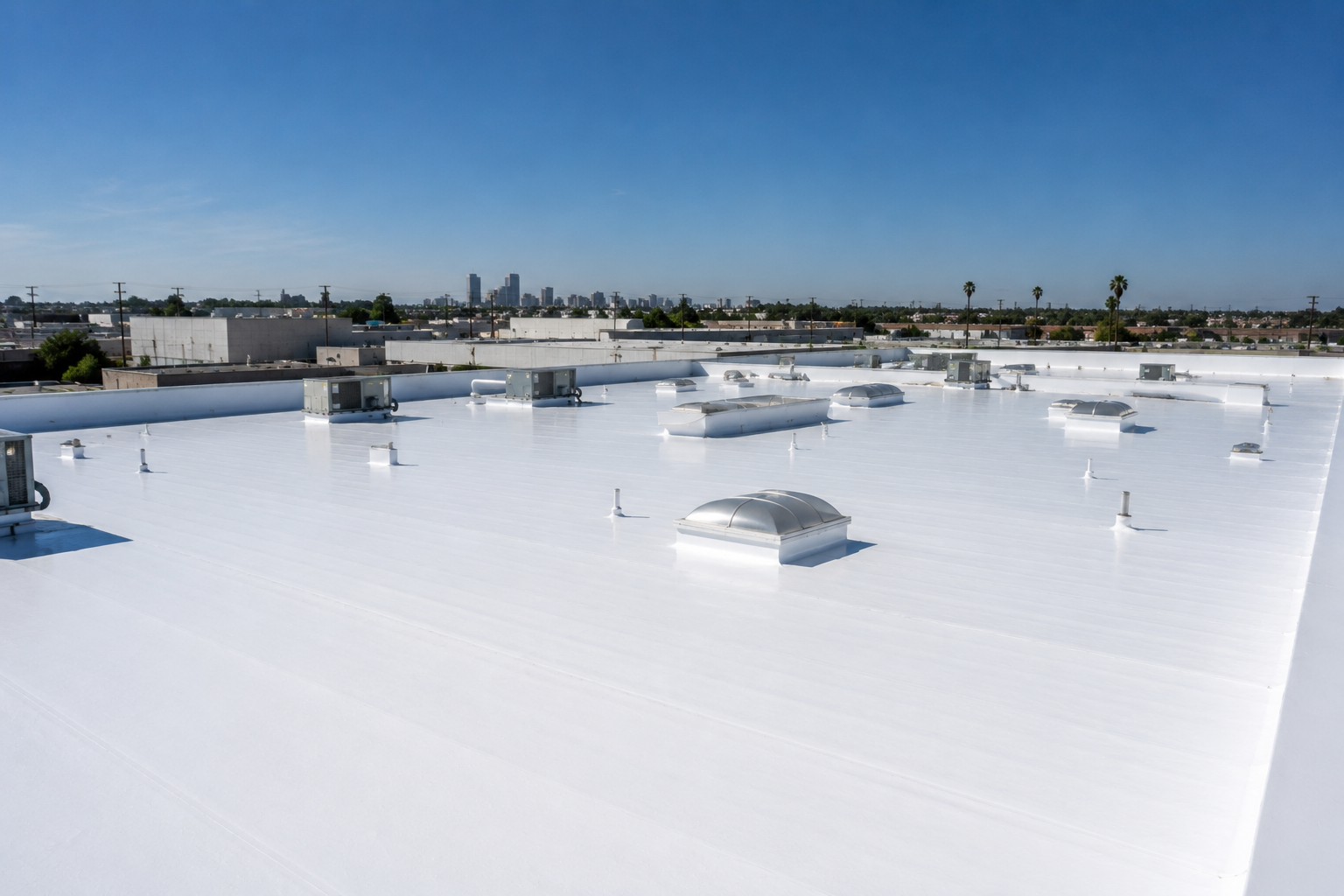
A commercial cool roof is designed to reflect more sunlight and retain less heat than many traditional roofing materials. These systems are especially relevant for warehouses, offices, retail properties, apartment buildings, industrial facilities, and other structures with large areas of roof exposure.
Commercial cool roofing does not refer to one specific product. It can include reflective single-ply membranes, specialized commercial roof coatings, reflective restoration systems, or other light-colored roofing materials designed for flat and low-slope commercial roofs.
The appropriate solution depends on the roof’s condition, drainage, substrate, penetrations, repair history, insulation, existing materials, and the long-term needs of the commercial property.
DISCUSS YOUR COMMERCIAL ROOF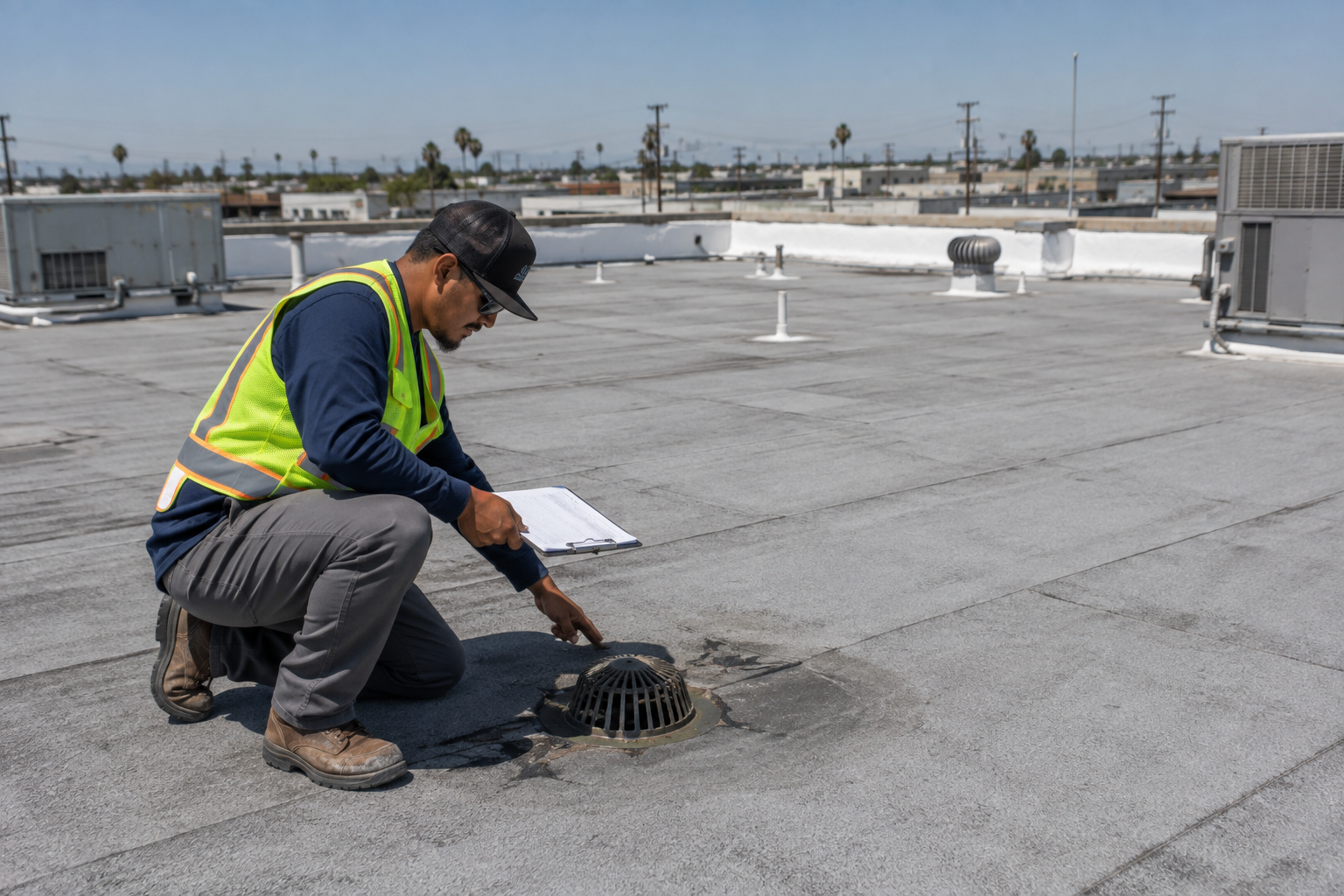
A properly selected commercial cool roof system can provide benefits beyond appearance. The goal is to create a roofing solution that responds to the building’s exposure, use, existing roof condition, and long-term maintenance priorities.
Reflective surfaces are designed to absorb less solar heat than many dark-colored roofing materials, helping reduce extreme roof surface temperatures.
Reducing rooftop heat gain may help support more manageable indoor temperatures in buildings with significant roof exposure.
An energy-efficient commercial roofing strategy may help reduce cooling demand during periods of intense Southern California heat.
Certain coatings and reflective systems create an additional protective surface over compatible commercial roofing materials.
Some existing commercial roofs may qualify for coating or restoration instead of immediate full roof replacement.
Cool roofing can become part of a larger commercial roof maintenance and asset-management plan for the property.
Reflective materials alone cannot correct damaged insulation, trapped moisture, failed seams, deteriorated flashing, poor drainage, or ongoing roof leaks. The existing roof should be reviewed before a commercial roof coating, membrane, restoration, recover, or replacement is recommended.
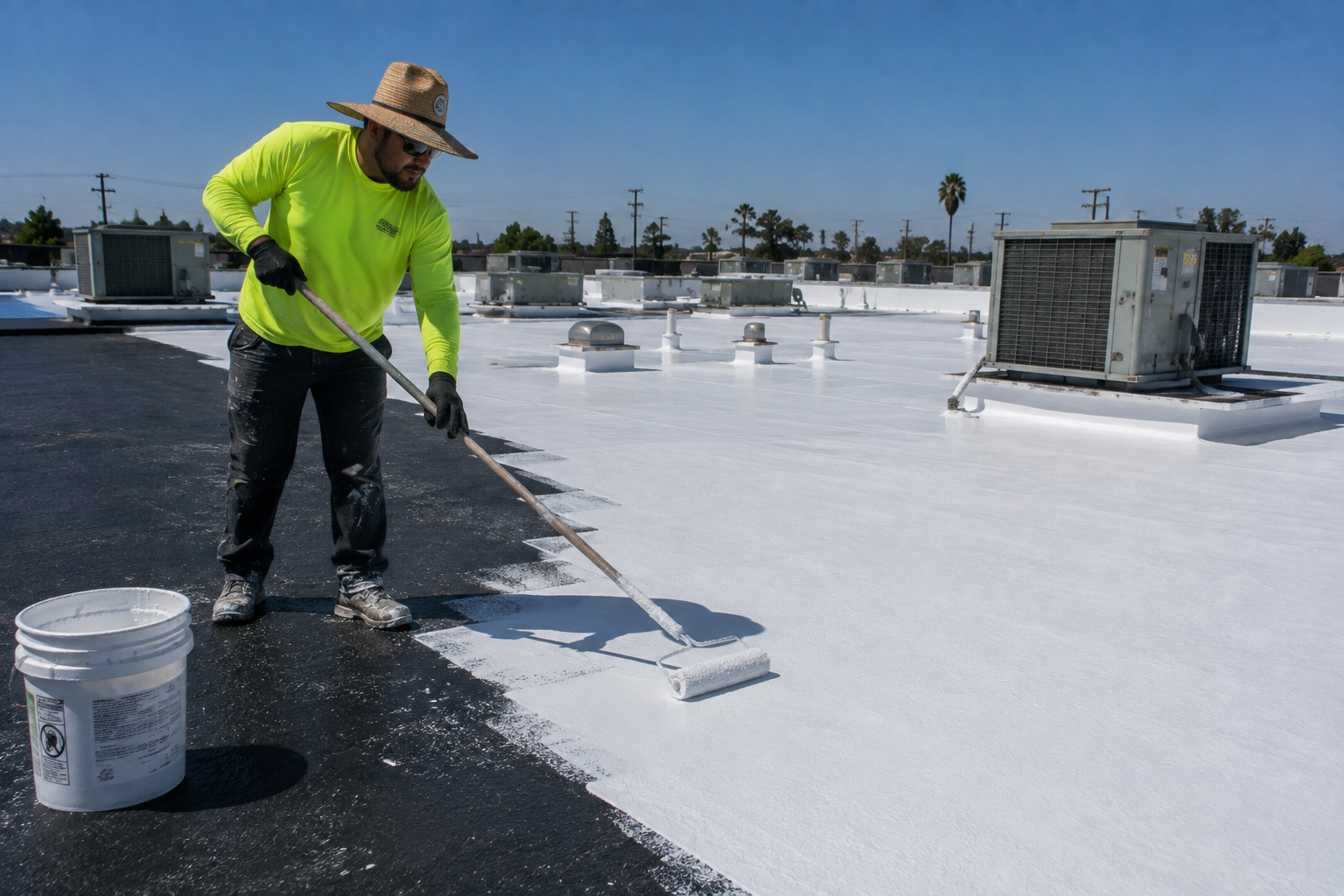
A commercial roof coating may be applied over certain compatible roof systems to improve reflectivity, reinforce the surface, and provide an additional layer of weather protection.
The roof must be properly cleaned, prepared, repaired, and evaluated before a coating system is installed. Coating over unresolved moisture, failed materials, or damaged roof components can conceal problems rather than correct them.
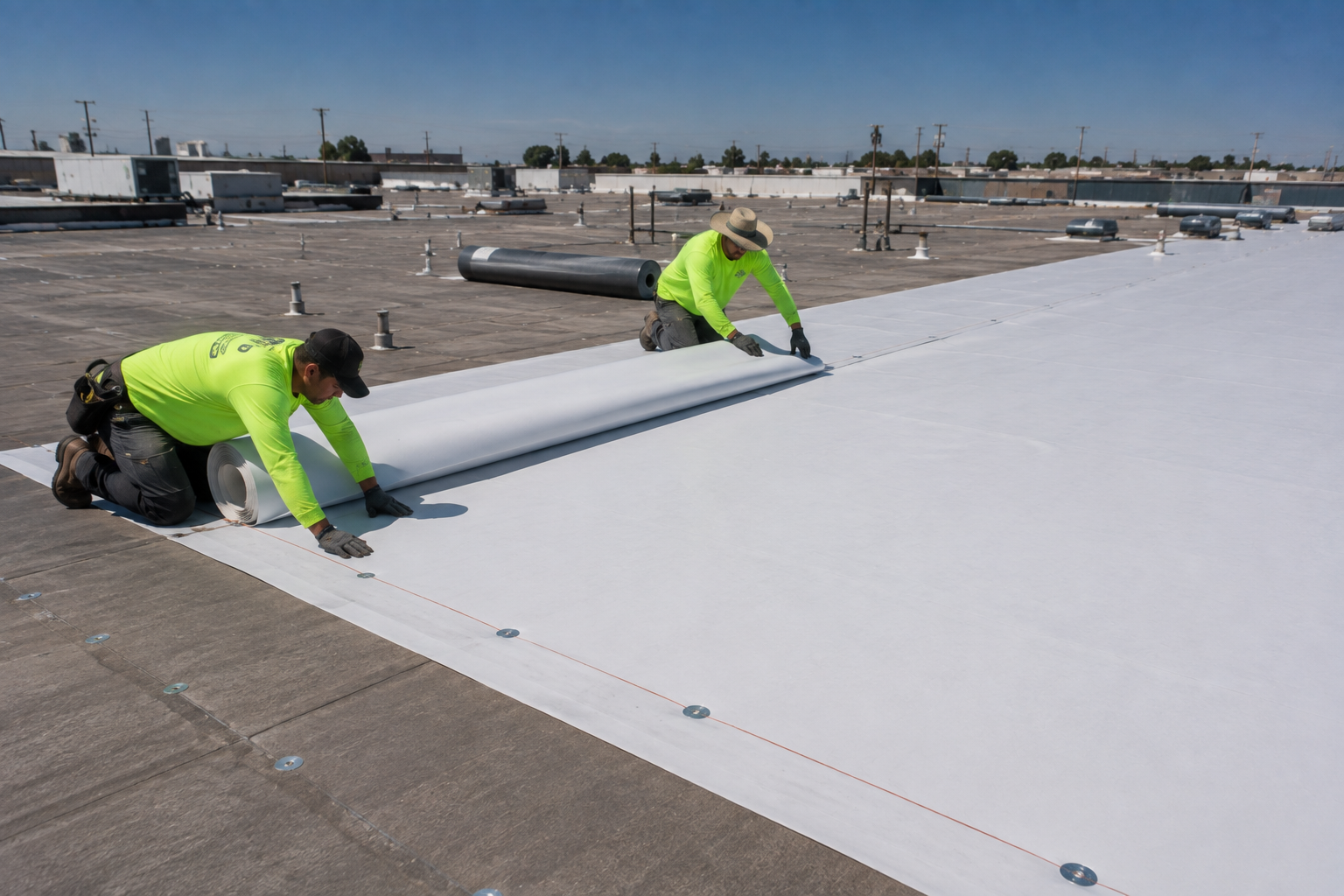
TPO and PVC are widely used single-ply commercial roofing systems for flat and low-slope buildings. Their light-colored surfaces can support commercial cool roofing goals while providing welded seams and dependable weather protection.
Depending on the building, deck, insulation, wind requirements, and roof design, a membrane may be mechanically attached, fully adhered, or installed as part of another approved commercial roof assembly.
REQUEST A COOL ROOF ESTIMATEThe best commercial cool roofing solution must be selected according to the existing roof and building—not from a generic product list.
TPO is a widely used reflective single-ply membrane for commercial flat and low-slope roofs.
PVC may be appropriate for commercial buildings requiring durable seams and resistance to grease or certain chemicals.
Reflective coatings may improve roof reflectivity and reinforce the surface of an eligible existing roof.
Restoration may combine repairs, reinforced details, surface preparation, and a reflective finish.
Reflective materials alone do not resolve trapped moisture, damaged insulation, failing seams, poor drainage, deteriorated roof components, or recurring commercial roof leaks.
We begin with the building location, known roofing concerns, roof history, leaks, and the owner’s objectives.
Roof surfaces, penetrations, drainage, flashing, repairs, and visible areas of deterioration should be examined.
Repair, coating, restoration, recover, or replacement options are considered according to the existing conditions.
The property owner receives practical direction regarding the recommended commercial cool roofing solution.
Commercial cool roofing may be considered for a wide range of flat and low-slope commercial roof applications throughout Los Angeles County.
Every commercial roof is different. These answers provide a starting point, but the existing roof should be reviewed before making a final recommendation.
A cool roof generally uses a surface designed to reflect more sunlight and absorb less heat than many conventional dark roofing materials. This may be achieved using reflective membranes, coatings, or other compatible roofing products.
No. The existing roofing material, adhesion, moisture condition, drainage, repairs, and overall roof condition must be considered first.
Reflectivity alone does not correct failed seams, damaged flashing, wet insulation, drainage problems, or other sources of water entry.
White is commonly associated with highly reflective commercial roofing, but available colors and reflective properties vary by roofing system and manufacturer.
Project duration depends on roof size, access, preparation, necessary repairs, weather, building operations, and the selected roofing system.
Tell us about your commercial building, existing roof, concerns, and long-term plans. We’ll help identify an appropriate next step.