Aging Roof Surface
Surface weathering, oxidation, fading, and normal material aging may indicate that additional protection should be considered.
Commercial roof coatings Los Angeles property owners can use may help restore compatible flat and low-slope roofing systems, improve reflectivity, seal vulnerable areas, and extend roof performance without immediately completing a full commercial roof replacement.
DK Commercial Roofing (Los Angeles) provides commercial roof coating evaluations for warehouses, offices, retail centers, industrial facilities, apartment buildings, churches, schools, and other commercial properties throughout Los Angeles County.
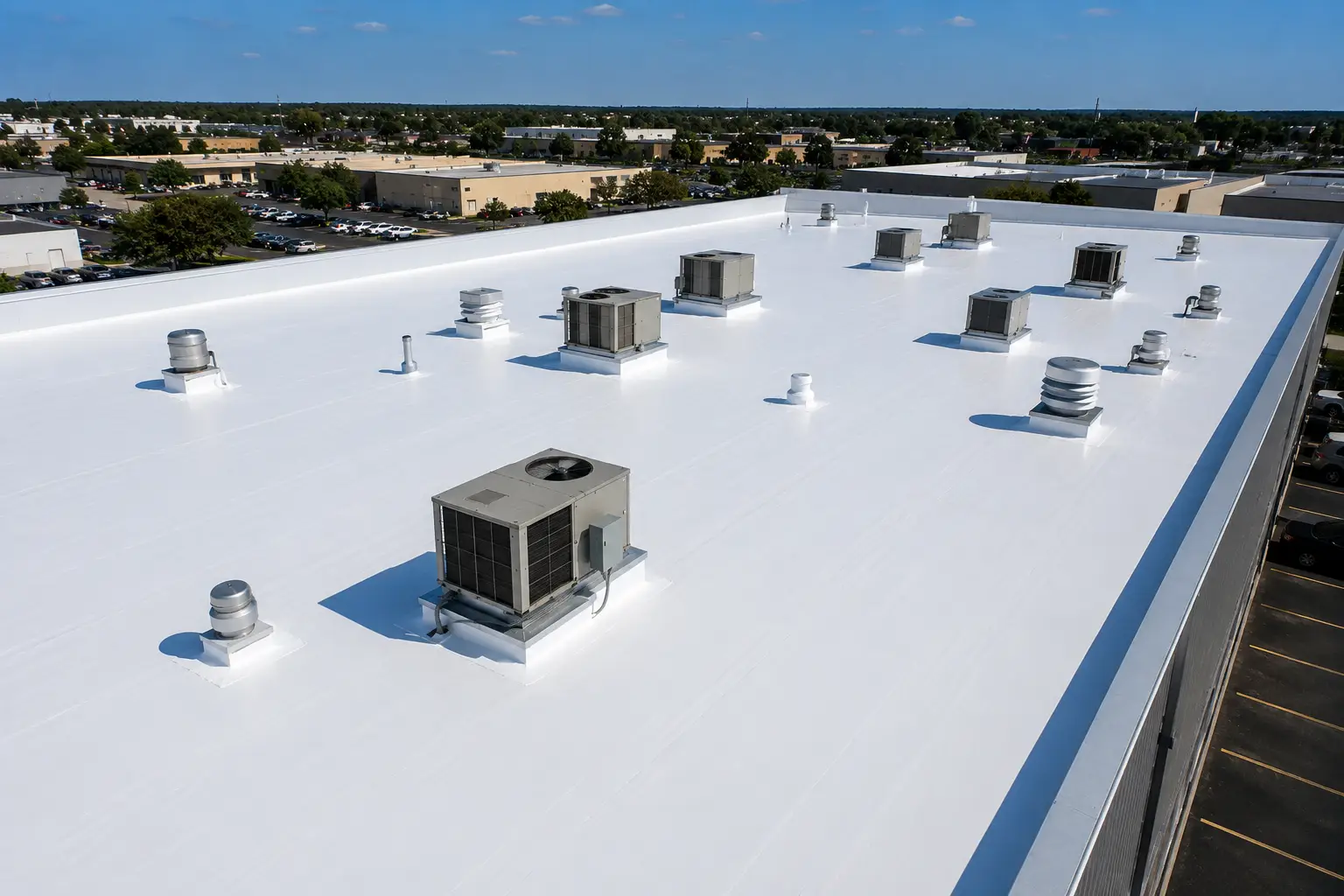
Commercial roof coatings are fluid-applied materials used to create a continuous protective surface over compatible roofing systems. Unlike sheet membranes, coatings are applied around seams, flashing, roof penetrations, curbs, fasteners, drains, and irregular rooftop details.
A coating system is not simply paint placed over an aging roof. The existing roof must first be inspected to determine whether it is dry, stable, properly attached, and suitable for restoration. Damaged areas, open seams, deteriorated flashing, wet materials, ponding water, and drainage concerns should be addressed before coating.
Los Angeles commercial roofing contractors should recommend a roof coating only when the existing roof and building conditions support a dependable restoration system.
REQUEST A ROOF COATING EVALUATIONRoof coatings may be appropriate when the existing commercial roof is aging but remains structurally suitable for preparation, repair, reinforcement, and restoration.
Surface weathering, oxidation, fading, and normal material aging may indicate that additional protection should be considered.
Repairable seams, flashing, fasteners, penetrations, and transitions may be reinforced before the coating is installed.
A reflective coating may reduce solar heat absorption at the roof surface and support the property’s energy-performance goals.
Property owners may use a coating system to restore a compatible roof before complete replacement becomes necessary.
Fluid-applied materials can conform around curbs, penetrations, equipment, flashing, and irregular commercial roof details.
A coating project may be incorporated into a broader plan involving repairs, drainage improvements, and preventative maintenance.
Coatings can provide an additional protective layer over compatible roofing materials and properly completed repairs.
A restoration project may involve less removal and building disruption than a complete commercial roof replacement.
Commercial roof coating performance depends heavily on the condition and preparation of the existing roof. Applying coating over trapped moisture, loose materials, dirt, failed repairs, open seams, damaged flashing, or unstable roofing can lead to premature coating failure.
Before application begins, the roofing system should be evaluated for compatibility, moisture concerns, attachment, drainage, surface condition, repairs, and areas requiring reinforcement.

Different materials provide different strengths. A coating should be selected based on compatibility and actual roof conditions.
Silicone coatings provide strong resistance to ultraviolet exposure and are commonly considered for roofs with compatible surfaces and recurring water exposure.
Acrylic coatings are reflective water-based products commonly used on compatible commercial roofing systems in suitable drainage and weather conditions.
Elastomeric materials are designed to remain flexible and create a continuous protective surface over properly prepared substrates.
Urethane coatings may provide increased durability and resistance in roof areas exposed to traffic, impact, or demanding conditions.
Inspection, cleaning, repairs, flashing, reinforcement, compatible primers, proper application rates, curing conditions, and final review all affect the finished coating system.
Each stage helps create a clean, compatible, reinforced, and continuous roofing surface.
Evaluate membrane condition, repairs, seams, flashing, drainage, penetrations, equipment, attachment, and visible moisture concerns.
Remove dirt, dust, oxidation, debris, loose materials, biological growth, and contaminants that may interfere with adhesion.
Correct punctures, open seams, damaged flashing, deteriorated repairs, loose materials, and other visible roofing defects.
Reinforce seams, fasteners, penetrations, drains, curbs, roof edges, transitions, and other vulnerable areas as required.
Compatible roof surfaces may require primer to support adhesion and proper performance of the selected coating system.
The base layer may provide reinforcement, surface build, and a consistent foundation for the finished coating system.
The final coating layer creates the continuous reflective and protective surface across the prepared roofing system.
Review coating coverage, thickness, curing, details, drainage, flashing, penetrations, equipment, and completed repairs.
A properly selected and installed coating system can support waterproofing, reflectivity, maintenance, and longer-term roof planning.
Fluid-applied materials create a continuous protective surface across compatible roofing materials and reinforced details.
Light-colored coatings may reduce solar heat absorption at the roof surface and support building energy goals.
A restoration system may extend the usable service period of a roof that remains suitable for coating.
A coating project may reduce removal, disposal, noise, and disruption compared with complete replacement.
Review the roofing material, drainage, attachment, moisture, flashing, repairs, penetrations, equipment, and surface condition.
Determine whether the roof substrate and existing materials are appropriate for the proposed coating and preparation methods.
Clean the roof and remove loose materials, dirt, debris, oxidation, contaminants, and other conditions that may affect adhesion.
Repair open seams, flashing, penetrations, punctures, fasteners, roof edges, drains, and deteriorated previous repairs.
Install compatible primer, reinforcement, base coats, and finish coats at the required application rates.
Review coverage, thickness, curing, repairs, seams, flashing, drainage, penetrations, and completed rooftop details.
A completed coating system should provide consistent coverage across the prepared roof surface with properly reinforced seams, flashing, penetrations, drains, curbs, transitions, and roof edges.
Drains and equipment should remain accessible, and the completed roof should be incorporated into an ongoing inspection and preventative maintenance plan.

Roof-coating compatibility depends on the existing material, condition, attachment, moisture, repairs, drainage, preparation, and selected coating system.
Property owners comparing commercial roofing companies Los Angeles buildings may rely on should look for careful roof evaluation, compatible materials, proper preparation, clear communication, and practical restoration recommendations.
Every coating project should begin with an evaluation of the existing roof, surface condition, moisture, repairs, drainage, compatibility, equipment, and long-term property goals.
A commercial roof coating is a fluid-applied protective material installed over a compatible and properly prepared roofing surface to create a continuous protective layer.
No. The roof must be evaluated for compatibility, attachment, moisture, damage, drainage, surface condition, repair needs, and remaining suitability for restoration.
No. A coating restores and protects a suitable existing roof. Replacement removes or covers the existing assembly and installs a new commercial roofing system.
The best material depends on the existing roof, substrate, drainage, ponding water, exposure, building use, traffic, preparation requirements, and performance goals.
Existing leaks and roofing defects should first be investigated and repaired. A coating system may then protect the properly prepared and reinforced roof surface.
Performance depends on coating type, application thickness, preparation, roof condition, drainage, exposure, foot traffic, repairs, maintenance, and installation quality.
Some properly maintained coating systems may be eligible for future recoating after inspection, cleaning, repairs, preparation, and confirmation of material compatibility.
Pricing depends on roof size, material, condition, access, cleaning, repairs, reinforcement, primer, coating thickness, drainage, equipment, and project complexity.
Tell us about the property, roofing system, roof age, leaks, ponding water, previous repairs, existing coatings, rooftop equipment, and your long-term plans for the building.