MATERIAL PERFORMANCE
Highly Flexible
EPDM membrane can accommodate properly designed roof movement, transitions, curbs, penetrations, and seasonal temperature changes.
EPDM roofing Los Angeles commercial property owners can use provides a flexible synthetic-rubber membrane system for flat and low-slope roofs exposed to sunlight, heat, rain, rooftop movement, mechanical equipment, and changing building conditions.
DK Commercial Roofing (Los Angeles) provides commercial EPDM roof installation, replacement, inspection, maintenance, and repair for warehouses, retail properties, offices, apartment buildings, industrial facilities, schools, churches, and commercial buildings throughout Los Angeles County.
EPDM membrane can accommodate properly designed roof movement, transitions, curbs, penetrations, and seasonal temperature changes.
The rubber membrane is commonly used on commercial roofs exposed to ultraviolet light, heat, rain, wind, and recurring weather cycles.
Compatible EPDM membrane, flashing, primers, adhesives, and tapes can be used to address localized damage and aging roof details.
EPDM has a long history of use on warehouses, offices, apartments, schools, retail centers, churches, and commercial facilities.
The system may be fully adhered, mechanically attached, or ballasted depending on the roof deck and approved assembly.
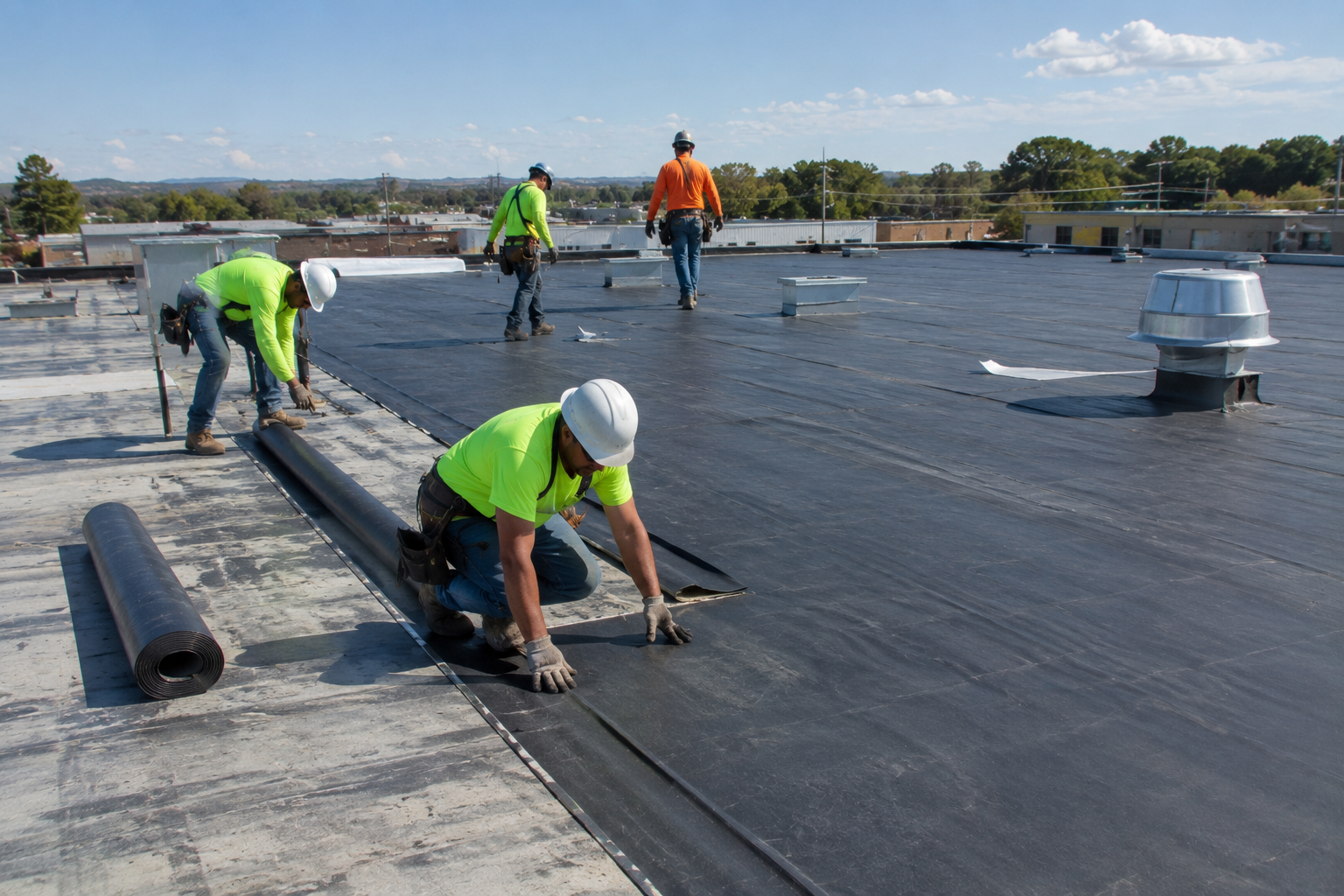
EPDM stands for ethylene propylene diene monomer. It is a synthetic rubber roofing membrane used on flat and low-slope commercial buildings. The material is manufactured in large sheets and installed over an approved substrate using an attachment method selected for the roof deck, insulation assembly, wind design, building conditions, and project requirements.
Unlike thermoplastic TPO and PVC membranes, EPDM seams are generally connected using manufacturer-approved primers, seam tapes, adhesives, and flashing materials rather than hot-air welding. Successful seam performance depends on careful cleaning, preparation, alignment, pressure, material compatibility, and installation conditions.
The visible membrane is only one part of the commercial roof. A complete EPDM assembly may also include insulation, tapered insulation, a cover board, a vapor-control layer, attachment components, flashing, drains, scuppers, roof edges, curbs, penetrations, and walkway protection.
EPDM performance depends on the entire roof assembly—not only the rubber membrane visible at the surface.
A commercial rubber roof contains several coordinated components. The exact assembly varies by building, deck, drainage, insulation, wind design, interior conditions, and project specifications.
The synthetic rubber sheet creates the primary waterproofing surface across the flat or low-slope commercial roof.
A compatible cover board may provide a stable surface and additional protection from impact, traffic, and rooftop work.
Rigid and tapered insulation can support thermal performance while directing water toward drains, scuppers, and gutters.
Some roof assemblies require additional control layers based on interior humidity, air movement, climate, and roof design.
Steel, concrete, wood, gypsum, and other approved decks support the completed EPDM roofing assembly.
Commercial roofs expand and contract as temperatures change. Rooftop equipment, structural movement, insulation, roof decks, flashing transitions, and building activity also place stress on the roofing system.
EPDM membrane is valued for its flexibility and ability to conform to properly designed commercial roof assemblies. That flexibility does not eliminate the need for dependable seams, reinforced corners, compatible flashing, secure attachment, positive drainage, and planned protection in frequently serviced areas.
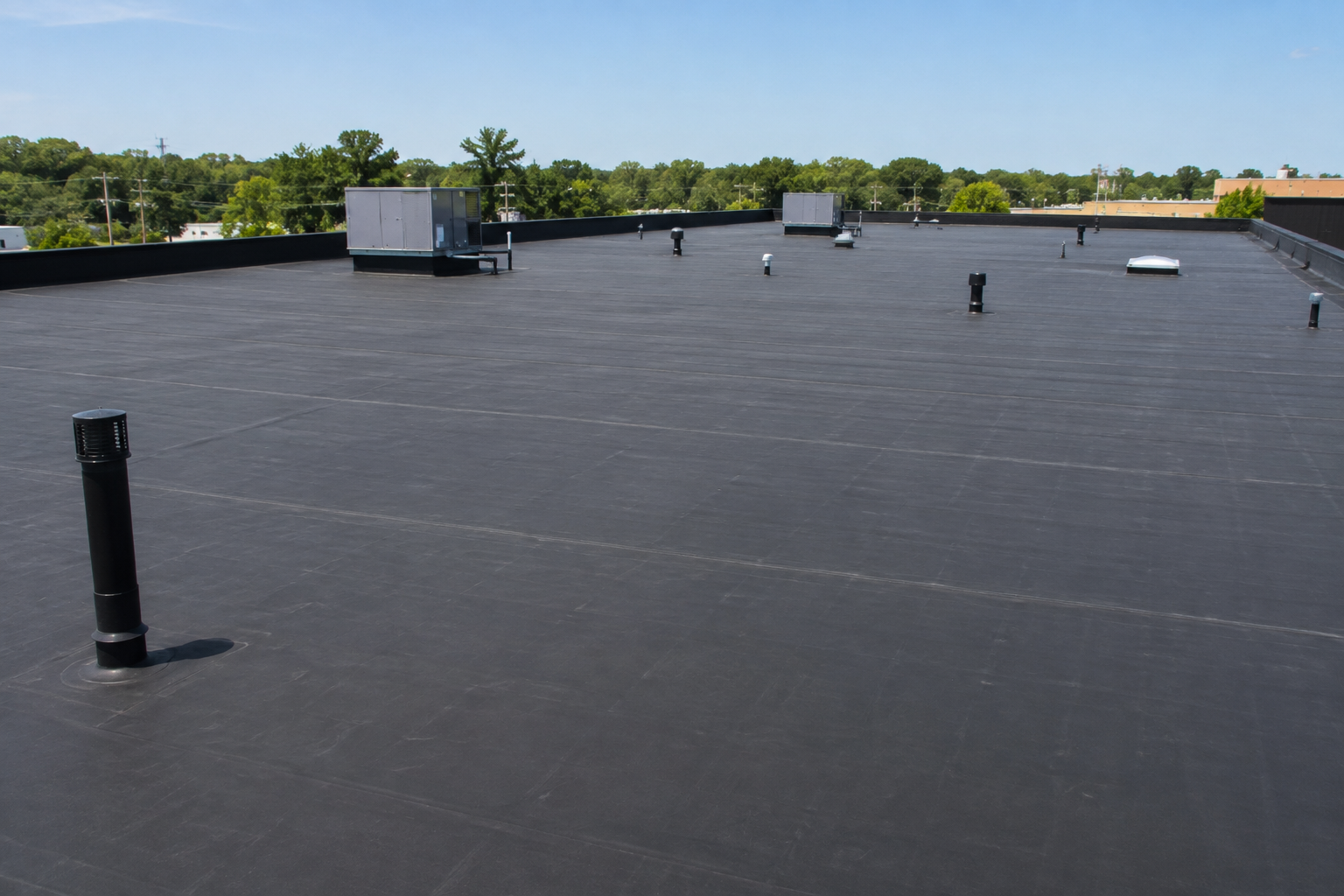
EPDM is commonly evaluated for commercial properties that need a flexible, repairable, low-slope membrane system with a long history of commercial roofing use.
EPDM can accommodate properly designed roof movement, flashing transitions, penetrations, curbs, and seasonal temperature changes.
The membrane is widely used on roofs exposed to sunlight, heat, rain, wind, changing temperatures, and long-term outdoor conditions.
Punctures, seams, flashing, drains, penetrations, and localized deterioration may be repaired using approved EPDM materials.
EPDM is commonly used on warehouses, offices, multifamily properties, schools, churches, retail buildings, and industrial facilities.
EPDM membrane may be fully adhered, mechanically attached, or ballasted depending on the building and approved system design.
Routine inspections and timely repairs can help preserve seams, flashing, drains, penetrations, roof edges, and membrane surfaces.
EPDM is commonly considered for commercial buildings with flat or low-slope roofs, compatible decks, planned drainage, rooftop mechanical equipment, and accessible maintenance areas.
Large commercial roof areas with drains, rooftop equipment, loading operations, and service traffic.
Professional properties with low-slope roofs, mechanical equipment, penetrations, and occupied spaces below.
Shopping centers and individual retail buildings with rooftop HVAC, drains, curbs, and multiple tenant areas.
Multifamily and HOA properties requiring maintainable flat-roof systems above occupied residential units.
Operational buildings with equipment, exhaust systems, penetrations, access needs, and service activity.
Educational, administrative, classroom, and activity buildings with broad low-slope roof areas.
Sanctuary, classroom, office, and community buildings with commercial flat-roof sections and rooftop equipment.
Occupied commercial properties requiring careful equipment coordination, drainage, access, and project planning.
The attachment method should be selected according to the roof deck, insulation, wind requirements, building height, perimeter zones, project design, manufacturer requirements, and property conditions.
The EPDM membrane is bonded to a compatible insulation surface or cover board using an approved adhesive system. Seams, flashing, penetrations, and edges are completed with compatible accessories.
The system uses approved fasteners, plates, or fastening components to secure the roofing assembly to the structural roof deck.
The membrane is loosely laid over an approved roof assembly and held in place using ballast such as stone or approved pavers.
No single membrane is ideal for every commercial building. Roofing systems should be evaluated according to roof design, building use, exposure, drainage, budget, deck conditions, and long-term plans.
| System Feature | EPDM | TPO | PVC |
|---|---|---|---|
| Material Type | Synthetic rubber | Thermoplastic membrane | Thermoplastic membrane |
| Common Membrane Color | Black, with white-faced options | Commonly white | Commonly white or light colored |
| Field Seam Method | Primer and seam tape | Heat welded | Heat welded |
| Material Character | Flexible rubber membrane | Flexible thermoplastic | Flexible thermoplastic |
| Reflectivity | Varies by membrane surface | High with white membrane | High with white membrane |
| Common Commercial Use | Broad low-slope application | Broad commercial application | Commercial and specialty application |
This comparison is general. Chemical exposure, grease, rooftop traffic, insulation, roof deck, wind design, attachment, drainage, building operations, membrane color, and manufacturer requirements should be evaluated before selecting a roofing system.
EPDM roofs can often receive localized repairs when the damaged area is identified and the surrounding membrane remains suitable for compatible corrective work.
Aging tape, contamination, movement, poor preparation, or previous repairs can affect seam performance.
Tools, debris, foot traffic, equipment service, and sharp materials may puncture or tear the rubber membrane.
Walls, curbs, pipes, drains, skylights, equipment, and roof edges may require new flashing or reinforcement.
Aging, attachment conditions, stress, perimeter details, and movement may place tension on membrane and flashing.
Drainage components and surrounding membrane may deteriorate, separate, become blocked, or receive damage.
Incompatible patches, loose tape, aging sealants, and temporary repair materials may need to be removed and corrected.

Routine roof care can help identify punctures, open seams, drainage problems, aging flashing, damaged roof edges, loose materials, and rooftop traffic issues before they become larger leaks.
Review the membrane, seams, flashing, drains, curbs, penetrations, edges, equipment, and previous repairs.
Remove debris, loose materials, vegetation, contaminants, and conditions that block drainage or conceal roof damage.
Keep drains, scuppers, gutters, strainers, and drainage paths clear and accessible.
Address punctures, seams, flashing, penetrations, edges, and failed previous work using compatible materials.
Track recurring conditions, membrane aging, insulation concerns, drainage, roof traffic, and future replacement needs.
A completed EPDM roof should provide consistent membrane coverage, secure seams, reinforced flashing, protected penetrations, clear drainage, dependable roof edges, and accessible rooftop equipment.
Property owners comparing Los Angeles commercial roofing contractors should look for building-specific guidance, compatible roof materials, careful seam preparation, dependable flashing, clear communication, and attention to the complete roofing assembly.
EPDM roofing recommendations should be based on the building, roof deck, membrane condition, drainage, insulation, equipment, attachment method, flashing, exposure, and long-term property plans.
EPDM stands for ethylene propylene diene monomer. It is a synthetic rubber single-ply roofing membrane used on flat and low-slope commercial buildings.
EPDM may be a suitable option for many Los Angeles commercial properties. The building, roof deck, drainage, membrane color, attachment, insulation, equipment, exposure, and project goals should be evaluated before selection.
EPDM seams are generally completed using compatible primer and seam tape. Successful installation depends on cleaning, preparation, alignment, pressure, weather, and material compatibility.
Yes. Punctures, open seams, flashing, drains, penetrations, and localized damage may often be repaired using compatible EPDM materials when the surrounding roof remains suitable.
A recover assembly may be possible in some situations. Existing roof layers, moisture, deck conditions, insulation, drainage, attachment, local requirements, and compatibility must be reviewed.
EPDM is a synthetic rubber membrane with taped seams. TPO is a thermoplastic membrane with heat-welded seams. Reflectivity, building use, attachment, exposure, drainage, budget, and project requirements should guide the selection.
Roof energy performance depends on membrane color, insulation, air leakage, HVAC performance, roof condition, building use, and climate. White-faced EPDM options may also be available for some assemblies.
Performance depends on membrane thickness, system design, attachment, seam preparation, flashing, drainage, exposure, traffic, repairs, inspections, and ongoing maintenance.
Inspection frequency depends on roof age, condition, weather, equipment service, warranty requirements, foot traffic, previous repairs, drainage, and property-management practices.
Pricing depends on roof size, removal, deck conditions, insulation, cover board, membrane thickness, attachment, flashing, drainage, equipment, access, labor, and overall project complexity.
Tell us about the building, current roofing system, roof size, deck, drainage, rooftop equipment, membrane condition, leaks, repair needs, replacement plans, and long-term performance goals.